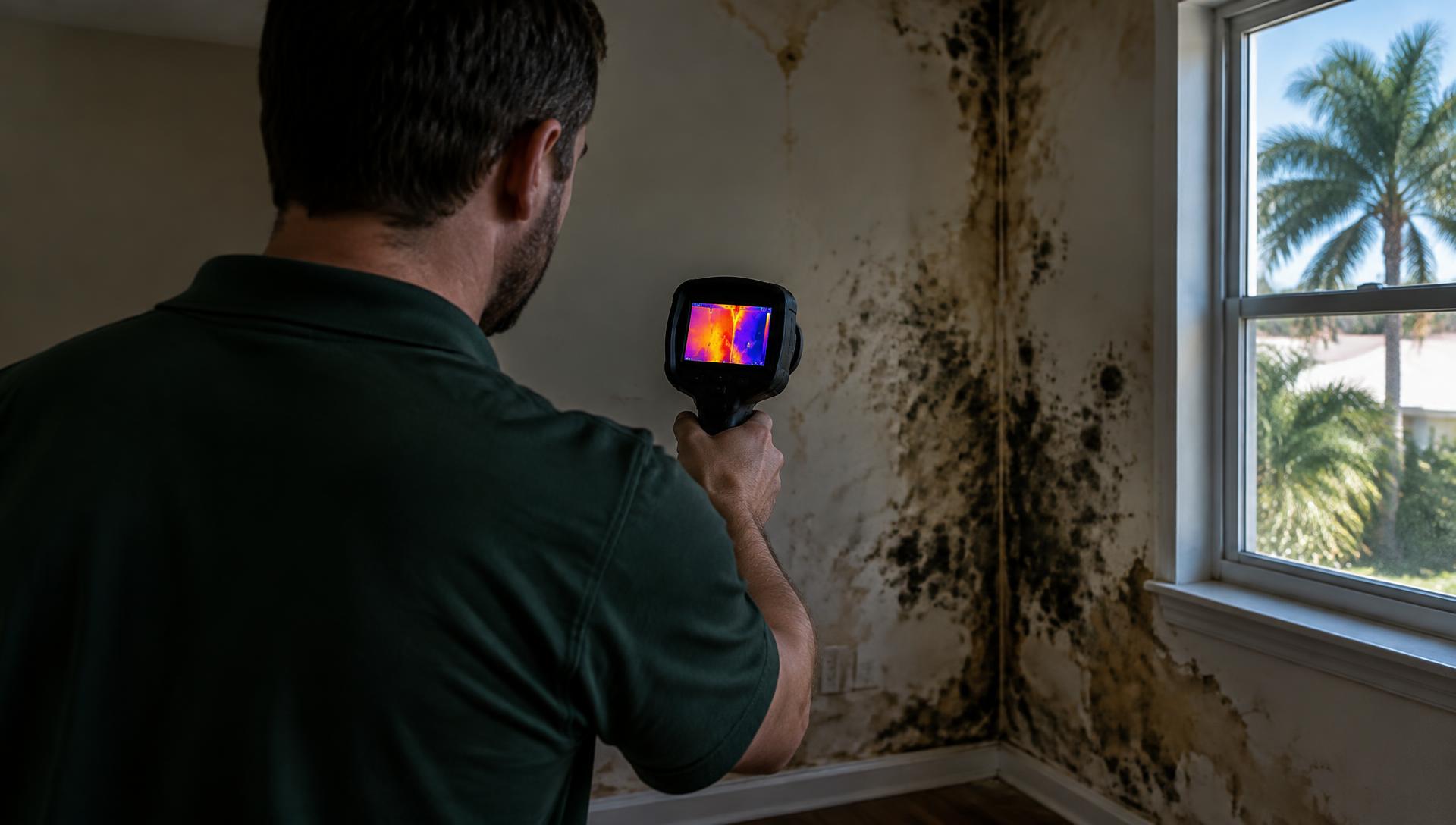
Spending forty or more hours a week in an office means your indoor working environment plays a major role in your daily comfort and respiratory health. When commercial properties suffer from poor maintenance, storm leaks, or chronic air conditioning problems, employees often begin to notice lingering musty odors, stuffiness, and frequent irritation while on the job.
Common Causes of Workplace Mold in Florida
In Florida's humid subtropical climate, commercial properties face constant moisture challenges. Commercial spaces, municipal halls, and retail offices often develop mold problems due to a few common culprits:
- Commercial HVAC Inefficiency: Air conditioning systems in Florida must cool and dehumidify simultaneously. When units are oversized, poorly maintained, or failing, relative humidity inside the building can easily rise above 60%, creating favorable conditions for fungal growth inside ductwork and on acoustic ceiling tiles.
- Roof Leaks and Wind-Driven Rain: Tropical storms and heavy summer downpours exploit minor vulnerabilities in flat commercial roofs, sending water into wall cavities and drop ceilings where it often goes unnoticed for weeks.
- Plumbing Leaks and Drainage Issues: Break-room refrigerators, commercial restrooms, and building condensation lines can leak steadily into drywall and subfloors.
Why Surface Cleaners and Air Purifiers Fall Short
When moisture issues arise in municipal or corporate offices, property managers sometimes attempt quick remedies—like wiping visible spots with bleach or installing plug-in UV purifiers—while leaving ongoing leaks unresolved. Surface treatments cannot address fungal growth that has established itself within porous wallboard, carpet backing, or insulated duct systems.
Relying on cosmetic fixes or air fresheners without addressing the underlying water intrusion allows moisture to persist, causing building materials to deteriorate further and degrading indoor air quality throughout shared ventilation systems.
Steps to Resolve Commercial Mold Concerns
Resolving mold issues in an office requires a systematic approach led by state-licensed professionals:
- Professional Moisture and Mold Inspection: A licensed inspector conducts thermal imaging, moisture meter readings, and air sampling to map moisture intrusion and identify spore concentrations through independent mold testing.
- Immediate Source Correction: Leaking roofs, damaged condensate pans, or plumbing failures must be addressed quickly, accompanied by structural drying and water damage restoration where water has pooled.
- Containment and Licensed Remediation: In accordance with Florida Chapter 468 Part XVI guidelines, professional containment barriers and negative air machines are used during mold remediation to prevent spores from spreading to occupied offices.
If you suspect your commercial facility or office building has an unresolved moisture or mold problem, contact Ahold of Mold Environmental. We serve commercial property owners and tenants across Central Florida at (386) 492-1288 and South Florida at (954) 281-2666.