Living in Florida means dealing with frequent heavy rainfall, tropical storm activity, and constant reliance on air conditioning systems. Whether facing a burst supply line, an overflowing water heater, or an AC condensate drain backup, unexpected water intrusion can cause severe structural damage in a matter of hours. Knowing when you can manage cleanup yourself and when you need licensed professional assistance is critical to protecting your home.
1. Stop the Source Immediately
Before any cleanup begins, stopping the water source is essential. A slow drip or pressurized leak can saturate framing, subflooring, and insulation behind finished walls. Locate and shut off your home's main water valve right away if plumbing is the culprit. If the issue stems from an air conditioning overflow—a very common cause of water damage across Central Florida and South Florida—turn off the HVAC unit immediately to prevent continuous condensation drainage into ceilings and floors.
2. When Can You Handle It Yourself?
A DIY approach is generally only appropriate for minor, contained incidents involving clean water (Category 1), such as a small sink overflow or a spilled bucket on tile or vinyl flooring. If the water has affected only a small, non-porous area, has not seeped beneath baseboards, and can be fully dried within a couple of hours, standard mopping, towels, and household ventilation may suffice.
3. Warning Signs You Need a Professional
In Florida's high-humidity environment, self-remediation often leaves hidden moisture behind. You should call a certified water damage restoration specialist if:
- Water has been standing for more than 24 hours: In warm conditions, mold colonization starts between 24 and 48 hours on damp cellulose materials.
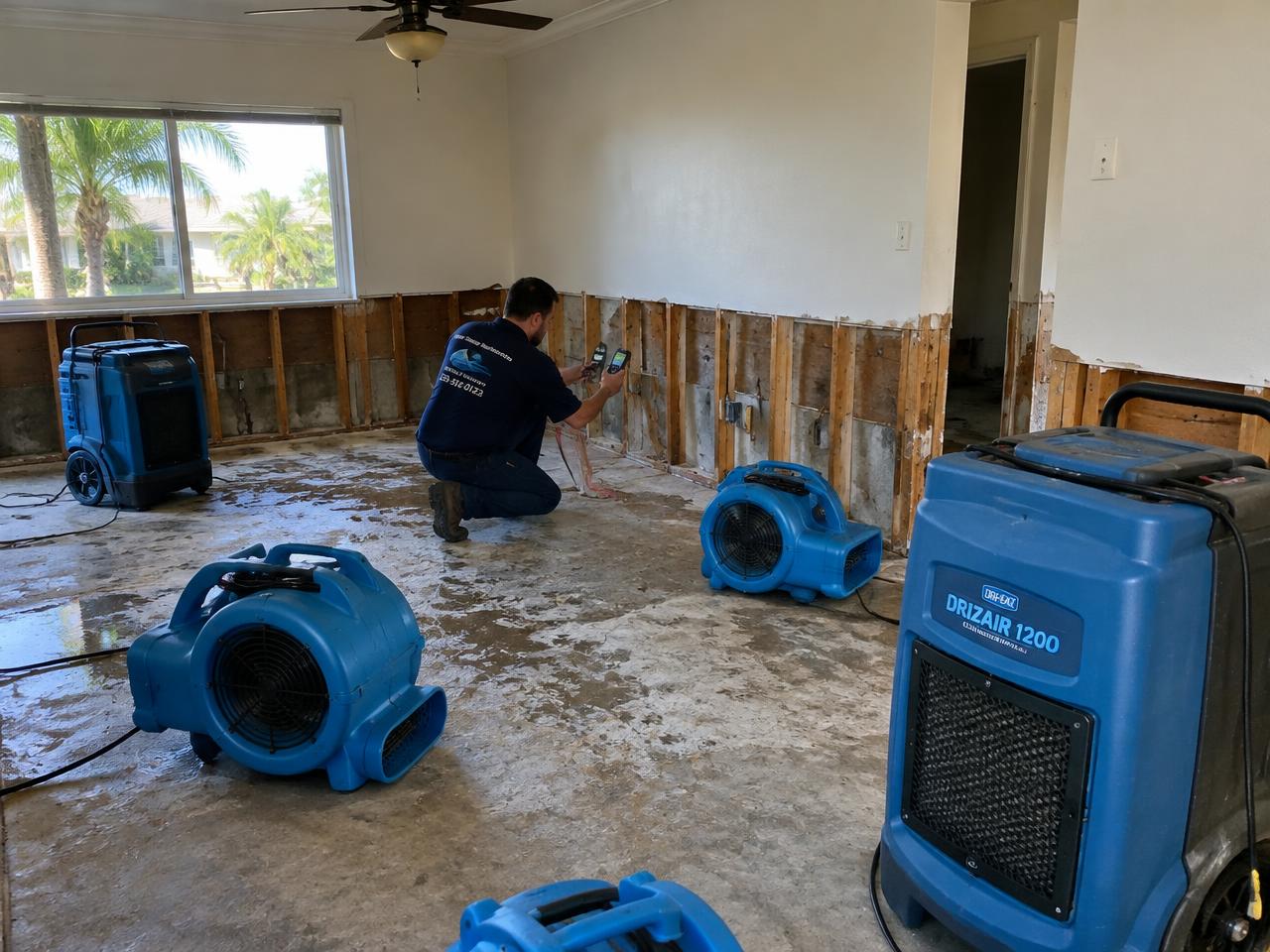
- Water has entered wall cavities or subfloors: Water readily wicks up drywall and beneath laminate or hardwood flooring. Moisture meters and thermal imaging cameras are needed to map the actual boundaries of saturation.
- The water is contaminated: Water from sewage backups, outdoor storm runoff, or washing machine drains contains contaminants (Category 2 or 3) requiring containment, antimicrobial treatment, and specialized disposal.
- The HVAC system was running during the flood: Saturated ductwork or indoor evaporator coils can spread moisture and spores throughout the structure.
- You notice musty odors: Lingering sour or earthy smells indicate active bacterial or fungal activity inside damp materials.
4. The Difference Professional Drying Makes
Extracting standing water with a shop vacuum only addresses surface liquid. Professional mitigation teams use commercial extraction units, directed air movers, and low-grain refrigerant (LGR) or desiccant dehumidifiers. These tools lower the ambient relative humidity and extract moisture trapped deep within wood framing, concrete, and wall cavities, ensuring the structure reaches an established dry standard before repairs begin.
5. Avoiding Long-Term Mold Problems
Incomplete drying often leads to hidden fungal growth behind baseboards, under cabinets, and inside closets. If water has sat unnoticed for several days, an inspection and professional mold testing can confirm whether secondary damage has occurred. Identifying moisture issues early prevents costlier structural repairs and extensive remediation down the road.
If you experience unexpected flooding or suspect moisture has penetrated your walls or flooring, contact Ahold of Mold Environmental. Our Florida-licensed assessors and remediators have provided thorough moisture mapping, water extraction, and structural restoration services since 1996.