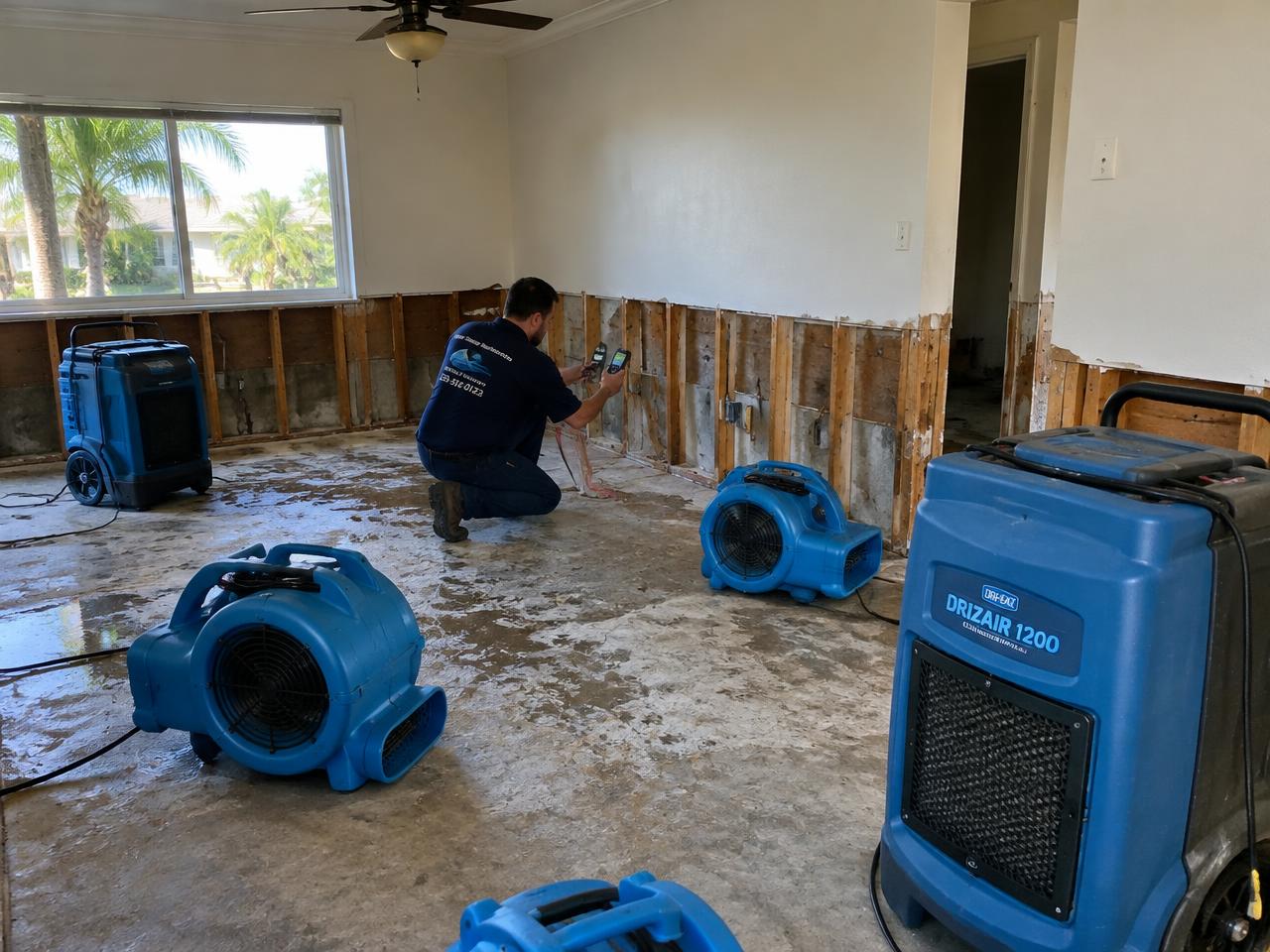
You might see a small leak in your home—say, dripping from the ceiling during a heavy afternoon storm—and think it is no big deal. Maybe you place a bucket under the drip and wait for the rain to clear. In Florida, however, that small leak can escalate rapidly.
Even a minor intrusion can cause significant structural decay, degrade drywall, and trigger rapid microbial growth in our warm, humid climate. Proactive maintenance is your best defense against extensive repairs and the need for professional water damage restoration.
Protecting the kitchen and laundry areas
The kitchen is a frequent origin point for indoor water damage because of its numerous water lines: the dishwasher, sink supply hoses, garbage disposal, and refrigerator ice maker. Inspect the floors and cabinets around these appliances regularly. Check braided supply lines for corrosion, brittleness, or slow weeping. If you discover pooling water or warped cabinetry, investigate the source immediately before hidden mold takes hold.
Maintain the roof and attic spaces
Florida's intense sun, wind-driven rain, and tropical storms place immense stress on roofing systems. Regularly inspect your attic for damp insulation, dark staining along the roof decking, or musty smells after severe weather. Keep shingles and flashing clear of fallen palm fronds, branches, and debris that can trap moisture against roof seams. Catching a minor roof penetration early prevents drywall collapses and keeps moisture out of structural framing.
Inspect bathrooms and plumbing fixtures
Bathrooms undergo constant moisture exposure. Routinely examine the caulk around tubs, showers, and vanity backsplashes. Degraded grout or cracked caulking allows water to seep behind tile backer board and into wall cavities. Check around the base of your toilets for soft flooring or loose mounting bolts, which often indicate an expired wax ring leaking subfloor water.
Monitor your water meter for hidden leaks
Slab leaks and pinhole copper leaks inside walls can run undetected for weeks. Once every few months, conduct a simple meter test. Turn off all indoor faucets, outdoor spigots, and water-using appliances. Check your water meter indicator. If the dial or digital flow rate continues to register usage while everything is off, you likely have a hidden plumbing leak that requires prompt attention.
Clear gutters and direct downspouts away from foundations
Clogged gutters cause torrential storm runoff to overflow, pooling directly against exterior walls and foundation footings. In Florida sandy soils, saturated ground against the foundation can push moisture upward into flooring materials. Clean gutters ahead of summer storm cycles and ensure downspout extensions discharge water at least five to ten feet away from the home.
If you suspect an unaddressed leak has led to hidden structural dampness or indoor air quality issues, professional mold testing can pinpoint areas of concern. Family-owned since 1996, Ahold of Mold Environmental provides licensed mold assessment (MRSA3074) and remediation (MRSR4581) services across Central Florida and South Florida. Contact our team today to protect your property from ongoing moisture issues.