Water damage is one of the most urgent property emergencies a Florida homeowner can face. Whether caused by an air conditioning condensation backup, a plumbing failure, or heavy tropical rainstorms, moisture requires immediate attention. In Florida's subtropical climate, untreated water can compromise structural materials and lead to microbial contamination in as little as 24 to 48 hours. Having a structured response plan will help protect your property and family.
1. Identify and Stop the Source
The first priority is stopping additional water from entering the building. If the issue is an interior pipe break, water heater malfunction, or appliance leak, immediately shut off your home’s main water supply valve. For exterior intrusions caused by roof leaks or rising storm water, isolate the area as best as possible and prioritize personal safety over property protection.
2. Ensure Personal and Electrical Safety
Water and electricity create immediate life-safety hazards. If standing water is present near outlets, appliances, or your electrical panel, do not walk through it. Turn off the relevant breakers if you can access the breaker box safely without stepping in moisture, or contact a licensed electrician. Wear sturdy, non-slip footwear and protective gloves when inspecting wet areas.
3. Contact a Licensed Plumber
If the water source is a pressurized plumbing failure, drain backup, or cracked supply line, call a licensed plumber right away. Addressing the mechanical failure ensures that restoration efforts can proceed without the risk of recurring leaks.
4. Document the Damage and Call Your Insurer
Before cleanup begins, thoroughly document the situation by taking clear, well-lit photos and videos of affected rooms, baseboards, flooring, and damaged personal belongings. Contact your insurance carrier to initiate a claim. Be aware that many Florida homeowner policies include specific guidelines regarding water mitigation timelines, as well as standard $10,000 policy sublimits for mold cleanup resulting from covered water losses.
5. Begin Initial Mitigation and Remove Standing Water
If conditions are safe, begin removing standing surface water using wet/dry vacuums, squeegees, or towels. Remove wet rugs, boxes, and upholstery away from wet floors to prevent dye transfer and further saturation. However, avoid attempting deep structural drying on your own; household fans often circulate humid air without effectively drying deep wall cavities or subfloors.
6. Bring in Professional Water Restoration Experts
Do not wait days to address moisture behind walls or under flooring. Hiring a licensed water damage restoration contractor ensures that specialized extraction tools, industrial air movers, and commercial dehumidifiers are deployed to stabilize indoor humidity and dry framing materials thoroughly.
If moisture has lingered for more than two days, having an independent, licensed mold assessor perform thorough mold testing can verify whether spore levels have elevated within the living space, establishing whether formal containment and mold remediation under Florida Chapter 468 regulations are required.
7. Confirming Your Home Is Ready for Reoccupancy
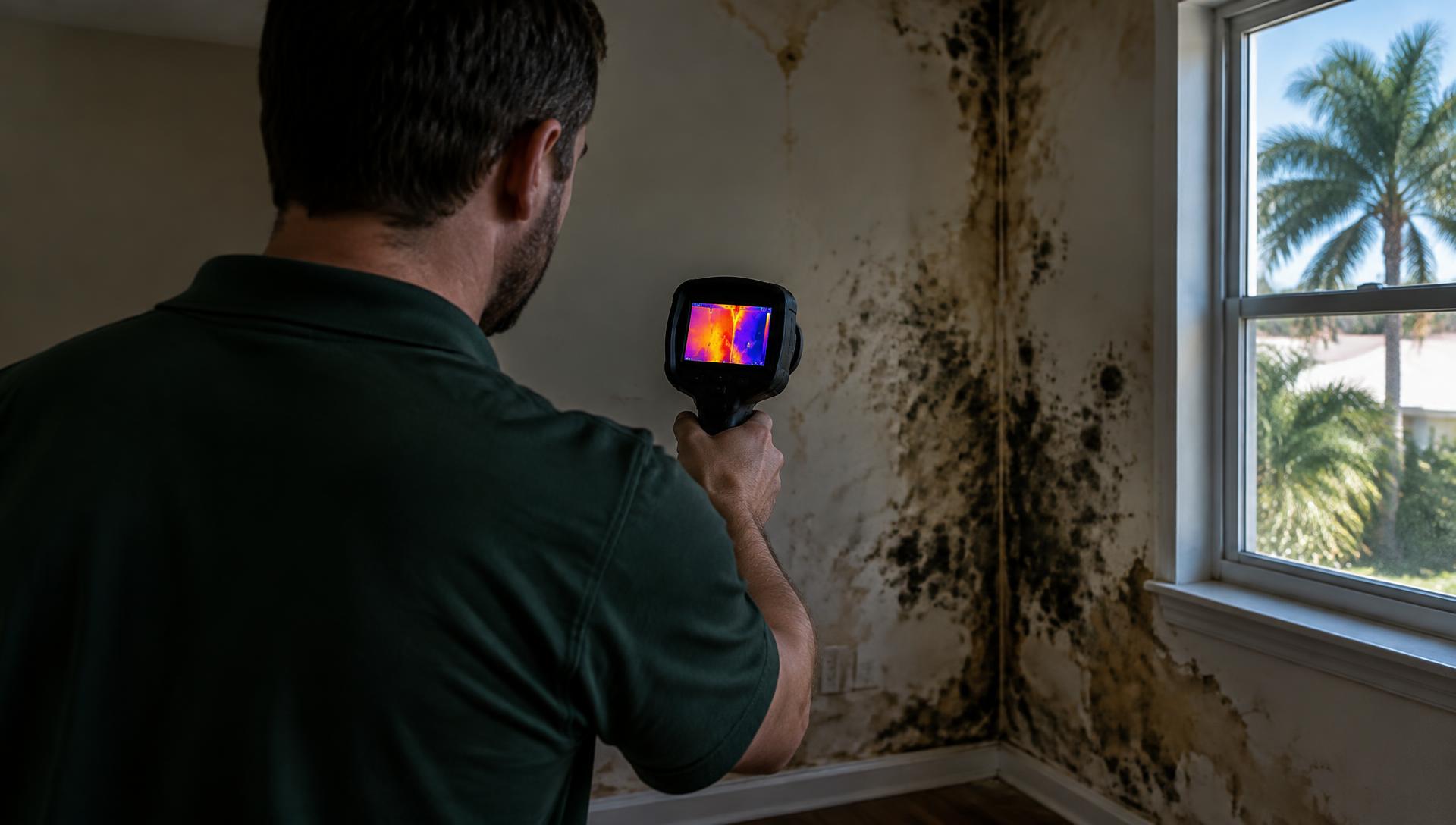
Deciding when to return depends on structural stability, indoor air quality, and the completion of drying protocols. Restoration specialists use calibrated moisture meters and thermal imaging to confirm that framing, drywall, and subflooring have reached dry baseline standards before reconstruction commences. If you need assistance assessing water impacts or have questions about post-damage moisture, reach out to our team via our contact page for guidance.