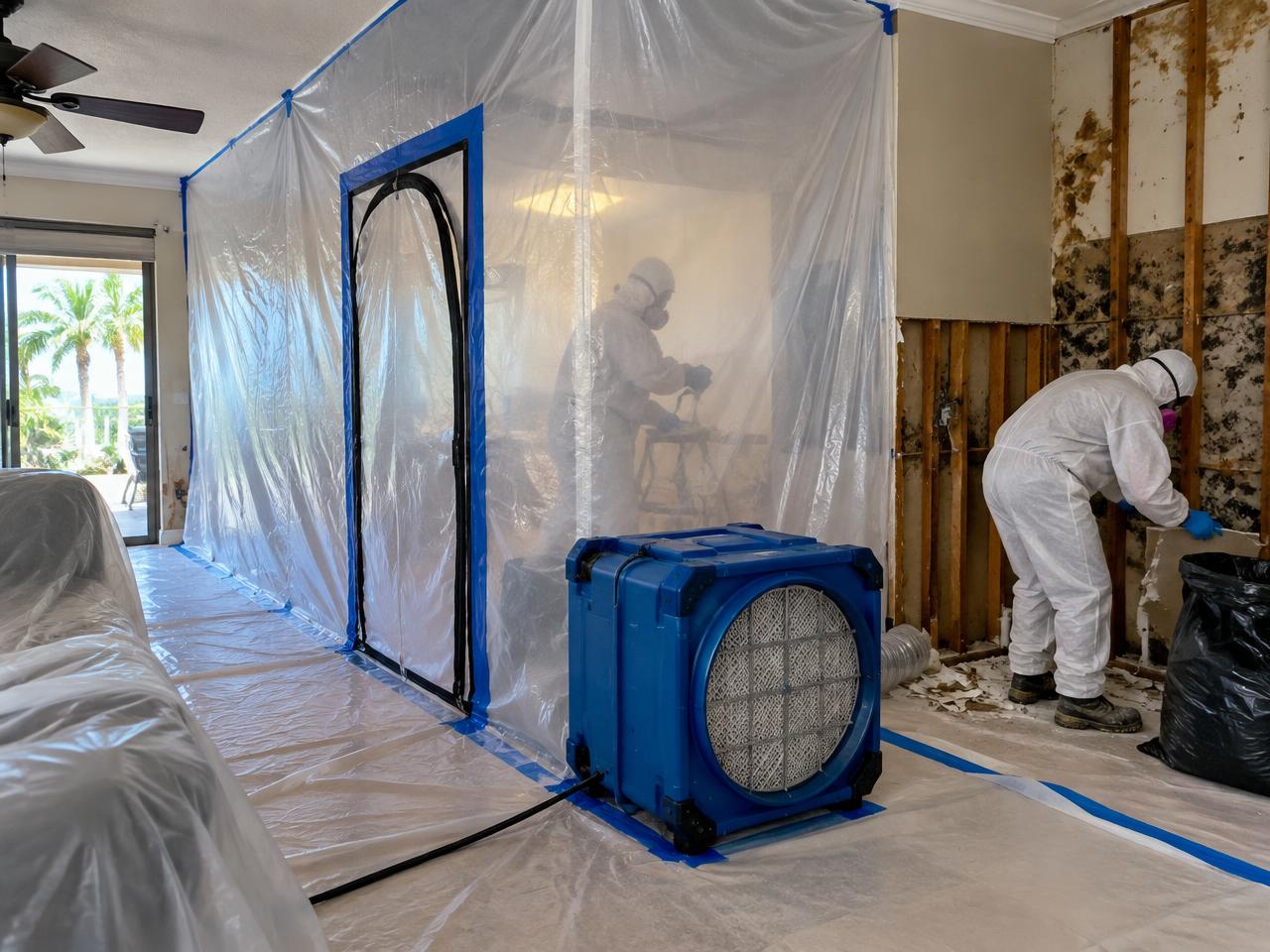
Mold inside Florida homes and businesses can contribute to property damage and poor indoor air quality, but it is not always easy to detect. Because of our subtropical climate and year-round humidity, microbial growth can develop out of sight behind walls or within air conditioning systems. Knowing the early indicators allows you to address moisture sources quickly. Here are several common signs that indicate you may need professional mold inspection or remediation:
- Musty or Damp Odors:
One of the most reliable indicators of hidden mold is a persistent, earthy smell. Mold releases microbial volatile organic compounds (mVOCs) as it feeds on organic materials. If a specific room, closet, or AC return always smells damp regardless of cleaning, professional mold testing can help determine whether concealed colonies are present. - Plumbing Leaks and AC Overflow:
Because mold needs moisture to flourish, plumbing leaks and clogged air conditioner condensate lines are prime culprits. If an appliance or pipe has been slowly dripping into a subfloor or wall cavity, mold can begin colonizing building materials within 24 to 48 hours. Addressing the leak and scheduling prompt moisture evaluation prevents deeper structural issues. - Allergy-Like Sensitivities:
Some individuals are sensitive to elevated concentrations of airborne mold spores. If occupants notice unexplained eye irritation, coughing, nasal congestion, or throat scratchiness that seems to improve when leaving the building, it may point to an indoor environmental issue warranting evaluation. - High Indoor Humidity and Condensation:
In Florida, indoor relative humidity should ideally stay below 60%. Areas prone to high moisture—such as bathrooms, laundry rooms, and unconditioned crawlspaces or attics—are particularly vulnerable. Visible condensation on windows, metal registers, or supply vents indicates excess moisture that can foster mold colonization. - Water Stains and Discoloration:
Yellowish, brownish, or dark staining on drywall, baseboards, or ceiling tiles points to past or active water intrusion. Even if the surface feels dry, hidden moisture may remain inside the wall cavity. Pairing professional moisture detection with water damage restoration helps ensure the area is properly dried before colonies spread.
If you suspect microbial growth in your property, turn to the licensed team at Ahold of Mold Environmental. Family-owned and operated since 1996, we hold dual Florida state licensing as a Mold Assessor (MRSA3074) and Mold Remediator (MRSR4581). We assist homeowners and commercial managers throughout Central Florida and South Florida with comprehensive moisture diagnostics and professional mold remediation. Contact our team today to discuss your inspection needs.