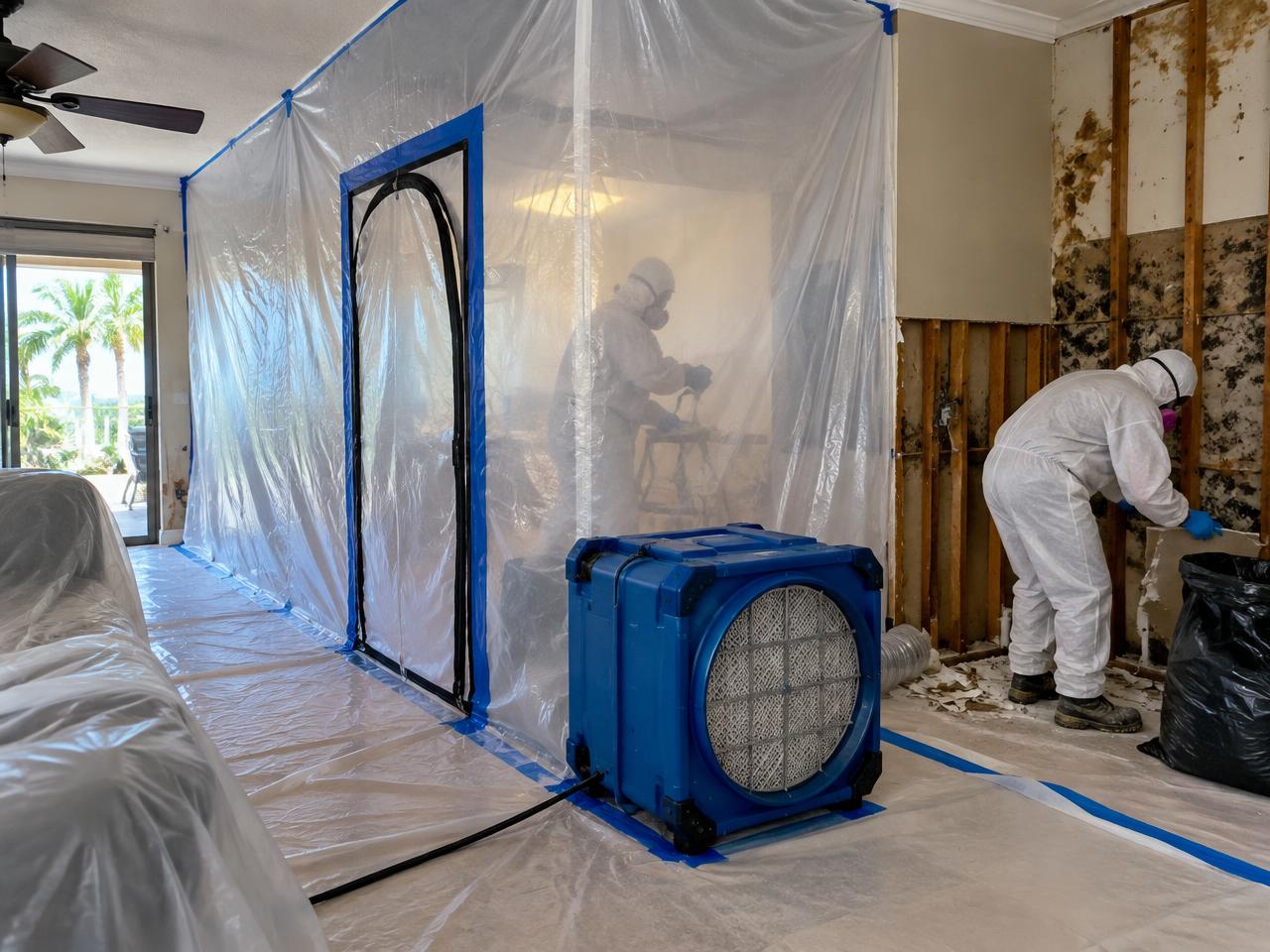
Experiencing sudden water intrusion from an appliance failure, plumbing break, or severe Florida storm requires prompt attention. Until professional water damage restoration teams arrive on site, following basic safety and stabilization steps can prevent secondary losses and protect your household.
Immediate Safety Checklist
Before handling wet belongings or cleaning surfaces, verify that your environment is completely safe:
- Evaluate structural stability: Stay out of rooms where ceilings are wet, discolored, or actively sagging.
- Watch for electrical hazards: Avoid entering standing water if electrical outlets or appliances are submerged. Never turn on ceiling light fixtures if the ceiling above is damp.
- Prevent slip-and-fall accidents: Tile and laminate flooring become extremely slippery when wet. Wear sturdy, non-slip footwear.
- Watch heavy materials: Saturated drywall, carpeting, and upholstery can be deceptively heavy; avoid lifting heavy wet items alone.
Steps to Take While Help Is on the Way
If it is safe to enter the affected area, focus on preliminary stabilization:
- Remove standing water: Use clean mops, towels, or a squeegee to blot and clear excess standing water. Never use a standard household vacuum cleaner, as it poses an electrocution risk and can ruin the motor.
- Protect wood furniture: Wipe moisture from wood surfaces, remove lamps and decorative items, and place aluminum foil or plastic saucers under furniture legs resting on damp carpet.
- Elevate soft furnishings: Remove and prop up wet upholstery cushions to allow air circulation.
- Relocate delicate items: Move artwork, photos, books, magazines, and loose items off wet floors to prevent dye transfer and staining onto carpeting.
- Support indoor drying: If your electrical service is verified safe, run your central air conditioning to draw humidity out of the air.
Why Fast Professional Mitigation Matters in Florida
In Florida's humid climate, moisture trapped behind baseboards, beneath flooring, and inside wall cavities can foster microbial growth in as little as 24 to 48 hours. Thorough moisture mapping and structural drying are critical steps to prevent the need for extensive mold remediation later.
Whether you are dealing with storm intrusion in Central Florida or an AC overflow in Fort Lauderdale, our licensed team is ready to evaluate your property. If you suspect moisture has migrated into building materials, contact Ahold of Mold Environmental for professional assessment and restoration guidance.