When major national media outlets first chronicled the story of Melinda Ballard, her family, and their sprawling 11,000-square-foot estate in Dripping Springs, Texas, the public became acutely aware of a problem that building science had grappled with quietly for decades. After an undetected pipe leak allowed moisture to saturate subflooring and drywall, extensive colonies of Stachybotrys chartarum, Aspergillus, and Penicillium spread behind finished walls, culminating in a historic $32 million jury verdict against an insurance carrier.
While that case became Exhibit A in courtrooms nationwide, it also spotlighted the fundamental conditions required for indoor fungal proliferation: persistent moisture, cellulose-rich building materials, and warm temperatures. For homeowners in humid regions like Central Florida and South Florida, the case demonstrated why moisture intrusion can never be left unaddressed.
The Anatomy of Moisture Intrusion and Fungal Growth
Indoor mold colonization does not happen in a vacuum. Mold spores exist naturally in outdoor ambient air across every ecosystem. Problems arise indoors only when these microscopic spores encounter standing water or sustained elevated humidity. When wallboard, wood framing, or carpet backing remains wet for longer than 24 to 48 hours, dormant spores germinate and form visible colonies.
In Ballard's residence, the trouble began with an unnoticed plumbing leak beneath hardwood flooring. Months later, warping floorboards revealed saturated subflooring where moisture had collected in dark, unventilated cavities. By the time exploratory cuts were made into the drywall, thick dark growth had colonized the paper backing of the wallboard throughout multiple rooms.
Similar challenges arose in high-profile construction defect disputes in California condominium complexes and public buildings, where trapped rainwater from improperly flashed windows, roof penetrations, or pinhole plumbing leaks created hidden microbial reservoirs. When building envelopes fail, addressing structural water damage through prompt water damage restoration is essential to stop microbial proliferation before it compromises interior finishes.
The Scientific Debate and Environmental Assessment
The national publicity surrounding high-profile litigation fueled passionate debate within the medical and scientific communities. Researchers investigated whether specific metabolic byproducts, such as mycotoxins produced by molds like Stachybotrys, caused unique systemic symptoms beyond standard allergic sensitization. While public health agencies like the Centers for Disease Control and Prevention (CDC) emphasized that individuals exhibit wide variations in allergic sensitivity and respiratory response, consensus formed around one fundamental point: chronic, extensive moisture damage and microbial contamination should not be allowed to persist in any occupied building.
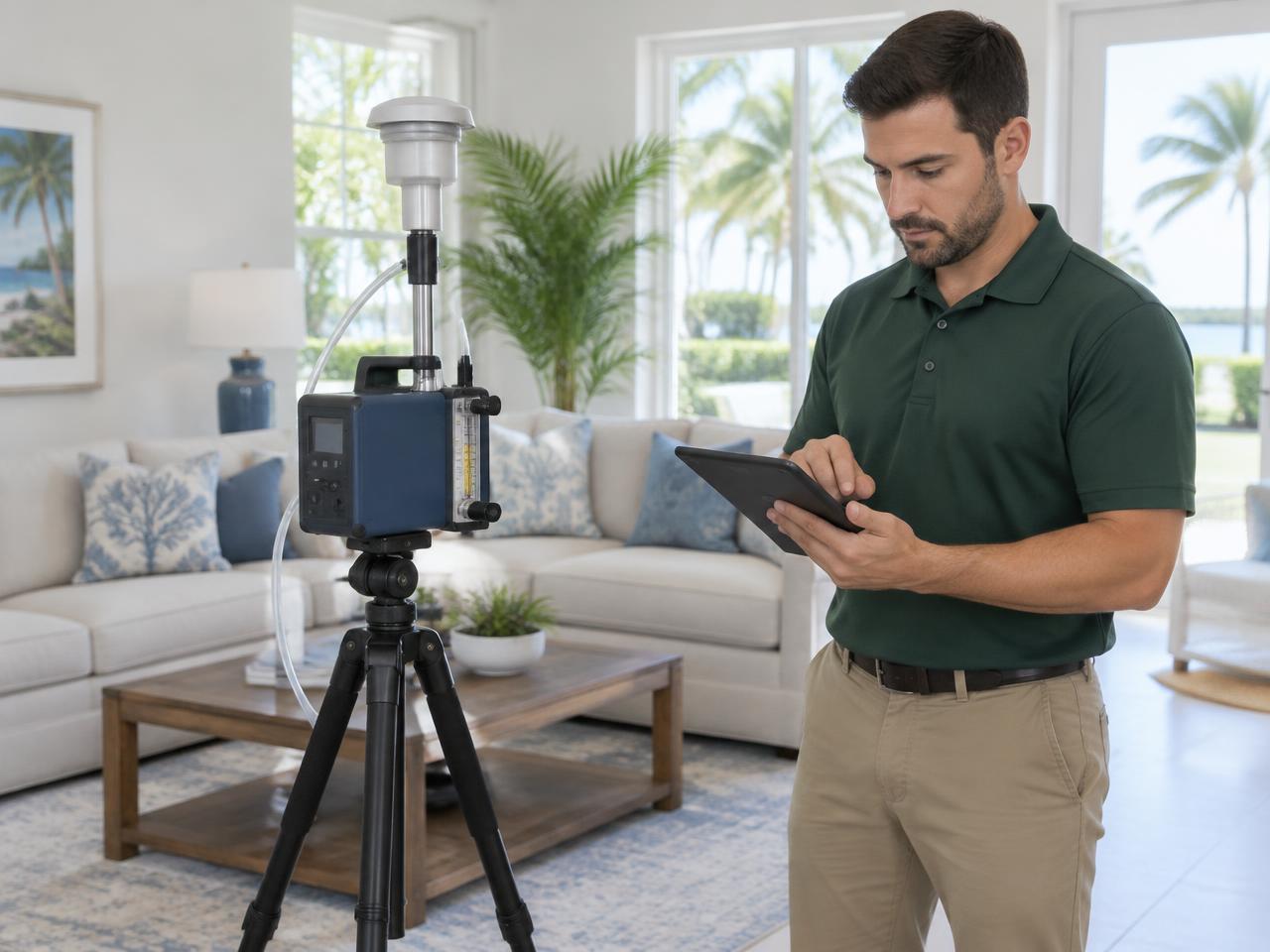
Early cleanup efforts often relied on contractors without standardized protocols, but the industry rapidly evolved toward scientifically defensible investigative methods. Rather than guessing at the source or severity of contamination, property managers and homeowners began utilizing formal mold testing—including calibrated air sampling, surface direct exams, and thermal moisture mapping—to identify the exact species present and trace hidden moisture pathways.
How Florida Regulates Mold Assessment and Remediation
In response to national concerns over uncredentialed contractors capitalizing on homeowner anxiety, Florida enacted strict consumer protection standards under Florida Chapter 468 Part XVI. Today, Florida law establishes clear professional boundaries that protect property owners:
- Independent Licensing: Florida issues distinct licenses for Mold Assessors (MRSA) and Mold Remediators (MRSR).
- Conflict of Interest Prohibitions: A company or individual licensed as a mold assessor cannot perform the remediation on the same residential or commercial project within a 12-month period. This statutory separation ensures that the professional who tests and evaluates your indoor environment has zero financial incentive to inflate remediation scopes.
- Rigorous Containment Protocols: Legitimate remediation requires documented engineering controls, including negative air pressure containment, HEPA filtration, and strict post-remediation clearance verification.
Under these standards, professional mold remediation focuses on physical removal of colonized porous materials, HEPA vacuuming, anti-microbial treatment of salvageable framing, and permanent correction of the underlying moisture issue.
Insurance Shifts and Florida's $10,000 Mold Sublimit
The landmark Ballard trial and subsequent nationwide claims caused insurance carriers to re-evaluate how policies handle water-related losses. Prior to the early 2000s, property insurance forms frequently lacked distinct caps or exclusions for microbial growth stemming from covered water losses.
Today, Florida homeowners face a very different property insurance landscape. Most standard residential policies strictly limit coverage for mold remediation, commonly imposing a $10,000 mold sublimit. Furthermore, insurance carriers require clear documentation that the contamination resulted from a sudden and accidental covered peril—such as an active burst supply pipe—rather than long-term neglect, slow leaks, or ambient humidity. Property owners who suspect an unaddressed leak must act immediately to document the source and initiate mitigation before limits are exhausted or claims are denied.
Actionable Takeaways for Florida Property Owners
The national headlines of the past offer clear, practical lessons for managing residential and commercial property today:
- Never Ignore Plumbing Anomalies: Buckled floorboards, damp baseboards, or subtle musty odors signify active moisture migration behind structural cavities.
- Maintain Controlled Indoor Humidity: In our subtropical climate, keeping indoor relative humidity below 55% using properly sized air conditioning and dedicated dehumidifiers is the first line of defense.
- Insist on Independent Assessment: If you suspect elevated moisture or fungal growth, work with a licensed Florida mold assessor who provides independent testing, comprehensive moisture mapping, and a detailed remediation protocol.
Whether managing a condominium in Broward County or a single-family home in Volusia County, taking a proactive, science-based approach ensures your property remains structurally sound and environmentally healthy. If you have questions about hidden moisture or indoor air quality, consider contacting a licensed assessor to evaluate your space objectively.