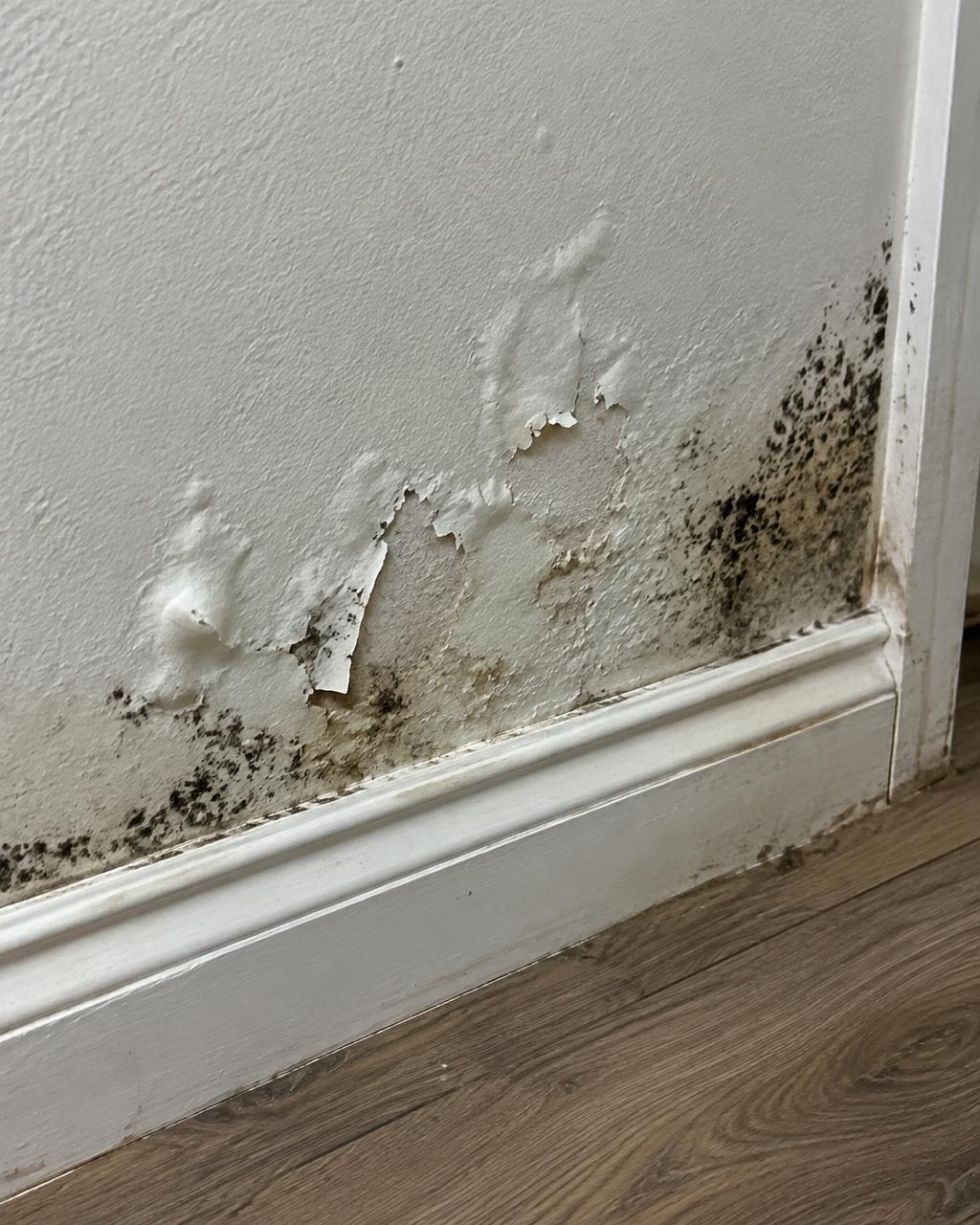
Knowing your home has water damage isn’t always as straightforward as walking into a room with standing water. While a burst pipe or a flash flood during rainy season leaves no question, many of the most destructive moisture problems develop quietly out of sight.
Florida's heat and persistent ambient humidity make early detection critical. Catching moisture before it spreads deep into subfloors and wall cavities can save thousands in repairs. Here are the most common signs that your property has hidden water damage:
- Dark spots and discoloration: Water staining on drywall, ceilings, or baseboards typically indicates an active leak above or behind the surface. In Florida homes, condensation from attic AC ducts or a wind-driven roof leak often produces these telltale brown or yellow rings. If damp to the touch, the intrusion is ongoing.
- Cracking, bubbling, or peeling paint: When moisture saturates drywall, paint loses adhesion. Bubbling latex paint, flaking coatings, or swollen baseboards are clear signs of water trapped inside the wall assembly.
- Pooling or recurring puddles: Unexplained water pooling near water heaters, under vanities, or around the perimeter of sliding glass doors points to failing seals, pipe leaks, or exterior water penetration that requires immediate investigation.
- Sounds of running water: If you hear dripping, trickling, or hissing sounds behind walls when no faucets or appliances are running, you may have a pressurized supply line leak or an underslab plumbing failure.
- Unexpected spikes in utility bills: A sudden increase in your monthly water bill without a change in household usage often signals a hidden plumbing leak. Addressing the problem quickly through professional water damage restoration helps stop waste and protects your structural materials.
- Visible mold growth: Mold requires moisture to thrive. If you notice dark, green, or powdery speckling along baseboards, behind furniture, or around AC supply vents, excess moisture is present. A licensed professional can perform targeted mold testing to assess the severity before starting containment and cleanup.
- Persistent musty odors: Damp building materials generate a distinct earthy or sour odor. Even if water stains aren't immediately visible, a persistent musty smell inside cabinets or near air handlers suggests concealed dampness and possible microbial activity that warrants comprehensive mold remediation.
- Roof or exterior envelope damage: Cracked tiles, lifted shingles, or damaged flashing allow tropical downpours to penetrate the attic and ceiling drywall. Regular exterior inspections help you spot vulnerable points before interior water damage takes hold.
What should you do if you suspect water damage?
Lingering moisture quickly weakens structural framing and creates ideal conditions for indoor air quality issues. Effective restoration requires commercial moisture meters, thermal imaging cameras, and industrial dehumidification equipment to ensure structural materials dry thoroughly.
If you suspect active water intrusion in Central Florida or need prompt service in South Florida, contact our licensed team. Family-owned since 1996, Ahold of Mold Environmental holds dual Florida state licenses as a Mold Assessor (MRSA3074) and Mold Remediator (MRSR4581) to help restore your property safely and thoroughly.