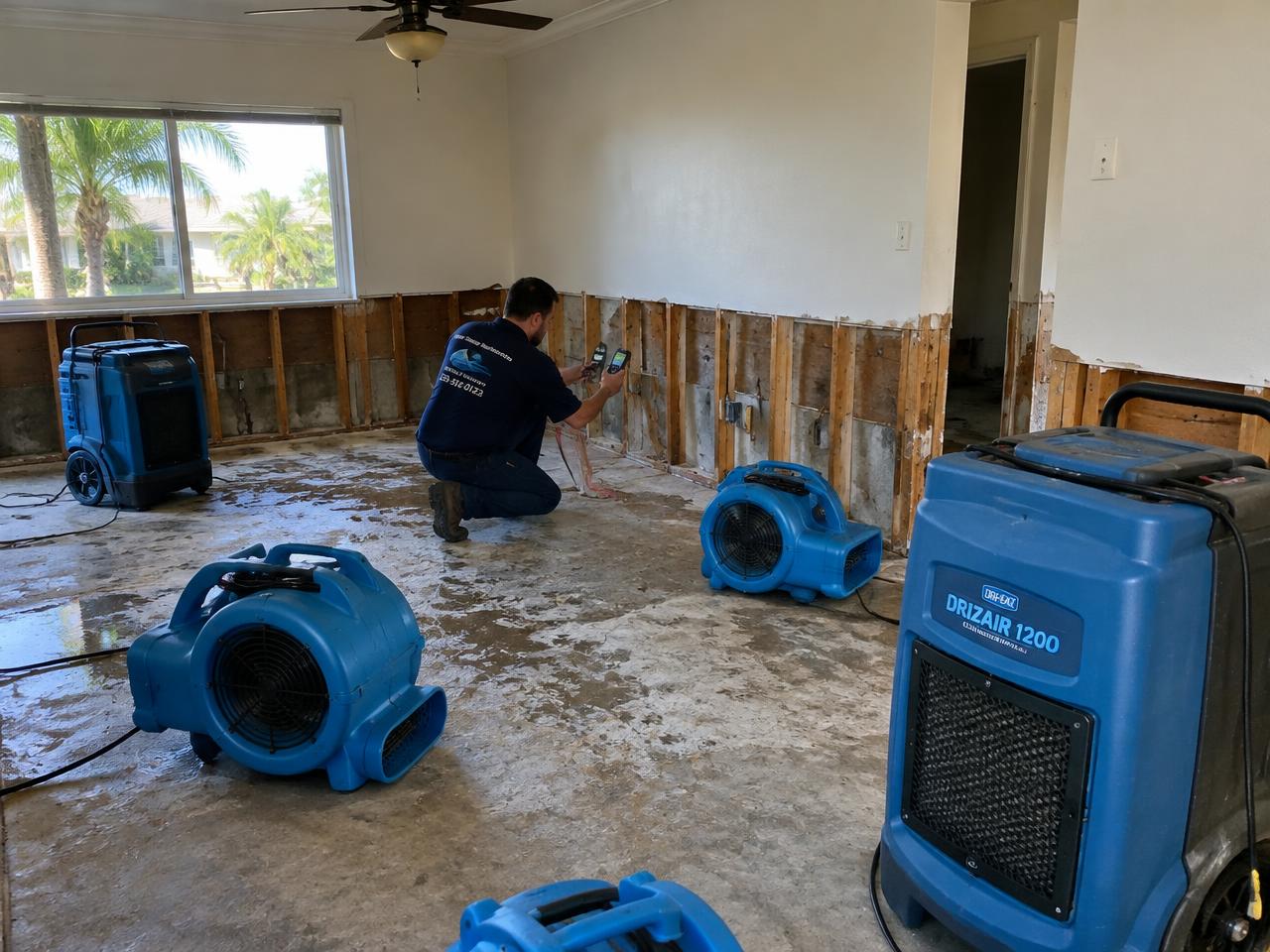
Discovering mold in your living space is a frustrating experience for any homeowner. In Florida's subtropical climate, excess moisture can easily cause hidden fungal colonies to develop out of sight behind drywall, beneath floorboards, around air conditioning ducts, or above ceiling tiles.
Prompt professional intervention is essential when moisture problems arise. Professional mold testing can accurately detect hidden colonies and identify spore concentrations indoors. Here are six unmistakable signs that your home may require assessment and potential mold remediation:
- Your home has unresolved water damage:
Moisture damage does not resolve simply because standing water has been mopped up. Porous drywall, subflooring, and insulation frequently retain elevated moisture levels following roof leaks, heavy storm rains, or appliance overflows. Scheduling water damage restoration and mold testing after any intrusion helps stop colonization before it spreads. - You have leaking plumbing or AC drain lines:
Slow leaks behind bathroom walls, under kitchen sinks, or from clogged air conditioning condensate drain lines provide a continuous source of moisture. Even after your plumber repairs the pipe, residual dampness can foster mold growth within wall cavities that requires professional containment and drying. - You notice a persistent musty odor:
Mold produces microbial volatile organic compounds (mVOCs) that generate a distinct, earthy, or damp smell. If your home has a lingering musty aroma that returns despite cleaning and air fresheners, fungal growth is likely hidden in your HVAC system or wall cavities. - You can see visible mold growth:
If you see dark spots, fuzzy patches, or powdery discoloration spreading across walls, baseboards, or ceiling corners, you should have it evaluated. Surface wiping with household cleaners rarely resolves root fungal structures embedded within porous materials. - Occupants experience unexplained allergy-like symptoms:
Elevated concentrations of airborne mold spores can irritate sensitive airways, trigger sneezing, runny noses, and itchy eyes, or aggravate asthma symptoms. If respiratory discomfort improves when family members leave the house, indoor air quality testing can verify whether mold is present. - Your indoor relative humidity stays above 60%:
Florida's climate is notoriously humid, making HVAC systems work overtime. If your indoor humidity consistently remains high, moisture will condense on cold surfaces such as supply registers and tile floors. Dehumidification is critical, but persistent dampness often means mold has already begun to spread.
If you have spotted any of these warnings, or if your property recently weathered significant water intrusion, contact Ahold of Mold Environmental. Our state-licensed professionals evaluate Central Florida and South Florida properties to help restore clean, balanced indoor air.