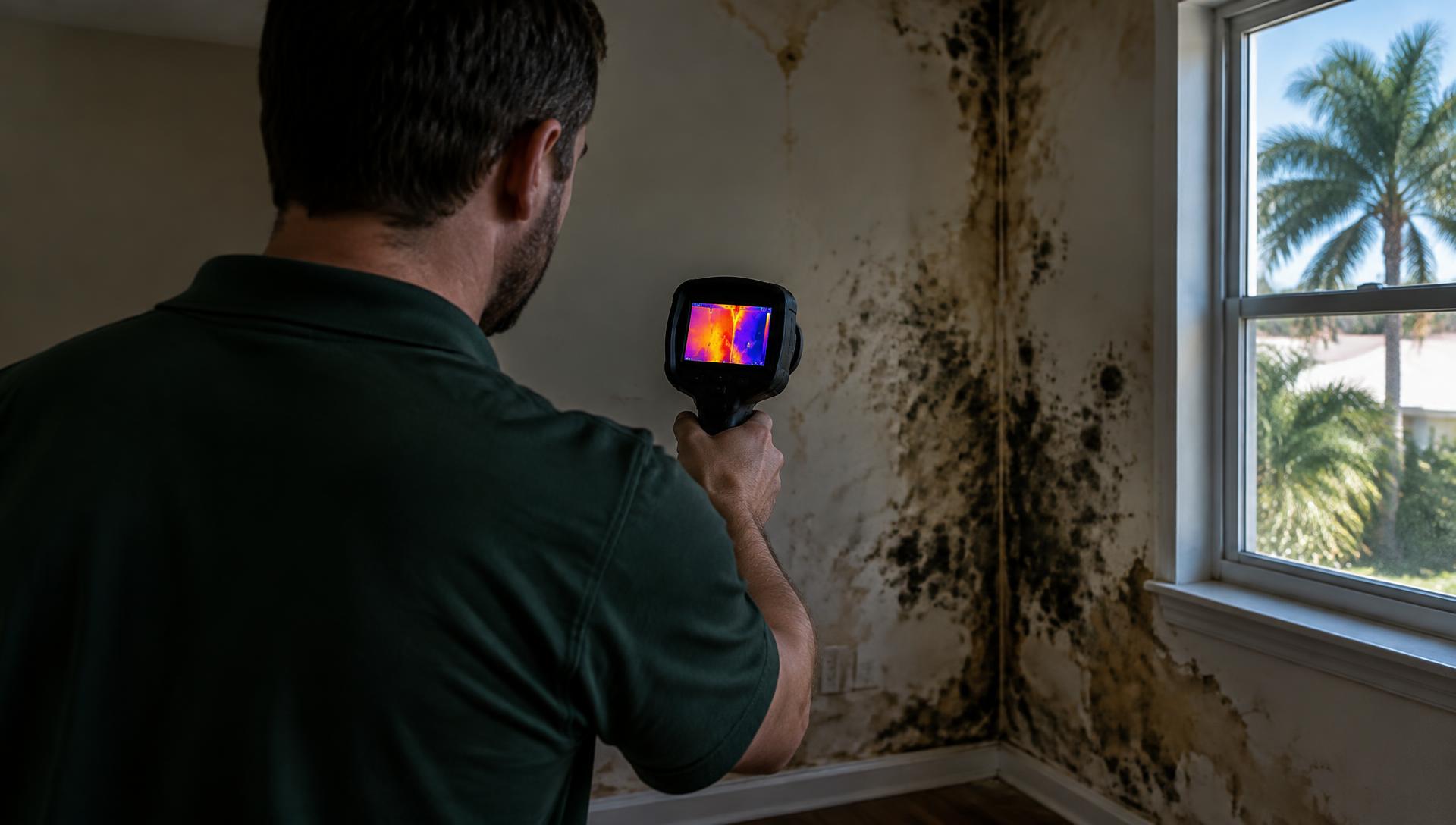
One of the most challenging aspects of water damage is that it often begins behind drywall, beneath flooring, or above ceilings where you cannot immediately see it. In Florida's subtropical climate, unaddressed moisture quickly escalates into structural issues and indoor air quality concerns. Here are the common warning signs of water damage in your home and the immediate steps you should take.
- Higher water bills: An unexplained spike in your monthly utility bill is frequently the first indicator of a hidden leak. A pinhole pipe leak behind a wall or a malfunctioning appliance line can release gallons of water daily into wall cavities and subfloors.
- Changes to walls, ceilings, or floors: Peeling paint, bubbling wallpaper, sagging drywall, and cupped or warped baseboards often point to moisture saturation. Because these signs can manifest slowly over time, any visible warping or discoloration warrants an immediate professional inspection.
- Visible staining or mold growth: Persistent moisture provides the ideal environment for microbial growth. If you observe dark spotting along baseboards, around air conditioning vents, or under sinks, moisture has likely been present for several days. A licensed professional can perform mold testing to assess the full extent of the issue.
- Musty indoor odors: You will often smell moisture before you see it. An earthy, musty odor—especially when the air conditioning cycles on—signals trapped dampness behind structural materials or inside ductwork. Masking odors with fresheners only delays finding the underlying moisture source.
What Should You Do When You Suspect Water Damage?
Acting quickly is essential to protect your home's structure and minimize the likelihood of extensive microbial growth. Follow these steps as soon as you suspect moisture intrusion:
- Stop the water source: If you suspect a plumbing failure, locate and shut off the main water valve to prevent further saturation.
- Call a licensed professional: Florida law under Chapter 468 Part XVI requires licensed professionals for mold assessment and remediation. Enlisting a qualified crew for water damage restoration ensures moisture meters and thermal imaging tools are used to locate all trapped water and dry the structure thoroughly.
- Document the damage: Take detailed photos and videos of the standing water, damaged personal property, and affected building materials before cleanup begins. This documentation is vital when filing a claim with your insurance provider.
- Review your insurance policy: Many Florida property insurance policies cover sudden and accidental plumbing events, though gradual leaks may be excluded and mold remediation coverage is frequently subject to a $10,000 policy sublimit.
Restore Your Property with Ahold of Mold Environmental
Whether you are dealing with an active plumbing leak, roof intrusion after heavy rain, or secondary microbial growth requiring comprehensive mold remediation, acting early saves time and money. Our team brings decades of experience to both Central Florida (Volusia, Flagler, and Brevard counties) and South Florida (Broward County). Contact our team to schedule an inspection and protect your home today.