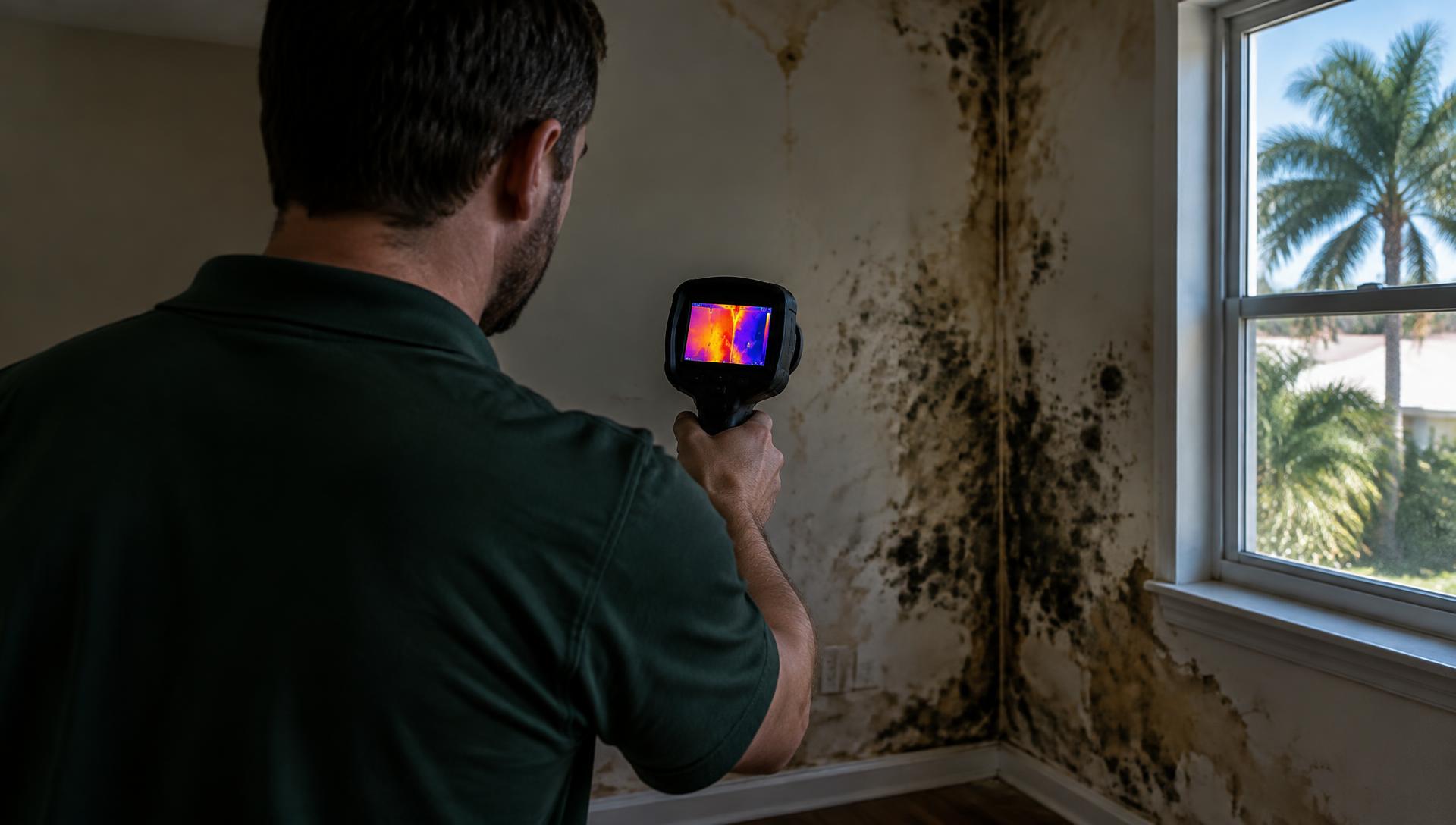
One of the most challenging aspects of indoor mold is that property owners are often unaware of its presence. While visible surface growth sometimes appears on damp bathroom grout or window sills, hidden moisture in Florida homes frequently fosters colonies behind drywall, under flooring, or inside air conditioning ductwork long before it becomes visibly obvious.
Because mold thrives in humid subtropical environments, identifying potential exposure early is essential. If anyone in your household experiences persistent, unexplained reactions indoors, it is wise to consult a healthcare provider while scheduling a professional mold inspection and testing service to evaluate your property. Common signs that suggest an indoor mold issue may be present include:
- Respiratory and allergy symptoms: Heightened indoor mold spore counts frequently trigger upper respiratory irritation. Occupants may notice persistent sneezing, nasal congestion, itchy eyes, throat irritation, coughing, or wheezing. Those with pre-existing asthma or respiratory sensitivities often find their conditions aggravated indoors.
- Persistent musty odors: Microbial volatile organic compounds (mVOCs) released by active colonies produce that familiar stale, damp, or earthy smell. If a room smells musty despite regular cleaning, hidden moisture is likely supporting fungal growth.
- Skin and eye irritation: Airborne spores and fungal fragments can cause localized contact irritation, leading to red, watery eyes or unexpected skin itching and rashes.
- General fatigue and indoor discomfort: Poor indoor air quality compounded by mold exposure can leave occupants feeling sluggish, fatigued, or experiencing frequent headaches that diminish when spending time outdoors or away from the building.
If you suspect an issue in your living space, evaluating your indoor air quality with a thorough healthy home assessment helps pinpoint both the moisture source and the extent of contamination. In Florida, state regulations under Chapter 468 separate mold assessment from remediation to ensure objective, conflict-free evaluations.
Family-owned and operating in Florida since 1996, Ahold of Mold Environmental provides licensed mold assessment (MRSA3074) and mold remediation (MRSR4581) across Central Florida and South Florida, including Fort Lauderdale and Daytona Beach. Whether dealing with storm-related water intrusion or chronic humidity issues, our team uses calibrated diagnostic tools to locate hidden colonies and design clear, effective remediation protocols.
Do not let unchecked moisture compromise your indoor environment. Contact Ahold of Mold Environmental today to schedule an inspection with our licensed professionals.