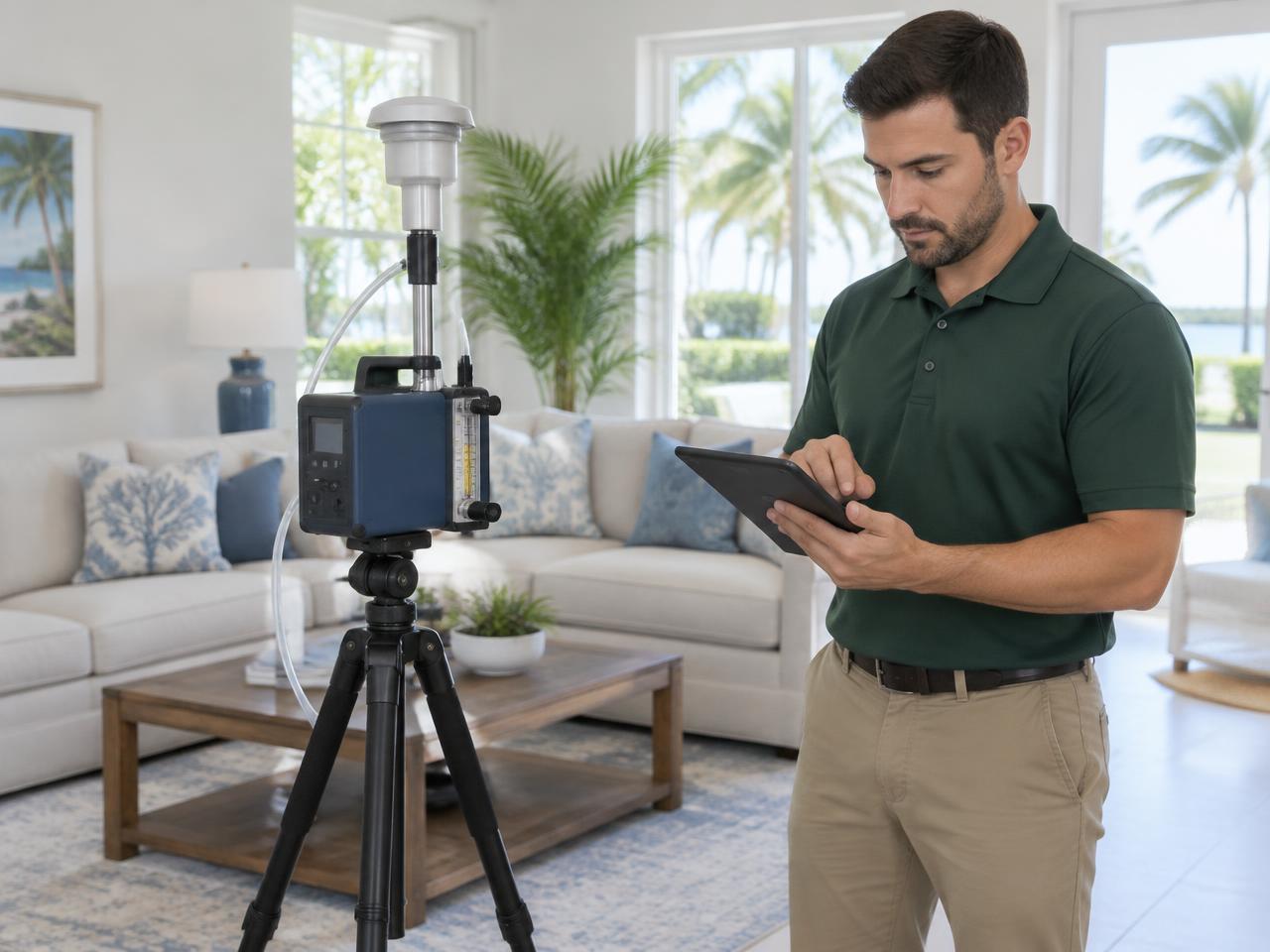
Water damage can disrupt your home quickly, whether caused by an unexpected plumbing break, an air conditioning condensate overflow, or wind-driven rain during Florida's rainy season. Even after standing water has been cleared, hidden structural moisture often remains. Having your property evaluated through professional mold testing after water damage is essential to ensure moisture has not settled out of sight.
Mold Develops Rapidly Following Moisture Intrusion
Water intrusion is deceptive. Even if you quickly mop up pooling water or run household fans, building materials such as drywall, baseboards, and carpet padding readily absorb moisture. In Florida's subtropical climate, elevated indoor humidity provides an ideal environment for mold spores to germinate within 24 to 48 hours of initial water contact.
Lingering moisture inside closed wall cavities, under subflooring, or within HVAC ductwork often escapes visual detection. Even when paired with standard water damage restoration efforts, specialized diagnostic tools—such as calibrated moisture meters, hygrometers, and infrared thermography—are necessary to confirm whether structural framing and substrate layers have returned to dry standard baselines.
A licensed Florida mold assessor determines the extent of moisture migration, identifies microbial reservoirs, and provides an objective assessment of whether formal containment and remediation protocols are warranted.
Why Addressing Post-Water Intrusion Mold Is Critical
Allowing moisture to linger unaddressed can lead to widespread property deterioration and indoor air quality concerns:
- Structural Degradation: Unchecked mold feeds on cellulose materials like drywall paper, ceiling tiles, and wooden framing members, weakening these components over time.
- Persistent Musty Odors: Active colonies release microbial volatile organic compounds (mVOCs) that create sour, musty odors which penetrate furnishings and fabrics.
- Indoor Air Quality Concerns: Elevated spore concentrations inside conditioned spaces can trigger respiratory irritation, eye discomfort, and sinus congestion for sensitive occupants.
If an assessment confirms colonization, following a defined protocol for mold remediation under Florida Chapter 468 standards ensures containment, proper HEPA air filtration, and safe removal of impacted porous materials. Whether your property is in Central Florida or South Florida, confirming that your home is completely dry and mold-free preserves structural value and restores a healthy living environment.