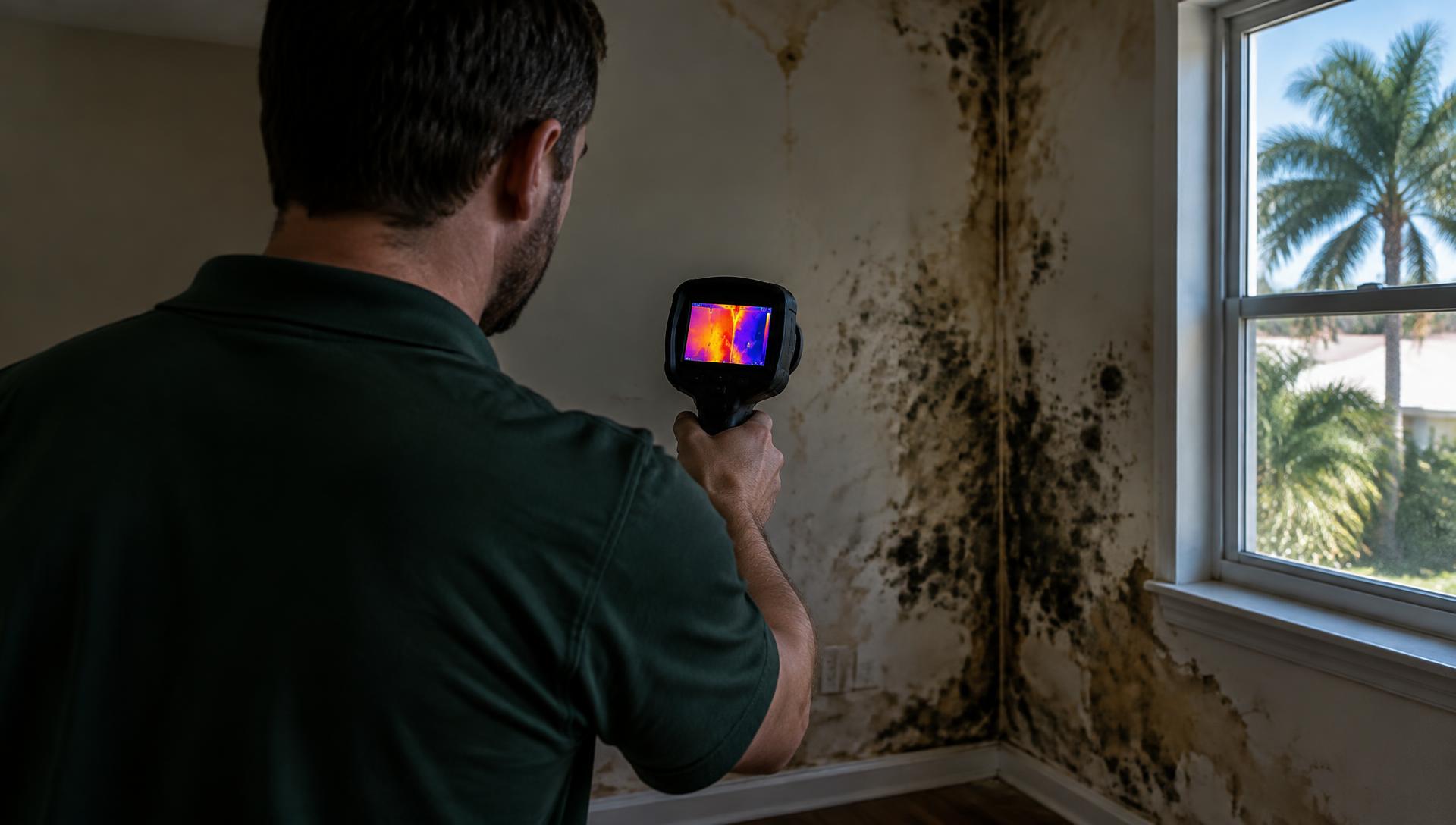
There are many different fungal species that appear dark green or black, and finding any noticeable fungal growth inside your home is a sign of an underlying moisture problem. In Florida’s warm, subtropical climate, elevated indoor humidity and water intrusion frequently create ideal breeding grounds for fungi such as Stachybotrys, Cladosporium, and Aspergillus. While public perception often labels any dark growth as "toxic black mold," any indoor mold growth can impact indoor air quality and degrade building materials. When contamination occurs, consulting a state-licensed professional for mold testing or remediation is the safest path forward.
If you have spotted dark spots on your walls, baseboards, or ceiling tiles, understanding how to manage and prevent moisture is essential. Read on for our tips on removing and preventing black mold in Florida residences.
Does Black Mold Simply Wipe Off?
Homeowners often wonder if surface wiping is sufficient to resolve a mold issue. While wiping a non-porous fixture (such as glazed ceramic tile or metal) with a damp cloth might remove visible accumulation, wiping alone rarely solves the issue on drywall, wood, or acoustic ceiling tiles. Disturbing dry mold without proper containment aerosolizes thousands of microscopic spores into your living space, where they can be drawn into your air handler and circulated throughout the home. Furthermore, fungi send microscopic hyphae (root structures) deep into porous materials, meaning surface wiping leaves the root system intact to regrow as soon as relative humidity climbs.
Cleaning Surfaces Affected by Mold
For minor surface growth covering less than a few square feet on non-porous or semi-porous surfaces, homeowners can take cautious DIY steps:
- Wear Protective Gear: Always wear an N95 respirator mask, eye protection, and non-porous gloves to prevent inhaling or touching spores during cleaning.
- Avoid Using Bleach on Porous Materials: Chlorine bleach is an oxidizer that evaporates quickly on surfaces, but its high water content can soak into drywall or wood framing, inadvertently providing moisture that fuels deeper root growth. Instead, use an EPA-registered disinfectant or mild detergent formulated for institutional mold cleanup.
- Clean and Dry Promptly: Thoroughly dry the cleaned area using dehumidifiers or fans once surface cleaning is complete. If materials like carpet padding or insulation are thoroughly colonized, they must be bagged, discarded, and replaced.
If the affected area exceeds 10 square feet, or if mold is present inside your air conditioning ductwork, skip DIY chemicals and contact a professional licensed in mold remediation to set up negative-pressure containment and HEPA air filtration.
Preventing Black Mold in Florida Homes
Like all molds, dark mold varieties require moisture, warmth, and organic food sources (such as paper drywall backing or wood). You can drastically reduce your risk by taking these preventive measures:
- Maintain Indoor Humidity: Keep indoor relative humidity between 30% and 50% (never consistently above 60%). Ensure your air conditioning system is properly sized so it runs long enough to dehumidify the air.
- Inspect Plumbing and Roofs: Regularly check under kitchen and bathroom sinks, inspect water heater pans, and check around your AC condensate drain line for blockages. Address minor leaks immediately before mold takes hold.
- Address Storm Damage Fast: Following heavy tropical rain, schedule professional water damage restoration to dry soaked framing and subfloors within 24 to 48 hours.
- Ventilate Wet Zones: Run exhaust fans during and for twenty minutes after showering, and ensure your clothes dryer vents directly outdoors rather than into an attic or utility room.
Indoor Air Quality and Moisture Concerns
Beyond being unsightly and causing musty odors, indoor fungal growth can irritate sensitive individuals. Exposure to elevated spore counts often triggers allergic-type reactions, such as coughing, wheezing, sneezing, skin irritation, and nasal congestion, particularly among individuals with pre-existing respiratory conditions or asthma. The Florida Department of Health advises eliminating indoor mold sources and drying water-damaged structures promptly to preserve indoor environmental health.
Whether you need an inspection in Central Florida or mold cleanup in Fort Lauderdale, the licensed team at Ahold of Mold Environmental has delivered trusted indoor air quality solutions across the state since 1996. Contact us today to schedule a comprehensive assessment of your property.