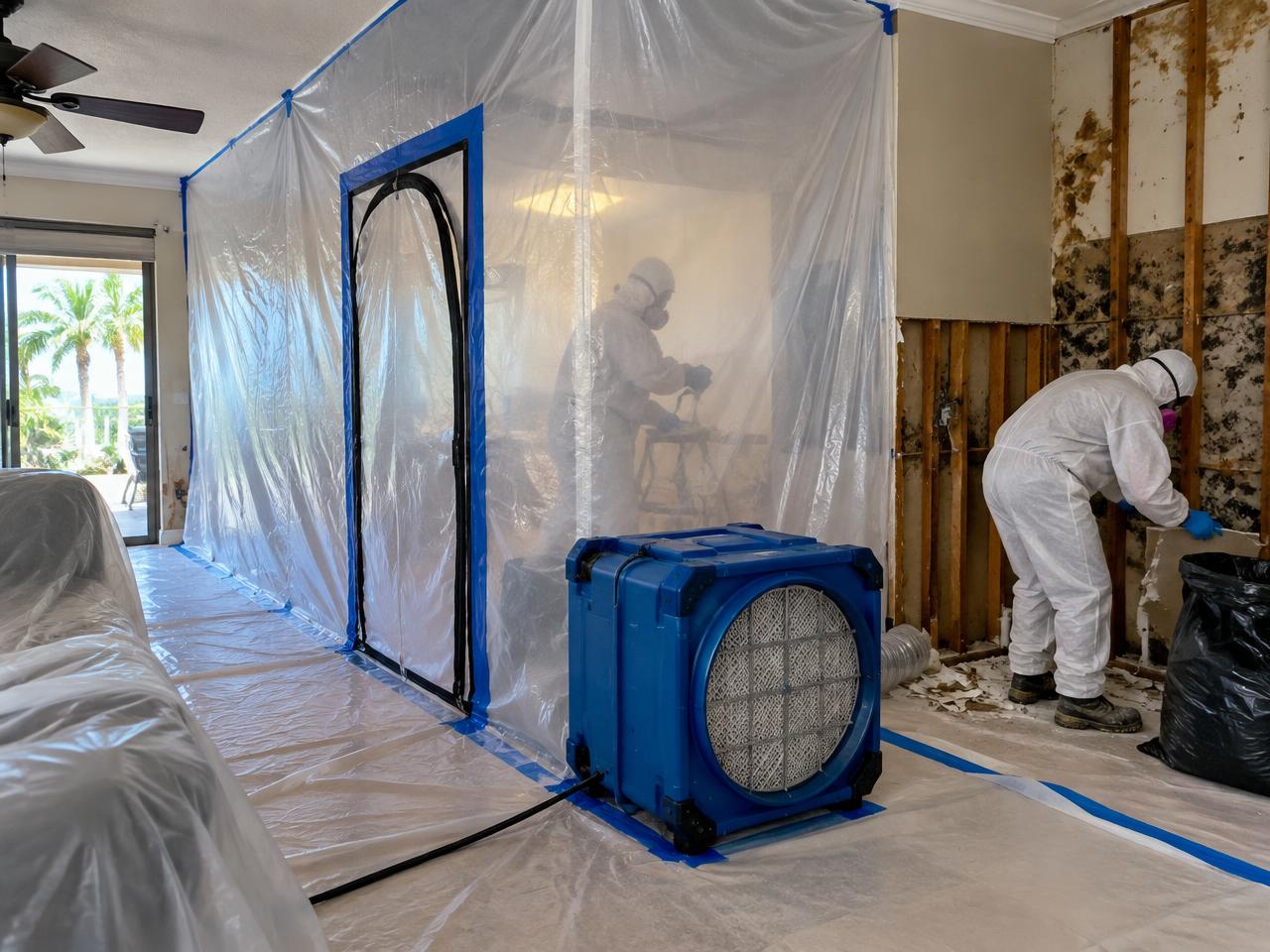
When summer arrives across Florida, so does hurricane season and months of relentless afternoon downpours. Tropical storms and sustained rain events are not something to take lightly, and keeping your property sealed is critical. Without proper preparation, you could easily find yourself dealing with moisture intrusion, compromised building materials, and the need for professional water damage restoration.
Fortunately, proactive maintenance helps you seal vulnerable points and divert water before it breaches your interior spaces.
Clean and Secure Your Gutters
This is one of the most effective maintenance tasks for Florida homeowners. Gutters and downspouts must be cleared of pine needles, leaves, and storm debris before the height of the wet season. While gutter screens and covers can slow the accumulation of leaves, fine debris and silt still require manual cleaning.
During a typical Florida deluge, clogged gutters immediately overflow. Instead of carrying water safely away from your structure, the excess spills directly down your exterior walls and pools against your foundation. In heavy winds, overflowing or poorly anchored gutters can also pull loose from the fascia, damaging the roof edge and soffits.
Inspect Your Home’s Perimeter and Grading
Because most Florida houses sit on concrete slab-on-grade foundations, the perimeter where the exterior wall meets the ground deserves careful inspection. Ensure the surrounding soil and mulch beds are properly graded, sloping gently downward and away from your home's exterior.
Verify that downspout extensions discharge water at least four to six feet away from the slab. When high-volume downpours drop inches of water in an hour, improperly positioned downspouts create localized flooding that can back up through weep screeds, crawlspace vents, or beneath sliding glass door tracks.
Check Windows, Stucco, and Rooflines
Wind-driven rain can penetrate even microscopic gaps around window frames, sliding doors, and utility penetrations. Inspect exterior caulk for cracking, peeling, or shrinkage, and check stucco surfaces for hairline fissures that could allow water behind the building envelope.
Inside, look for faint water stains, peeling paint, or discoloration along baseboards and ceilings, particularly near exterior walls and window headers. In humid conditions, unaddressed leaks quickly lead to hidden decay. If you suspect moisture has entered wall cavities or your attic, scheduling professional mold testing can verify whether microbial growth has taken hold.
Prepare Early to Avoid Costly Structural Repairs
Shielding your property from seasonal moisture is largely a matter of routine vigilance—identifying minor vulnerabilities before a tropical system tests them. Family-owned and operating in Florida since 1996, the licensed team at Ahold of Mold Environmental provides comprehensive evaluations, including our healthy home assessment, to pinpoint moisture risks before they escalate. Contact our specialists in Central Florida at (386) 492-1288 or South Florida at (954) 281-2666 to protect your indoor environment.