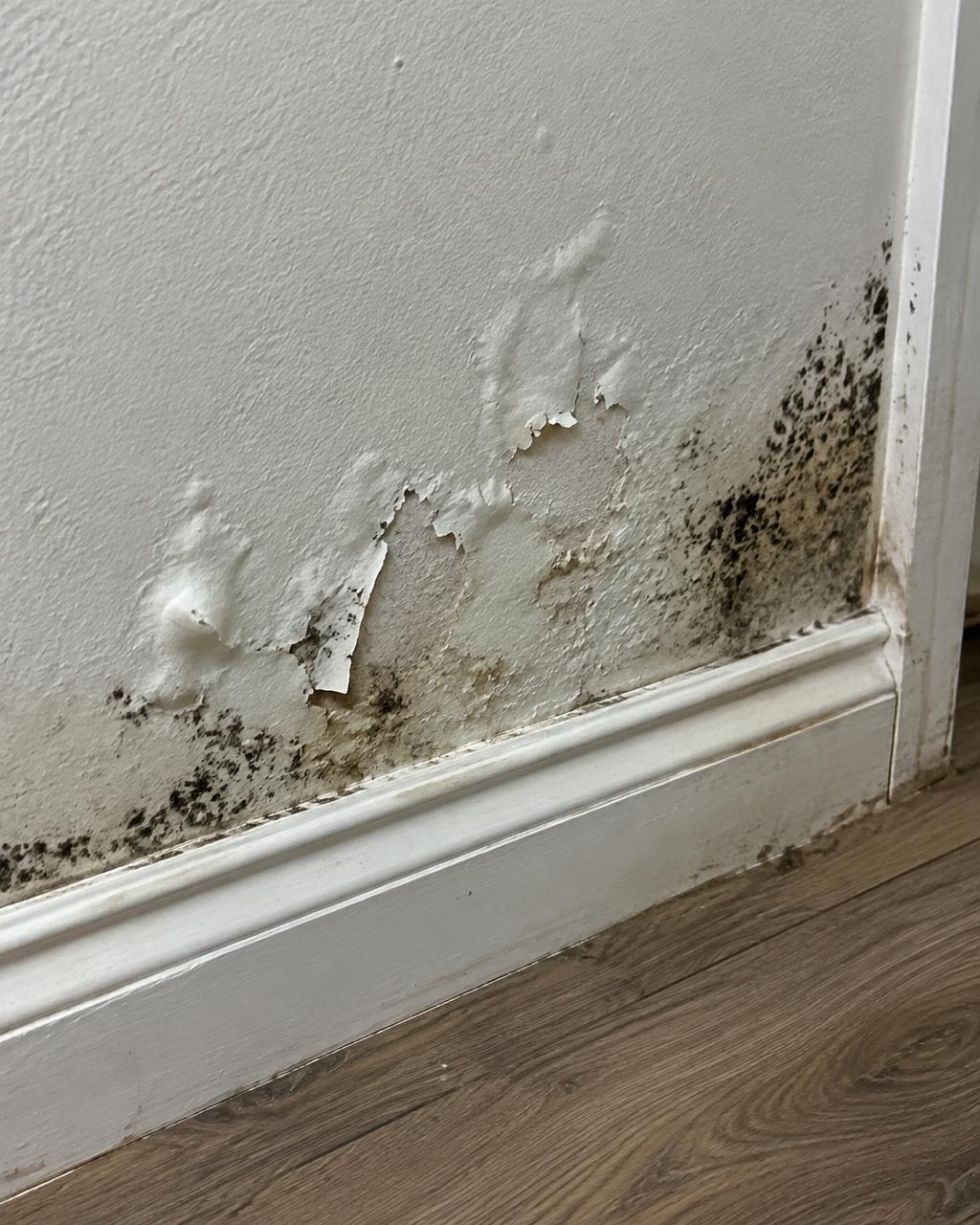
The first step in addressing any mold growth problem in a building is identifying and correcting moisture sources. In Florida's warm, humid climate, common triggers include air conditioning condensation line backups, roof leaks, plumbing failures, or high indoor relative humidity. If moisture problems are not corrected with proper water damage restoration practices, any mold cleanup or removal will serve only as a short-term measure, and the fungal growth will recur. Controlling moisture before, during, and after removal is essential to long-term success.
One of the most common misconceptions about mold is that it can be eradicated simply by spraying surfaces with over-the-counter disinfectants, biocides, or household bleach. That approach does not solve the underlying issue. The allergenic and irritant properties of mold remain active even when organisms are killed. Whether viable (living) or nonviable (dead), mold spores and cellular fragments that disperse into indoor air can still impact indoor air quality and occupant comfort.
While disinfectants may halt active reproduction, chemical treatments should never be used as a standalone solution for fungal contamination. Proper remediation requires that fungal growth be physically extracted from affected surfaces or that contaminated porous building components be completely removed from the property under controlled containment.
In determining which materials can be salvaged versus discarded, the two primary factors are porosity and the depth of growth:
- Non-porous and semi-porous materials: Hard plastics, metals, glass, tile, and structurally sound framing timber or concrete can generally be cleaned, HEPA-vacuumed, and preserved.
- Porous materials: Drywall, wallboard, acoustic ceiling tiles, wallpaper, carpeting, and upholstered furnishings absorb moisture deeply into their matrices. Once mold hyphae penetrate these substrates, they cannot be thoroughly sanitized or dried and should be bagged and discarded.
Cleanup and mold removal activities disturb fungal colonies, aerosolizing high concentrations of particulates. Individuals performing remediation must wear proper personal protective equipment (PPE), including particulate respirators, eye protection, and gloves, while establishing negative air pressure to avoid spreading spores into unaffected living spaces.
Under Florida law (Florida Statutes Chapter 468 Part XVI), contamination exceeding 10 contiguous square feet must be handled by a professional state-licensed contractor. If you suspect an extensive problem, schedule comprehensive mold testing or reach out for professional mold remediation. To discuss your property in Central Florida or South Florida, contact our licensed team for guidance.