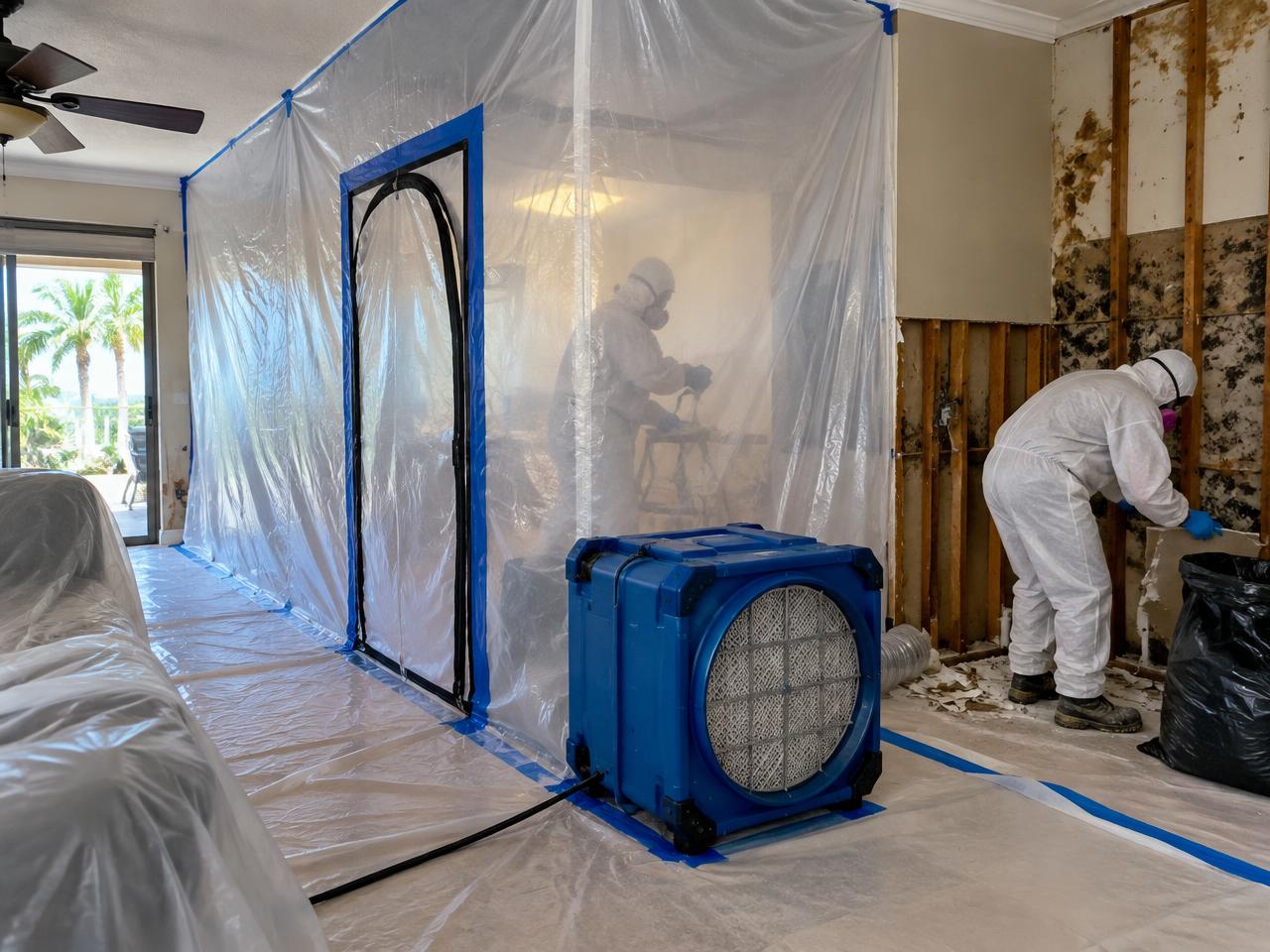
When severe hurricanes and tropical storms push storm surge and torrential rain into coastal communities across Central Florida and South Florida, homeowners face a race against the clock. After floodwaters recede, waterlogged building materials, saturated subflooring, and trapped moisture create an immediate secondary crisis: widespread, fast-spreading mold.
In the aftermath of major storms, residents often return to find their personal belongings, baseboards, and wallboards soaked. Even when standing water is pumped out quickly, moisture trapped behind door frames, under floor underlayment, and deep inside wall cavities provides ideal conditions for mold spores to germinate.
The Accelerating Factor: Florida Heat and Humidity
Mold requires two primary elements to flourish: an organic food source (such as drywall paper, wood framing, or carpet backing) and moisture. In Florida's subtropical climate, consistently high temperatures and relative humidity accelerate this process dramatically. While cooler regions might see slow fungal expansion, a flooded Florida home without functional air conditioning can develop severe fungal growth throughout multiple rooms in just two to three days.
Damp indoor environments contaminated by active mold growth can trigger coughing, wheezing, and sinus irritation among occupants, particularly individuals with existing asthma or environmental sensitivities. Attempting to live in a flood-damaged structure before complete structural drying takes place poses continued risks to both building integrity and indoor comfort.
Why Surface Cleaning and DIY Sprays Fall Short
Many property owners rush back to their properties, tear out wet carpet, and scrub remaining framing with over-the-counter cleaners or household bleach. Unfortunately, weeks later, visible mold and persistent musty odors often return.
Surface treatments fail for several clear reasons:
- Porous Absorption: Bleach sits on the surface of porous materials like dimensional lumber without penetrating the substrate, leaving fungal roots (hyphae) alive beneath the exterior layer.
- Trapped Cavity Moisture: Wall cavities that appear dry on the exterior may still harbor saturated fiberglass insulation and damp structural framing that cannot dry without specialized air movers and commercial dehumidifiers.
- Cross-Contamination: Tearing out mold-damaged drywall without negative air pressure containment spreads millions of spores into unaffected areas of the home through the HVAC ductwork.
Proper mitigation requires prompt water damage restoration that focuses on rapid moisture extraction, thermodynamic drying, and removing non-salvageable porous components under controlled containment.
Florida Regulations and Insurance Considerations
Under Florida law (Chapter 468, Part XVI), mold assessment and mold remediation must remain legally separated to prevent conflicts of interest. A licensed Mold Assessor (MRSA) performs impartial inspections and protocol writing, while an independent licensed Mold Remediator (MRSR) executes the physical removal and remediation plan.
Navigating post-storm recovery also involves insurance complexities. Many standard Florida residential property policies cap mold-related repairs at a $10,000 sublimit, and damage caused directly by rising coastal surge typically falls under National Flood Insurance Program (NFIP) policies rather than standard windstorm coverage. Documenting the damage thoroughly through independent mold testing and structural moisture mapping helps clarify the scope of remediation required.
Taking the Right Steps After Storm Damage
If your property has experienced floodwater intrusion from a tropical storm or hurricane in areas like Volusia, Flagler, Brevard, or Broward County, taking deliberate, measured steps prevents compounding damage:
- Shut off electrical power to damp areas before entering.
- Document all affected structures and personal property with photos and video before discarding materials.
- Remove soaked, porous materials (drywall, insulation, carpet padding) that cannot be safely sanitized.
- Engage licensed professionals for mold remediation to establish containment, scrub the air with HEPA filtration, and verify deep structural dryness before rebuilding begins.