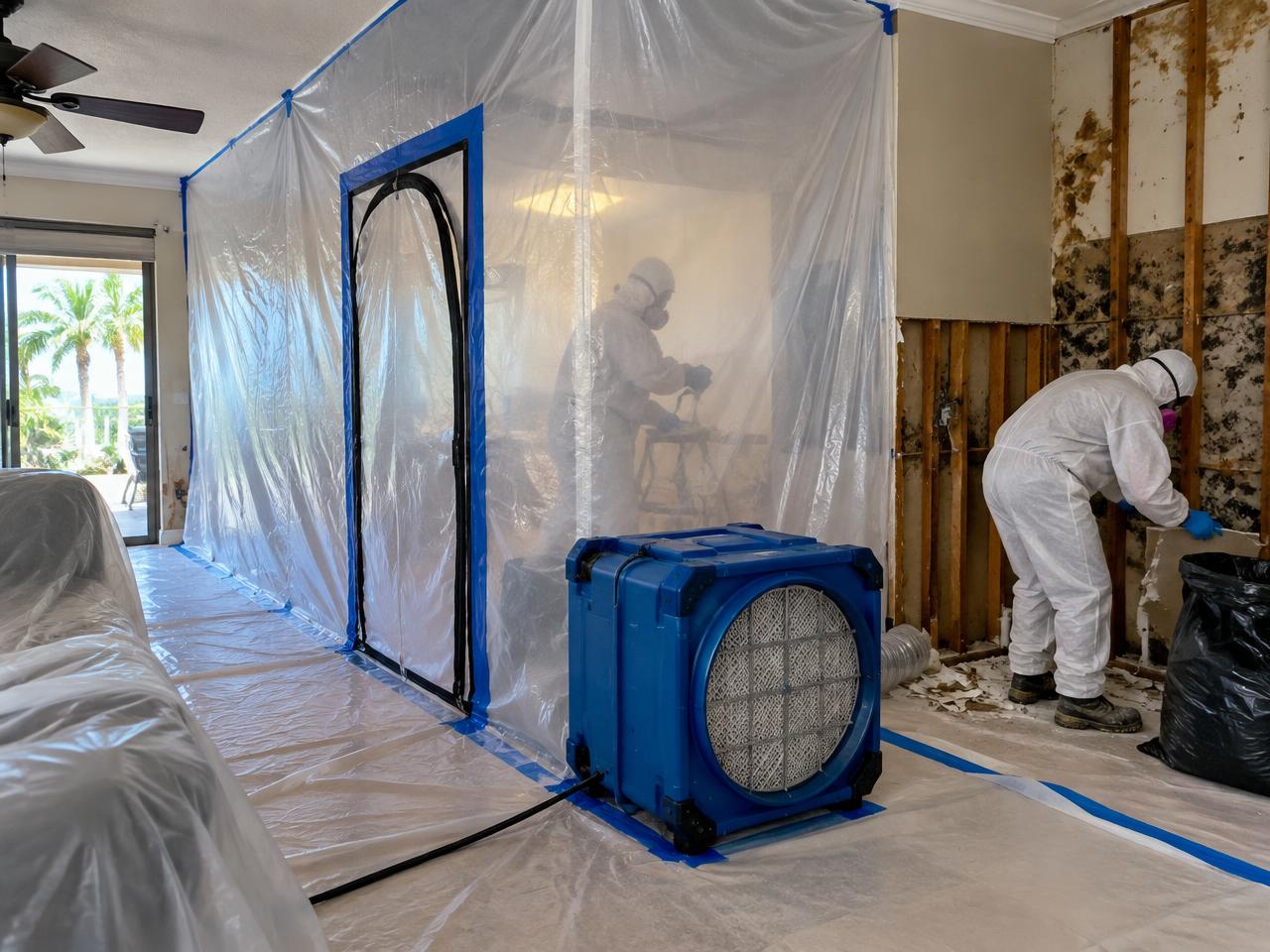
Indoor air quality directly impacts the daily comfort and well-being of everyone in your household, yet many Florida homeowners are unsure how to evaluate the air they breathe. Given Florida's subtropical climate, tightly sealed homes running air conditioning year-round can easily trap airborne pollutants, dust, and microscopic mold spores. Understanding how to check your indoor environment helps you identify hidden issues before they lead to structural damage or persistent odors.
Why is air quality testing so important in Florida?
Many homeowners assume their indoor air is clean as long as there is no visible dust or unusual odor. In reality, many microscopic contaminants—especially mold spores, volatile organic compounds (VOCs), and ultra-fine particulates—are invisible to the naked eye. In Florida, high outdoor humidity and moisture intrusion from heavy storms can create conditions where microbial growth develops inside HVAC ductwork or behind drywall, releasing airborne spores that circulate quietly throughout the property.
Home air quality testing and monitoring options
There are several proactive steps homeowners can take to test and monitor their indoor air. Here are some of the most effective approaches:
- Invest in a smart indoor air quality monitor: Modern consumer air monitors track relative humidity, temperature, total VOCs, and fine particulate matter (PM2.5). In Florida, maintaining indoor relative humidity below 50% to 60% is vital for preventing microbial growth, making a reliable hygrometer or digital monitor an excellent first line of defense.
- Install carbon monoxide and smoke detectors: Hardwired or battery-operated carbon monoxide alarms are essential safety devices that alert occupants to dangerous gas leaks from attached garages, water heaters, or backup generators often used during storm season.
- Schedule professional mold air sampling: When musty odors linger or residents experience unexplained discomfort indoors, professional mold testing provides verifiable data. Licensed assessors collect calibrated volume air samples inside and outside the home, sending them to an accredited laboratory to determine specific spore types and concentrations.
- Book a comprehensive environmental assessment: The most thorough approach is a professional healthy home assessment. A certified technician inspects the building envelope, evaluates HVAC air handler cleanliness, checks moisture levels with thermal imaging, and screens for potential pollutants.
Professional air quality testing services
Family-owned and operated since 1996, Ahold of Mold Environmental holds Florida state licenses for both mold assessment (MRSA3074) and mold remediation (MRSR4581). Whether you are located in Central Florida—including Volusia, Flagler, and Brevard counties—or in South Florida throughout Broward County and Fort Lauderdale, our experienced team provides unbiased, science-based indoor air quality evaluations.
If testing reveals elevated moisture or spore concentrations, we deliver clear, practical guidance on how to remediate the source and improve ventilation. Contact our team today to discuss your indoor air quality concerns and schedule an inspection for your home or business.