Addressing mold growth is an essential priority for any homeowner dealing with moisture issues. Because Florida's warm, humid climate allows fungal growth to establish quickly after plumbing failures or storm-related moisture intrusion, knowing the correct steps for safe cleanup is critical to protecting your home.
Why Bleach Has Limited Usefulness
When encountering surface growth, many homeowners instinctively reach for chlorine bleach. While bleach can sanitize non-porous surfaces such as ceramic tile, porcelain, or sealed fiberglass, it is largely ineffective on porous building materials. Drywall, unsealed wood, carpet padding, and insulation allow fungal hyphae (roots) to grow beneath the surface. Bleach does not adequately penetrate these materials; instead, the water content in diluted bleach can remain trapped in the substrate, feeding lingering growth once the chlorine evaporates.
The Importance of Moisture Control and Containment
Safe mold removal is not just about cleaning visible spots; it requires resolving the source of moisture. Whether the issue stems from an air conditioning malfunction, roof leak, or excess humidity, unresolved moisture will quickly cause recurrence. Homeowners dealing with recent leaks should consider professional water damage restoration to thoroughly dry building materials before remediation begins.
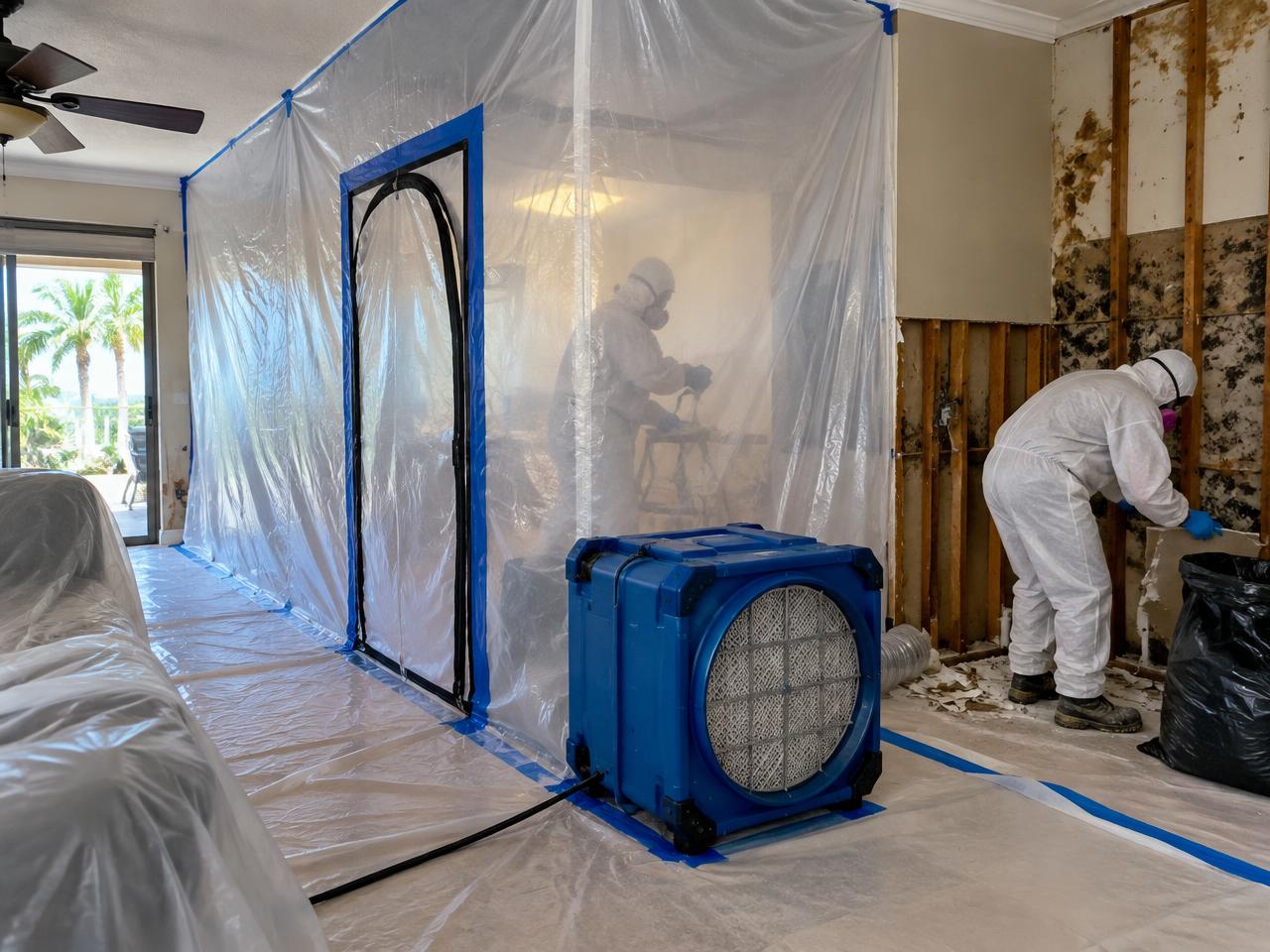
Attempting to scrub or tear out dry, contaminated materials without engineering controls often disperses millions of microscopic spores into the air. In a home with central air conditioning, these disturbed spores can circulate throughout ductwork and colonize other rooms. Safe removal requires setting up polyethylene containment barriers, maintaining negative air pressure with HEPA-filtered air scrubbers, and using HEPA vacuums on affected framing.
When to Hire a Licensed Remediation Professional
Small surface spots measuring less than ten square feet on non-porous or semi-porous fixtures can often be cleaned using mild detergents and thorough drying. However, extensive contamination, hidden growth inside wall cavities, or compromised drywall demands certified handling. Under Florida Chapter 468 Part XVI, professional mold assessment and remediation are strictly regulated to protect property owners.
Working with an experienced contractor like Ahold of Mold Environmental ensures that your project follows strict containment, removal, and clearance protocols. Serving both Central Florida and Fort Lauderdale, our licensed specialists provide comprehensive mold testing and professional mold remediation to restore indoor environmental balance. If you suspect hidden growth in your living space, contact our team to schedule a licensed evaluation.