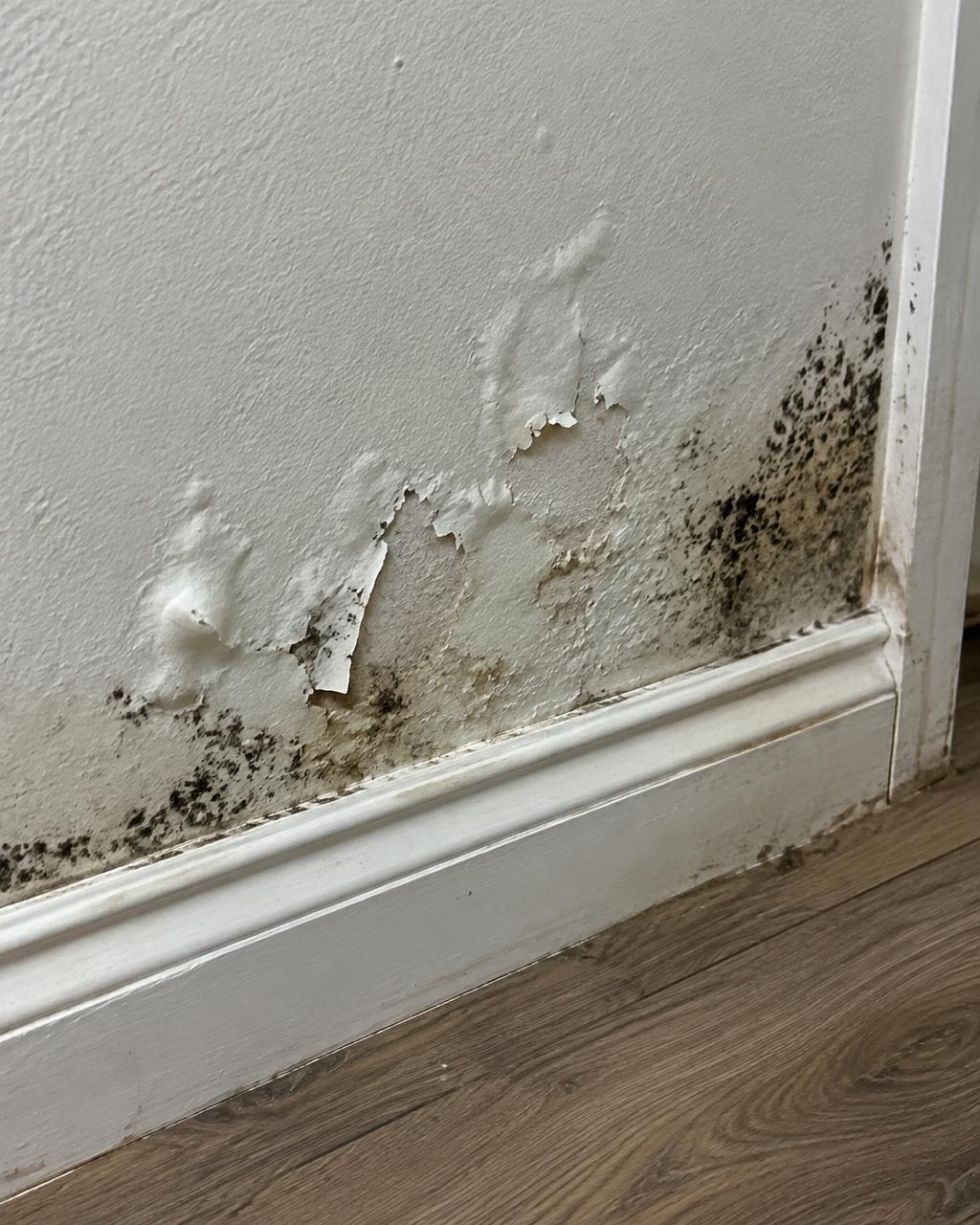
Mold is a moisture-loving fungus that thrives in warm, humid environments, making Florida homes especially prone to growth year-round. While mold plays a vital ecological role outdoors breaking down organic matter, indoor growth can deteriorate building materials and compromise indoor air quality.
Homeowners often try to identify mold by color or texture, categorizing growth into black mold, white mold, or surface mildew. While these traits offer visual clues, definitive identification requires professional mold testing and laboratory analysis. Understanding the common genera found in residential properties helps clarify what may be growing behind drywall, around AC vents, or under flooring.
Stachybotrys chartarum ("Black Mold")
Often referred to as toxic black mold, Stachybotrys chartarum is a slow-growing, moisture-dependent fungus typically found after chronic leaks, roof failures, or flooding. It appears dark greenish-black with a slimy texture when wet or a powdery surface when dry. Stachybotrys feeds on materials with high cellulose content, such as paper-faced drywall, fiberboard, and cardboard ceiling tiles.
White Mold and Efflorescence
White mold often has a powdery or velvety appearance, forming irregular circular colonies on wood framing, subfloors, and upholstered furniture. In Florida, white mold is frequently confused with efflorescence—a harmless mineral salt deposit left behind on concrete slabs and block walls when moisture wicks through masonry. A licensed assessor can perform a tape lift or swab sample to distinguish fungal growth from mineral crystallization.
Mildew
Mildew is an early-stage superficial fungal growth commonly seen on damp, non-porous surfaces such as shower tile, bathroom fixtures, and window sills. It generally appears flat, powdery, and gray or white before turning darker. Surface mildew on non-porous tile can usually be wiped down with household detergents, but recurrent growth points to chronic humidity issues.
Alternaria
Alternaria is common in damp indoor zones such as shower stalls, window tracks, and utility closets affected by plumbing leaks. It features a dark green or brown velvety, hair-like texture and spreads rapidly when ambient moisture remains above 60% relative humidity.
Cladosporium
Cladosporium is one of the most widespread outdoor and indoor molds across Florida. It typically displays an olive-green, brown, or black hue and frequently establishes colonies on air conditioning vents, cooling coils, cabinet interiors, and carpet fibers exposed to high moisture.
Penicillium and Aspergillus
Penicillium and Aspergillus are fast-spreading molds frequently detected in indoor air samples. They appear blue-green, white, or yellowish with a powdery texture and thrive in air conditioning ducts, damp insulation, wallpaper backing, and stored paper goods following moisture intrusion.
Fusarium
Fusarium can grow at lower moisture thresholds than Stachybotrys and appears in pink, reddish, or pale shades on water-damaged materials such as carpet backing, drywall, and foam insulation following water damage.
How to Handle Suspected Mold in Florida
Because color alone cannot confirm the species or severity of a fungal problem, Florida law regulates mold evaluation through Chapter 468. If you notice visible discoloration or musty odors in your property, a licensed mold assessor can evaluate the source of moisture and establish an accurate protocol for professional mold remediation. To schedule an inspection for your home, contact our licensed team today.