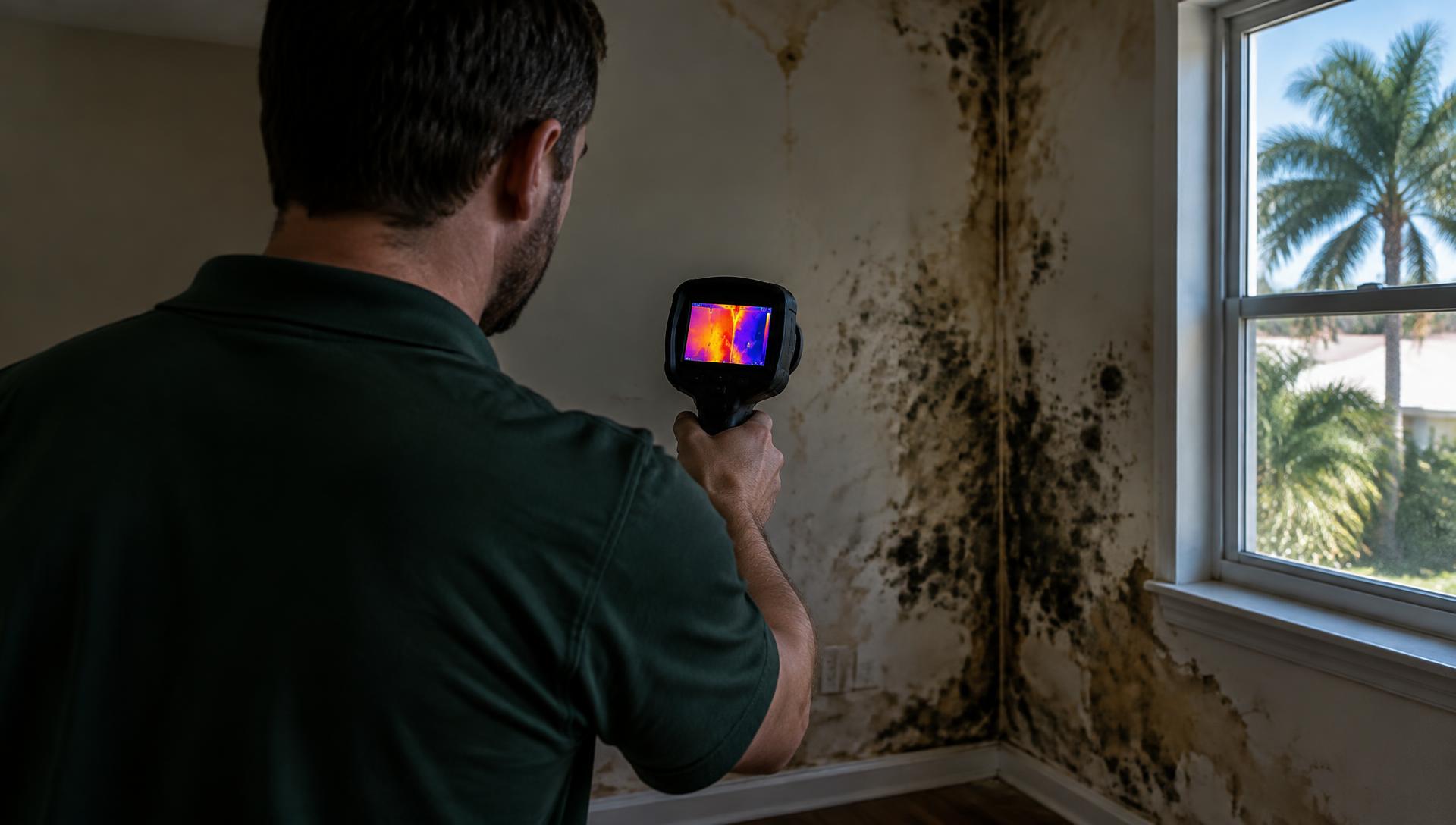
Extinguishing a residential or commercial fire often leaves behind thousands of gallons of water. While the flames are out, the combination of standing water, acidic soot, and charred building materials creates an immediate secondary emergency. In Florida's hot and humid climate, structural materials left saturated with firefighting water can foster microbial growth within 24 to 48 hours. Here are the essential steps to clean up water damage after a fire.
1. Be Aware of Safety and Chemical Hazards
Before stepping inside, ensure local fire officials have officially cleared the structure for safe re-entry. Firefighting water often contains toxic combustion byproducts, soot, ash, and potential biohazards. Never enter standing water where electrical lines or submerged outlets might still be energized. Always wear personal protective equipment (PPE), including heavy rubber boots, nitrile gloves, eye protection, and an N95 or P100 respirator to protect your lungs from airborne soot particulates.
2. Document the Damage for Insurance
Before removing debris or pumping out water, thoroughly document all visible structural damage and ruined personal belongings. Take comprehensive photos and video walk-throughs of every room. Because many Florida homeowners policies carry strict mold sublimits—often capped at $10,000—documenting that water damage stemmed directly from fire suppression efforts helps support your property claim.
3. Remove Standing Water Immediately
Water must be extracted as quickly as possible. Standing pools of water will seep through subflooring into crawl spaces, wick up drywall, and saturate structural sill plates. Using heavy-duty submersible pumps and commercial wet/dry vacuums accelerates water removal and reduces the depth of saturation across floors and baseboards.
4. Implement Controlled Structural Drying
In drier climates, opening windows may help ventilate a building. In Florida, however, outdoor humidity is routinely high enough to introduce additional moisture. Keep windows closed and utilize commercial-grade LGR (low-grain refrigerant) dehumidifiers alongside high-velocity axial air movers. The goal is to aggressively lower ambient humidity below 50 percent to draw moisture out of wall cavities, subfloors, and ceiling joists.
5. Remove Irreparably Damaged Porous Materials
Materials that are both charred and saturated cannot usually be restored. Wet drywall, fiberglass insulation, saturated carpet padding, and acoustic ceiling tiles absorb soot-laden water and provide ideal food sources for mold spores. Controlled tear-out of non-salvageable materials allows the underlying framing to dry thoroughly and prevents hidden fungal growth behind walls.
6. Clean, Deodorize, and Sanitize
Once bulk water is removed and wet materials are stripped back, remaining hard surfaces require deep cleaning. Soot is acidic and can permanently etch fixtures, tile, and metal framing if not neutralized. Use specialized soot sponges and antimicrobial disinfectants to clean structural elements, removing both chemical residues and biological contaminants before rebuilding begins.
7. Bring in Licensed Restoration Professionals
Fire and water damage recovery is complex and time-sensitive. Working with a company experienced in comprehensive water damage restoration ensures structural moisture levels are verified with thermal imaging and calibrated moisture meters. If prolonged dampness has already allowed microbial growth to begin, partnering with a Florida-licensed team for mold remediation guarantees that spores and contaminated materials are safely contained and cleared according to state standards.
Since 1996, Ahold of Mold Environmental has helped property owners navigate moisture crises with honest, licensed assessment and remediation services. Whether you are in Central Florida at (386) 492-1288 or South Florida at (954) 281-2666, contact our team today to schedule an inspection and secure your property.