Flooding caused by tropical storms, severe thunderstorms, or plumbing failures can quickly create ideal conditions for mold growth. In Florida's warm climate, elevated moisture levels can trigger fungal growth on building materials in as little as 24 to 48 hours. If your property has sustained water intrusion, taking prompt, structured action is critical to protect your living space and structural elements.
While minor surface dampness can sometimes be handled by a homeowner, extensive flooding or sewage-contaminated water often calls for professional water damage restoration and licensed mold contractors who understand containment and structural drying.
1. Manage Ventilation and Humidity Wisely
In many parts of the country, opening windows is the default recommendation after a flood. In Florida, however, outdoor humidity regularly reaches 80% to 90%. If your power is working, keep windows closed and run your air conditioning system alongside high-capacity dehumidifiers to extract moisture from the air. If power is out, open windows to maintain airflow and avoid heat buildup, but close them as soon as power and mechanical drying equipment are restored.
2. Remove Saturated and Porous Items
Any porous items soaked by floodwaters need to be addressed immediately. Category 3 floodwater (such as overland street flooding or storm surge) carries bacteria and contaminants that penetrate deeply into:
- Carpeting and carpet padding
- Upholstered furniture and mattresses
- Drywall and fiberglass insulation
- Cardboard boxes and paper products
Porous materials exposed to contaminated water generally cannot be sanitized thoroughly and should be documented for insurance before being removed and discarded. Non-porous items like metal, hard plastics, and solid wood furniture can often be cleaned, sanitized, and salvaged.
3. Inspect and Assess the Moisture Spread
Water frequently migrates beyond visible puddle lines, traveling behind baseboards and wicking up internal wall cavities. Performing an objective assessment helps identify the true boundaries of the moisture. For extensive water events, scheduling professional mold testing or an infrared moisture survey provides definitive data on hidden pockets of dampness within subfloors and wall framing.
4. Clean Non-Porous Surfaces Safely
Hard, non-porous surfaces with early surface mold can be cleaned using water and mild detergent, followed by an EPA-registered disinfectant. Avoid mixing cleaning agents—especially bleach and ammonia, which produce toxic chloramine gases. Always wear protective equipment during cleanup, including an N95 respirator, safety goggles, and heavy-duty nitrile or rubber gloves to minimize contact with microbial particles.
If visible mold covers an area greater than 10 square feet or has settled into structural wood framing, Florida law requires licensed mold professionals to handle containment and remediation.
5. Dry the Structure Completely
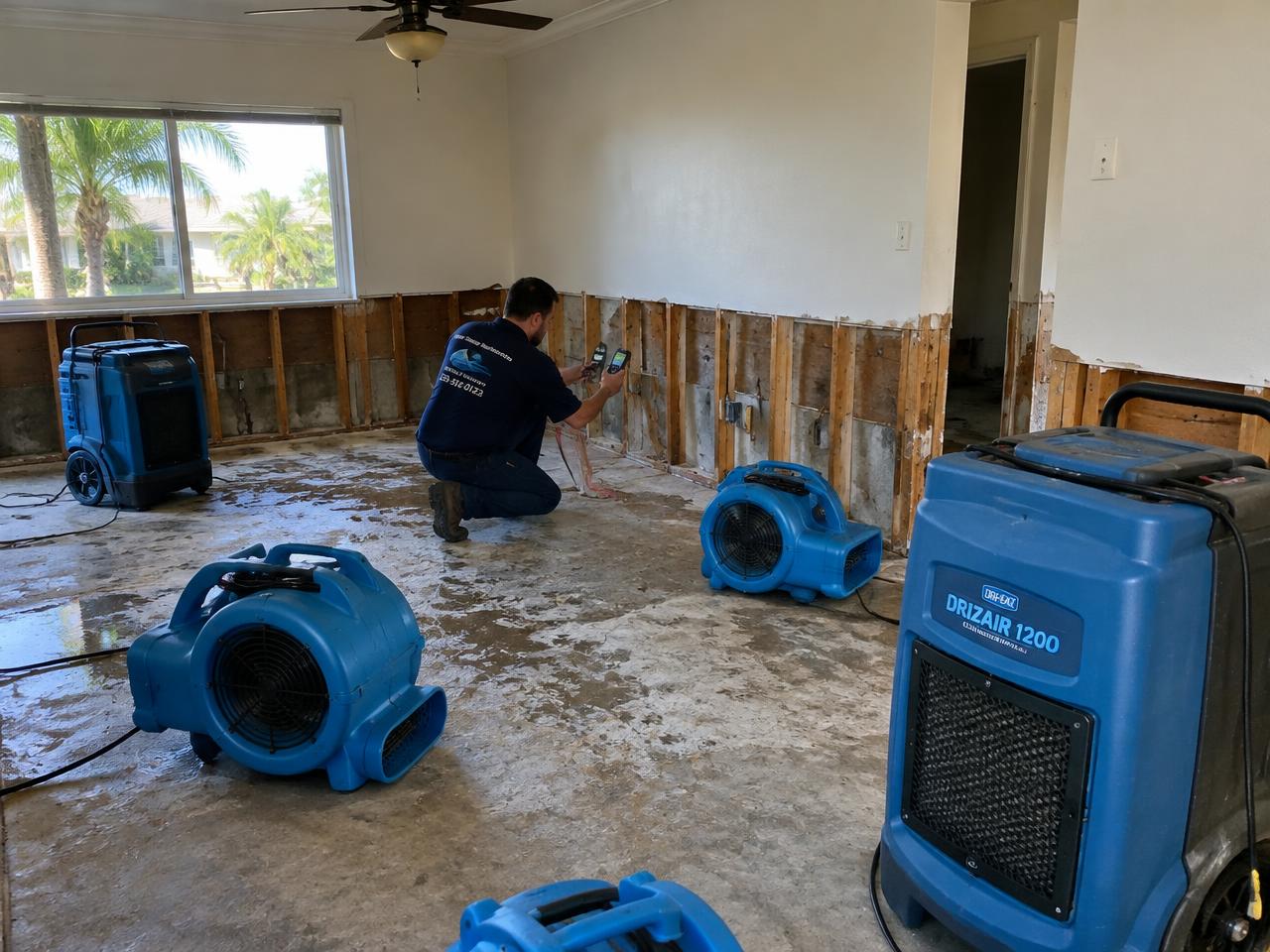
Cleaning surfaces is only half the battle; structural drying is required to prevent mold from returning. Position commercial air movers and LGR (low-grain refrigerant) dehumidifiers to draw bound moisture out of concrete slabs, wall studs, and subfloors. Moisture meters should be used to confirm that framing lumber has reached standard dry equilibrium before new insulation or drywall is installed.
If you encounter extensive post-storm flooding or recurring moisture, our state-licensed team provides comprehensive mold remediation across Central Florida and South Florida. For assistance in Broward County, contact our Fort Lauderdale office, or reach out to our Central Florida team to restore your home safely.