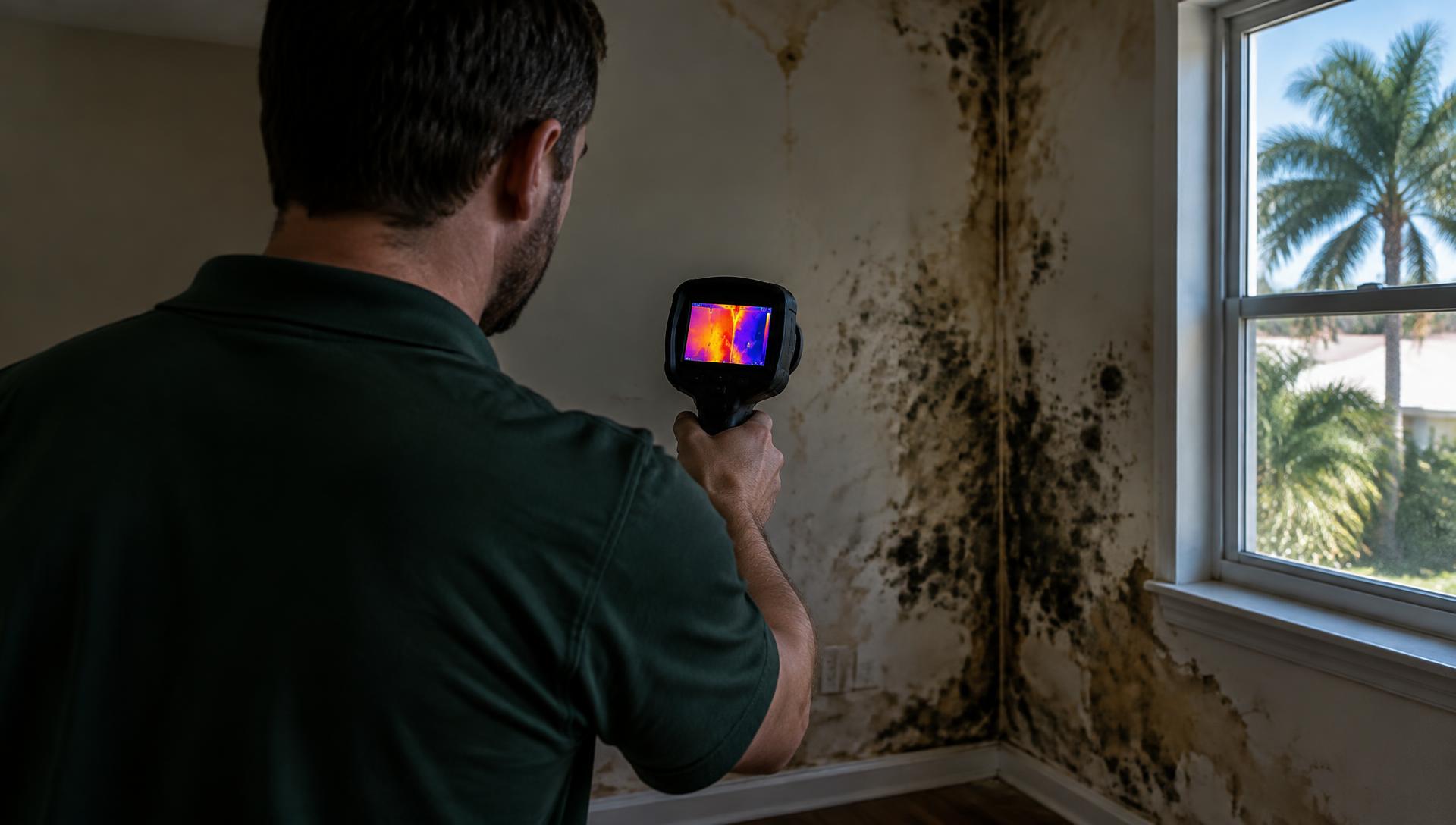
Mold spores exist naturally in Florida’s ambient environment, but indoor problems arise when elevated moisture allows indoor spore counts to exceed normal outdoor levels. With frequent rainfall, high indoor humidity, and continuous air conditioning usage, knowing how to routinely inspect your property for early warning signs can help you stop moisture problems before structural materials deteriorate.
Check For Signs Of Moisture Intrusion
Mold requires moisture, warmth, and an organic food source to flourish. In Florida homes, high-risk moisture zones include air conditioning closets, condensate drain lines, laundry rooms, bathrooms, and kitchen sink cabinets. Inspect your walls and baseboards for peeling paint, bubbling wallpaper, or soft drywall, which often point to hidden plumbing leaks or exterior water intrusion. If your home has experienced roof leaks or heavy storm runoff, addressing moisture with professional water damage restoration immediately helps prevent active spore growth.
Check For Musty Odors
Active fungal growth releases microbial volatile organic compounds (mVOCs), creating distinctive odors commonly described as damp, earthy, or musty. In many cases, this stale smell is your very first signal that an unresolved moisture issue exists. If you notice a persistent odor when entering a room or every time your air handler cycles on, mold could be colonizing behind walls, beneath flooring, or inside your ductwork. When smells linger without an obvious visible cause, scheduling professional mold testing can pinpoint elevated spore concentrations and identify concealed sources.
Check For Surface Discoloration
Unusual discoloration on ceilings, drywall, window frames, or baseboards often signals fungal development. Mold colonies appear in various textures and colors, ranging from black and dark green to gray, white, or brown speckling. Water stains from past roof leaks or plumbing overflows also indicate vulnerable areas where microbial activity may have taken root. Superficial cleaning often leaves the underlying root structure intact within porous materials, so evaluating how deeply discoloration penetrates drywall or subflooring is critical.
When To Schedule A Professional Assessment
If you discover widespread discoloration, recurring moisture, or unexplained musty odors throughout your residence, bringing in a state-licensed mold assessor is the most reliable next step. Certified assessors locate hidden moisture reservoirs, collect representative air and surface samples, and generate a clear protocol for targeted mold remediation if necessary. To protect your indoor living environment and property value, contact our team to evaluate your home.