Preventing mold growth in your home is a year-round priority in Florida. While many associate moisture problems strictly with named tropical storms or hurricane season, even routine summer downpours and afternoon thunderstorms can overwhelm building envelopes. When sudden rainwater enters exterior walls, attics, or crawl spaces, the combination of high humidity and warm temperatures creates an ideal environment for mold to thrive. Here is how water intrusion happens and what you can do to protect your home after heavy rain.
How Mold Develops After Rainstorms
Mold requires moisture, an organic food source, and suitable temperatures to flourish. During Florida's rainy season, wind-driven rain can push moisture into tiny vulnerabilities around windows, stucco hairline cracks, and roof penetrations. If your home's attic ventilation is restricted or insulation has shifted, warm, humid outdoor air colliding with cool, air-conditioned drywall can trigger heavy condensation inside wall cavities.
Once rainwater penetrates roof decking, soffits, or exterior siding, porous building materials like wood framing, fiberglass insulation, and drywall absorb the water. Because these areas are hidden from view and direct airflow, they remain damp long after the storm passes, allowing mold colonies to establish themselves quickly.
What You Can Do to Prevent Mold Growth
Taking prompt, practical steps immediately following heavy rain helps keep moisture from turning into a widespread issue:
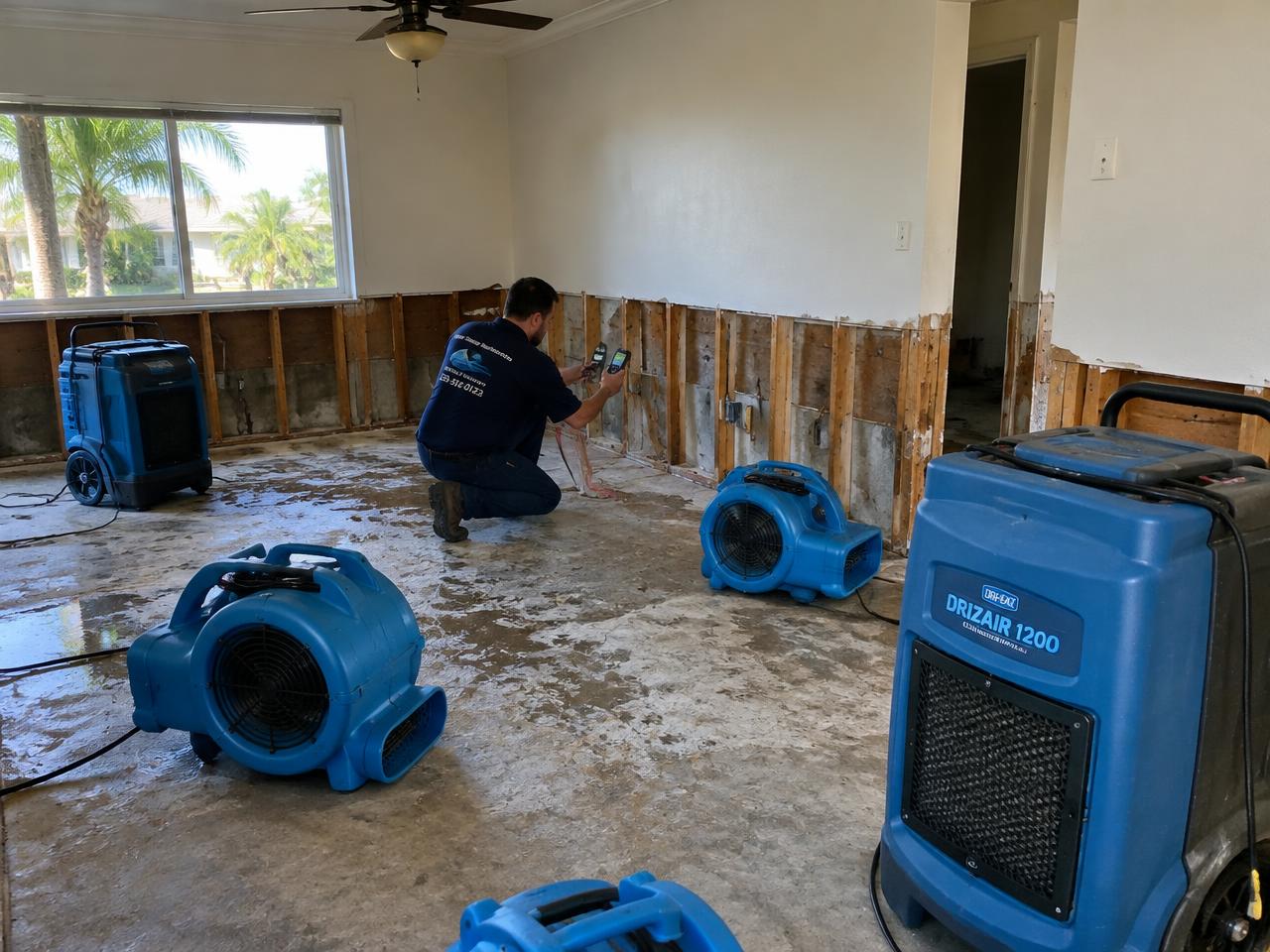
- Dry wet surfaces immediately: If wind-driven rain entered through window sills, sliding glass door tracks, or an unsealed door frame, dry the area thoroughly with towels. For standing water or saturated carpeting, professional water damage restoration equipment like commercial dehumidifiers and air movers may be needed to dry structures within 48 hours.
- Inspect your attic space: After substantial rainfall, look for signs of roof leaks. Check roof decking, insulation around plumbing vent stacks, and ceiling drywall for discoloration or dampness. Wet insulation loses its effectiveness and provides a persistent moisture reservoir for mold.
- Manage indoor relative humidity: Keep your indoor relative humidity below 50 to 55 percent. Run your central air conditioning with the fan set to "AUTO." Leaving the fan on "ON" recirculates moisture off the evaporator coil back into the living space. In high-humidity areas, supplemental dehumidifiers can provide additional protection.
- Maintain airflow in vulnerable areas: Keep interior doors open to encourage balanced airflow throughout the home. Ceiling fans circulating conditioned air can help prevent localized humidity pockets from condensing on exterior walls and windows.
- Inspect exterior seals and drainage: Ensure gutters and downspouts direct rainwater at least five feet away from your foundation. Check exterior caulking, window flashing, and weatherstripping periodically to ensure wind-driven rain cannot bypass building barriers.
Staying vigilant after severe weather is essential for preserving indoor air quality. If you suspect hidden moisture inside your walls or notice a persistent musty odor after a storm, schedule a professional mold testing inspection. Should contamination already be present, licensed mold remediation specialists can safely contain and clean the affected areas to restore your home.
For trusted assistance across Central Florida and the Fort Lauderdale area, contact the state-licensed team at Ahold of Mold Environmental to protect your home from storm-related moisture problems.