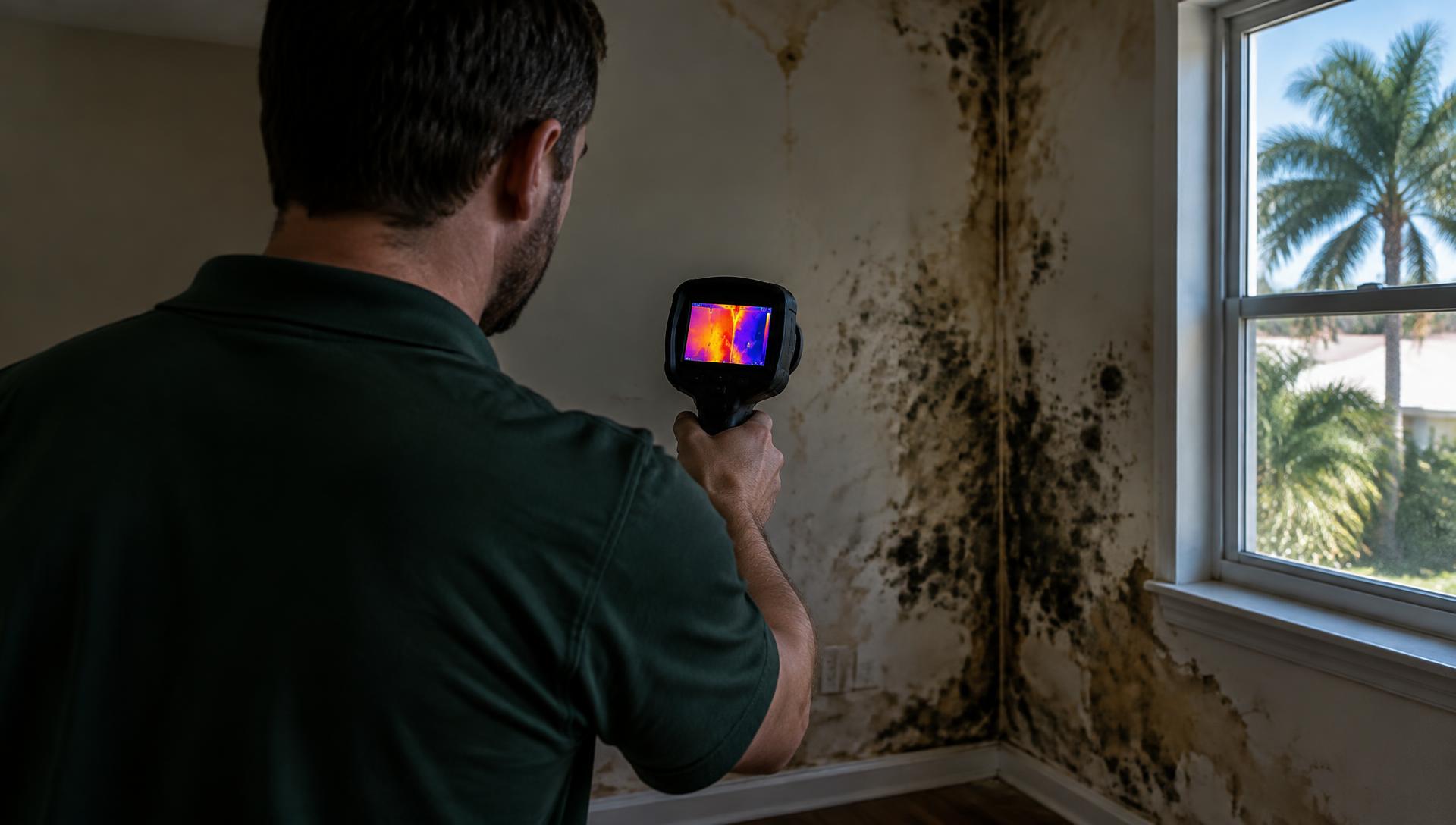
Mold simply needs organic material and moisture to germinate. In Florida's subtropical climate—where ambient indoor humidity and warm temperatures often work in tandem—mold spores can colonize quickly once liquid water or persistent moisture is introduced. Whether the cause is a failed air conditioning condensate line, a plumbing failure, or storm-driven rain, understanding the timeline of fungal growth is crucial for protecting your property.
The Growth and Spread of Mold
Mold is an essential part of the natural environment, breaking down organic matter outdoors. However, when concentrated inside a home or commercial building, it can damage building assemblies and compromise indoor air quality. Fungal growth depends largely on the surface material and the duration of elevated moisture levels. Mold feeds on cellulose-rich components such as drywall facing, wood framing, baseboards, insulation backing, and carpet padding.
In general, mold spores can germinate in as little as 24 to 48 hours after moisture contact. From there, fungal hyphae expand into colonies:
- Within 24 to 48 hours: Microscopic spore germination begins on damp, porous surfaces.
- Within 3 to 12 days: Colonies expand across surfaces and penetrate porous materials.
- Within 18 to 21 days: Microbial colonization often becomes distinct, presenting visible discoloration, staining, and noticeable musty odors.
If unmitigated moisture persists, spores can quickly spread to nearby surfaces through structural air currents and HVAC systems, escalating a minor leak into a structure-wide issue. If you suspect hidden growth behind walls or beneath flooring, professional mold testing can assess ambient spore levels and identify the presence of hidden colonies.
Preventing Mold Growth After Water Intrusion
Controlling indoor moisture is the single most effective defense against mold. When managing unexpected water damage, the initial 24 to 48 hours represent a critical window for intervention.
To prevent moisture from turning into an active mold outbreak:
- Extract Standing Water Promptly: Remove bulk water immediately using commercial-grade wet extraction equipment rather than household tools.
- Dehumidify the Air: Keep indoor relative humidity below 50% to 60%. Simply opening windows during a humid Florida afternoon introduces additional moisture into the building.
- Avoid Passive Air Drying: Allowing porous materials like saturated drywall or carpet to dry naturally over several days creates ideal conditions for mold germination. Saturated porous items that cannot be completely dried within 48 hours generally require removal.
Safe and Effective Mold Remediation
Once mold has colonized porous building components, wiping the visible surface with household disinfectants or bleach rarely addresses the hyphae embedded deep inside the substrate. Improper cleaning techniques can also disturb colonies, releasing millions of microscopic spores into the air and cross-contaminating unaffected rooms.
Under Florida law (Chapter 468 Part XVI), professional mold remediation must follow strict safety and containment protocols to protect structural integrity and occupant safety. Working with an experienced, licensed professional for mold remediation ensures proper containment, HEPA air filtration, safe removal of contaminated materials, and thorough sanitization.
If you have recently experienced a leak, storm intrusion, or persistent musty odors in Central Florida or South Florida, contact Ahold of Mold Environmental to schedule an assessment and stop mold before it spreads.