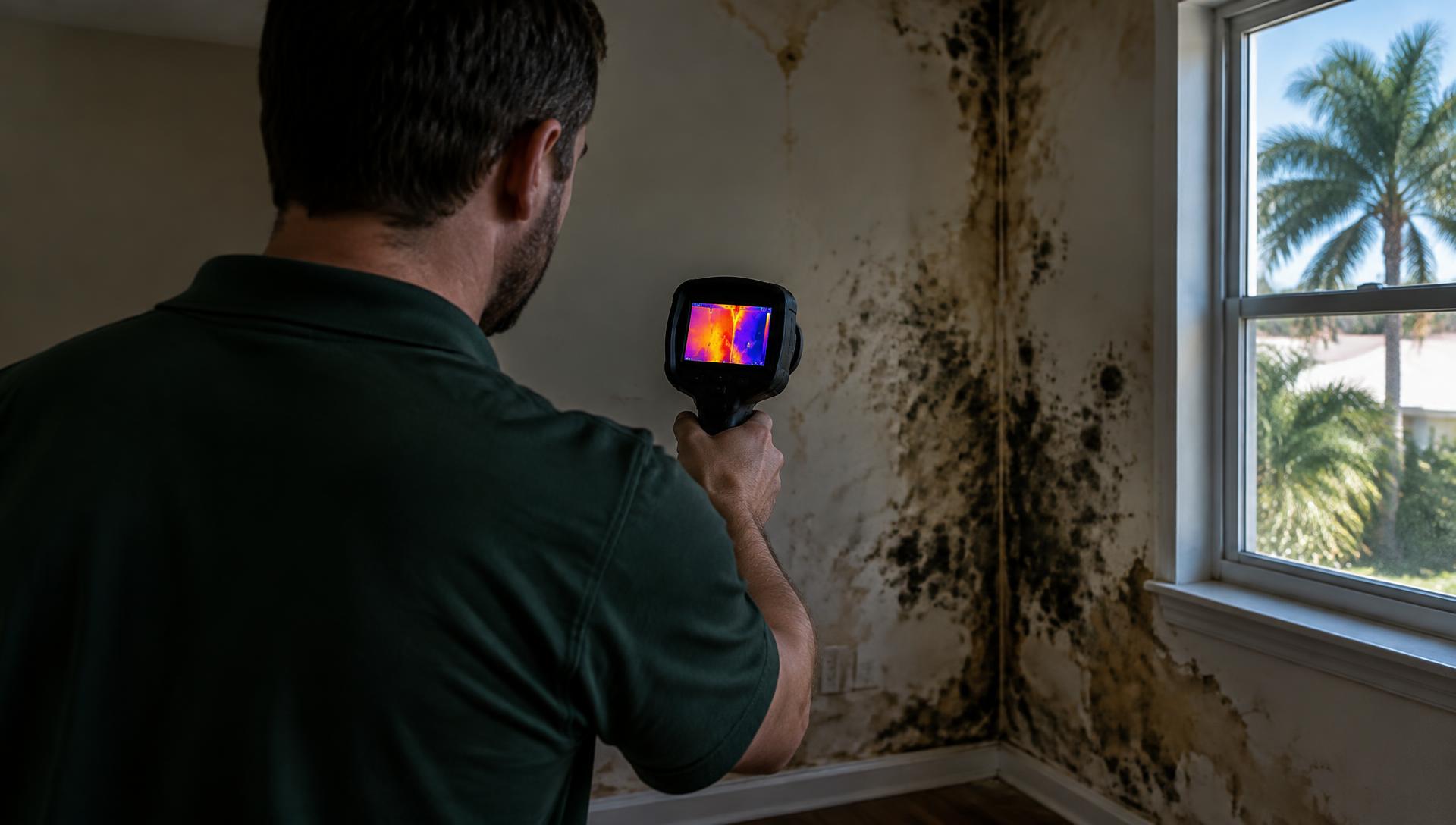
Ahold of Mold Environmental has been providing professional environmental services since 1996, serving clients across Central Florida and South Florida. In Florida, mold-related services are governed by Chapter 468, Part XVI of the Florida Statutes and enforced by the Department of Business and Professional Regulation (DBPR). This framework establishes mandatory licensing qualifications, operational standards, and strong consumer protections for residential and commercial properties.
Florida’s warm climate, intense rainy seasons, and storm events create chronic indoor humidity challenges. To protect property owners from predatory practices and substandard work, the state enacted formal guidelines that focus on three fundamental components:
Training and Qualifications: Mold professionals must complete rigorous education, document verifiable field experience, pass state-administered examinations, and maintain required commercial general liability and errors and omissions insurance before offering services.
Licensing Verification: It is unlawful in Florida to advertise or perform covered mold services without holding an active license issued by the DBPR. Consumers can verify credentials directly through state licensing portals.
Minimum Work Standards and Anti-Fraud Protections: Chapter 468 sets mandatory standards for both investigative and structural phases of a project, including:
- Conflict of Interest Prohibition: The statute expressly prohibits any individual or affiliated business from performing both the assessment and the mold remediation on the same project within a 12-month timeframe.
- Documented Scope of Work: Remediation contractors must follow an independent protocol developed by a licensed mold assessor rather than self-authorizing their own work scope.
- EPA-Registered Products: Remediators must utilize antimicrobial and disinfectant agents evaluated and registered consistent with U.S. Environmental Protection Agency standards.
- Containment and Safety Controls: Contractors must institute appropriate negative pressure containment barriers and supply required personal protective equipment (PPE) for field personnel to prevent cross-contamination.
- Third-Party Clearance: Following remediation, an independent licensed assessor must conduct post-remediation verification via professional mold testing before the area is cleared for build-back.
Understanding Florida Mold Licenses
The DBPR recognizes two specialized license designations for mold professionals:
- Licensed Mold Assessor (MRSA): Authorized to inspect properties, formulate sampling strategies, interpret analytical data, develop remediation protocols, and conduct post-remediation clearance assessments.
- Licensed Mold Remediator (MRSR): Authorized to execute remediation protocols, erect containment, remove affected porous materials, clean structural framing, and decontaminate indoor environments.
Any business offering removal, containment, surface sanitization, or cleanup of mold-damaged materials must hold an active remediator license. Whether managing storm-related water intrusion or long-term AC condensation problems, hiring properly credentialed contractors ensures strict adherence to Florida building and environmental standards.
Ahold of Mold Environmental maintains both Mold Assessor (MRSA3074) and Mold Remediator (MRSR4581) credentials, operating in full compliance with Florida conflict-of-interest regulations by serving as either your independent assessor or your remediation specialist. For questions about state compliance or to schedule an evaluation in Central Florida or our Fort Lauderdale service area, contact our team today.