Across the United States, and particularly in coastal states like Florida, millions of homes at high risk for rising water remain unprotected by flood insurance. Many property owners operate under the mistaken belief that standard homeowners insurance covers damage caused by storm surge, tidal flooding, or surface water runoff. In reality, standard policies explicitly exclude rising water, leaving homeowners vulnerable to severe financial losses after tropical storms or hurricanes.
Why Standard Policies Exclude Flood Damage
Most private insurers do not bundle flood coverage into typical homeowners policies due to adverse selection—the tendency for insurance to be purchased primarily by those living in the most hazard-prone areas. In standard insurance models, premiums collected from a broad population offset the costs of claims filed by a small percentage of policyholders. Because flooding is concentrated and often catastrophic when tropical systems strike, the risk is difficult for private carriers to absorb without separate, targeted underwriting.
To help address this gap, the federal government established the National Flood Insurance Program (NFIP) in 1968. Today, Florida property owners can obtain flood coverage either through the NFIP or via an expanding market of private flood insurance carriers.
How Flooding Is Defined by the NFIP
The National Flood Insurance Program defines a flood as a general and temporary condition of partial or complete inundation of two or more acres of normally dry land area, or of two or more properties (at least one of which is your property), caused by:
- Overflow of inland or tidal waters (such as hurricane storm surge).
- Unusual and rapid accumulation or runoff of surface waters from heavy rainfall.
- Mudflows caused by flooding.
In Florida communities from Fort Lauderdale and Broward County to coastal Volusia, Flagler, and Brevard counties, flood conditions frequently result from tropical depressions, intense summer squalls, king tides, and hurricane storm surges.
Flood Insurance Requirements and the 30-Day Waiting Period
Federal law mandates that properties located in designated Special Flood Hazard Areas (SFHAs) carry flood insurance if they have a mortgage backed by federal agencies like the FHA, VA, Fannie Mae, or Freddie Mac. However, flood risk is not confined to high-risk zones; FEMA estimates that more than 20% of all flood claims originate outside designated high-risk flood areas.
Crucially, NFIP policies generally carry a mandatory 30-day waiting period from the date of purchase before coverage goes into effect. Property owners cannot purchase a policy when a storm is already tracking toward their area and expect immediate protection.
Secondary Damage: What Happens After the Water Recedes?
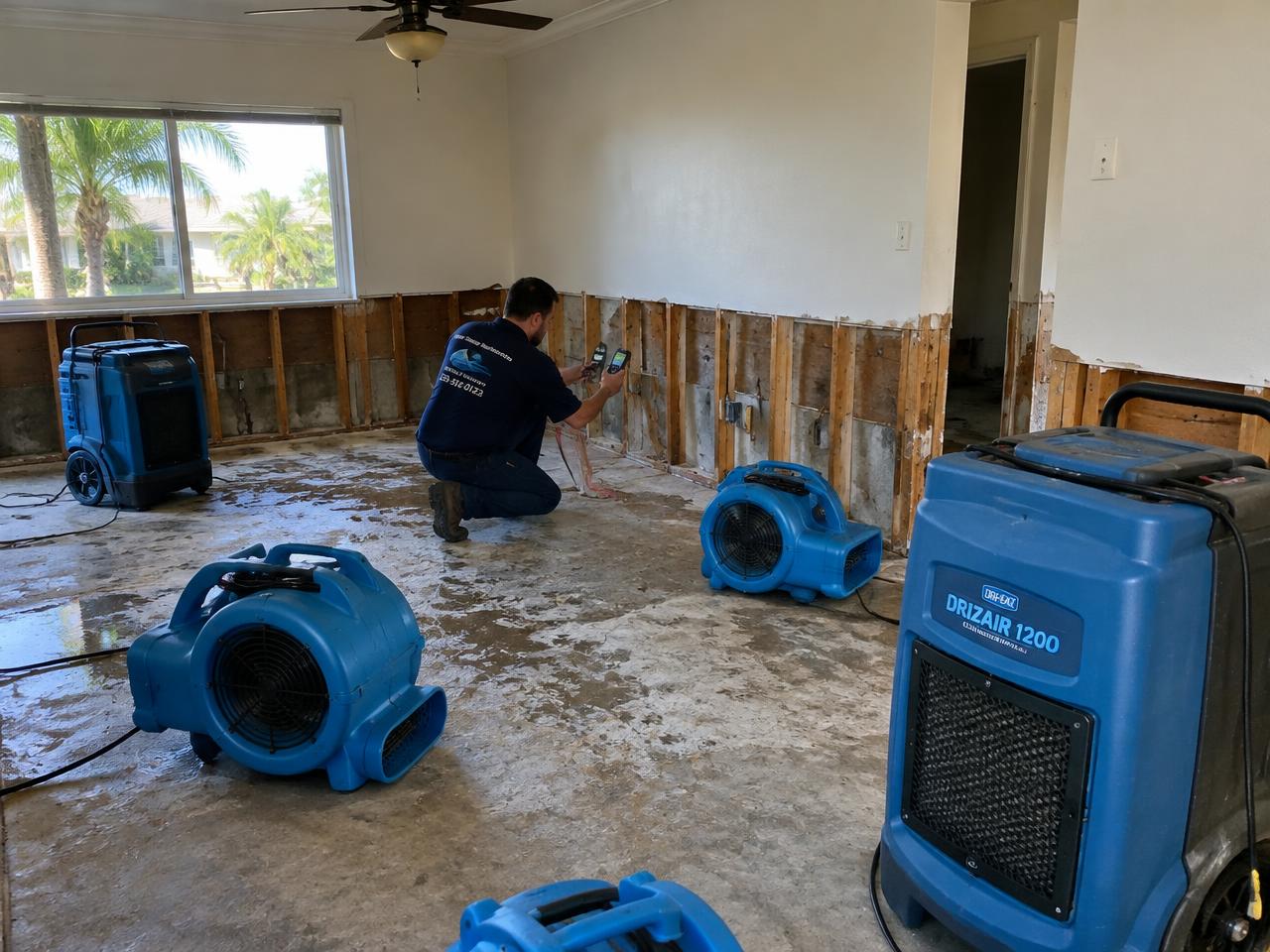
Once floodwaters retreat, the recovery clock starts immediately. In Florida’s humid, warm climate, indoor mold growth can establish within 24 to 48 hours of water intrusion. Proper water damage restoration is essential to extract standing water, remove ruined porous materials, and run industrial dehumidifiers before microbial growth spreads throughout structural cavities.
If you suspect moisture lingered long enough to foster hidden colonies inside walls or under floorboards, professional mold testing can document the full scope of contamination. If remediation is needed, licensed assessors and remediators operate under Florida Chapter 468 mold licensing regulations to ensure proper protocol, containment, and clearance. Homeowners facing property damage across our service areas in Central and South Florida should contact their insurance adjuster immediately and document all drying efforts thoroughly.