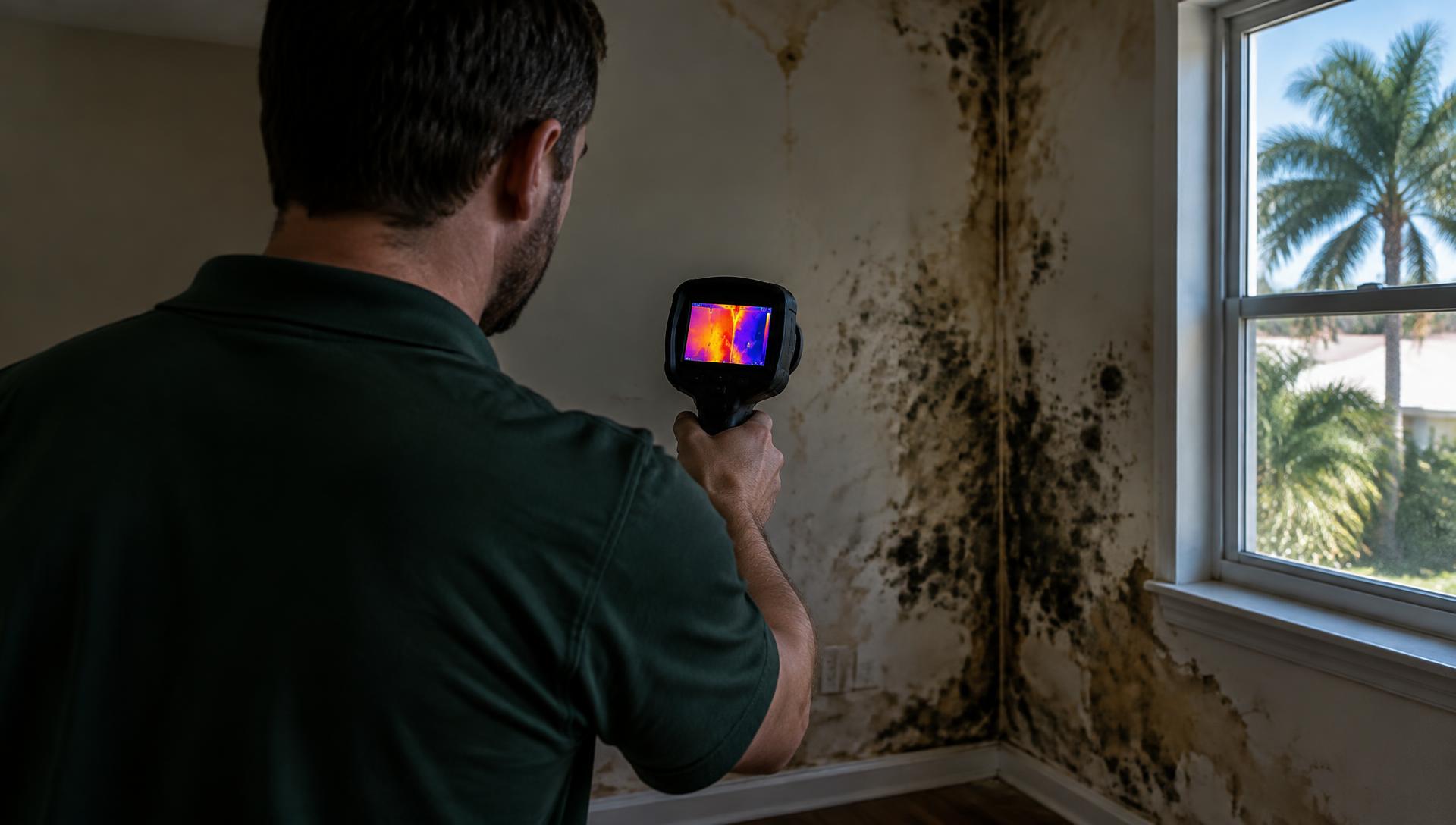
The value of hiring an experienced professional to inspect your property for microbial growth cannot be overstated, especially given Florida's year-round humidity, heavy rainstorms, and tropical moisture. However, finding the right team for the job is essential. To help property owners across Central and South Florida make an informed decision, here are five key things to look for in a qualified mold inspector:
- State licensing and proper credentials:
In Florida, mold assessment is strictly regulated under Florida Chapter 468 Part XVI. Any inspector evaluating your property must hold an active Mold Assessor license (MRSA) issued by the Florida Department of Business and Professional Regulation (DBPR). Verify that the company is properly licensed, insured, and certified by reputable industry organizations such as the IICRC. - Fair, transparent pricing:
You should never overpay for an assessment, but you should also be cautious of cut-rate or "free" inspection offers. Inexpensive inspections often omit independent laboratory analysis or serve merely as aggressive sales pitches. A reputable company charges a fair fee for detailed visual inspections, moisture mapping, and accredited third-party lab analysis. - Strong local reputation:
Before scheduling, review feedback from Florida homeowners and property managers. Look for established track records across reputable review platforms. Consistent positive feedback regarding professionalism, thoroughness, and clear reports indicates a trustworthy operation. - Fast laboratory turnaround:
In warm, humid climates, fungal growth can amplify quickly following moisture intrusion or plumbing leaks. Choose an inspector who delivers timely visual assessments and utilizes accredited third-party microbiology laboratories that return air or surface sample results within 24 to 48 hours. - Demonstrated field experience:
Classroom knowledge is essential, but real-world diagnostic experience in Florida's unique coastal construction and high-humidity environments matters just as much. Ahold of Mold Environmental has been family-owned and operated since 1996, giving our team decades of hands-on experience identifying moisture sources and fungal issues.
What Happens if Mold Is Detected?
If your mold testing confirms elevated spore concentrations or visible microbial colonies, your inspector should provide a comprehensive report outlining the extent of the issue and a remediation protocol. Under Florida law, mold assessment and mold remediation require distinct state licenses (MRSA and MRSR) to avoid conflicts of interest, ensuring that cleanup protocols remain objective and aligned with industry standards such as the IICRC S520.
Whether you manage a commercial facility or own a home in Volusia, Flagler, Brevard, or Broward County, working with qualified professionals protects both your structure and your investment. If you suspect hidden moisture or fungal growth, contact Ahold of Mold Environmental today to speak with our licensed Florida specialists.