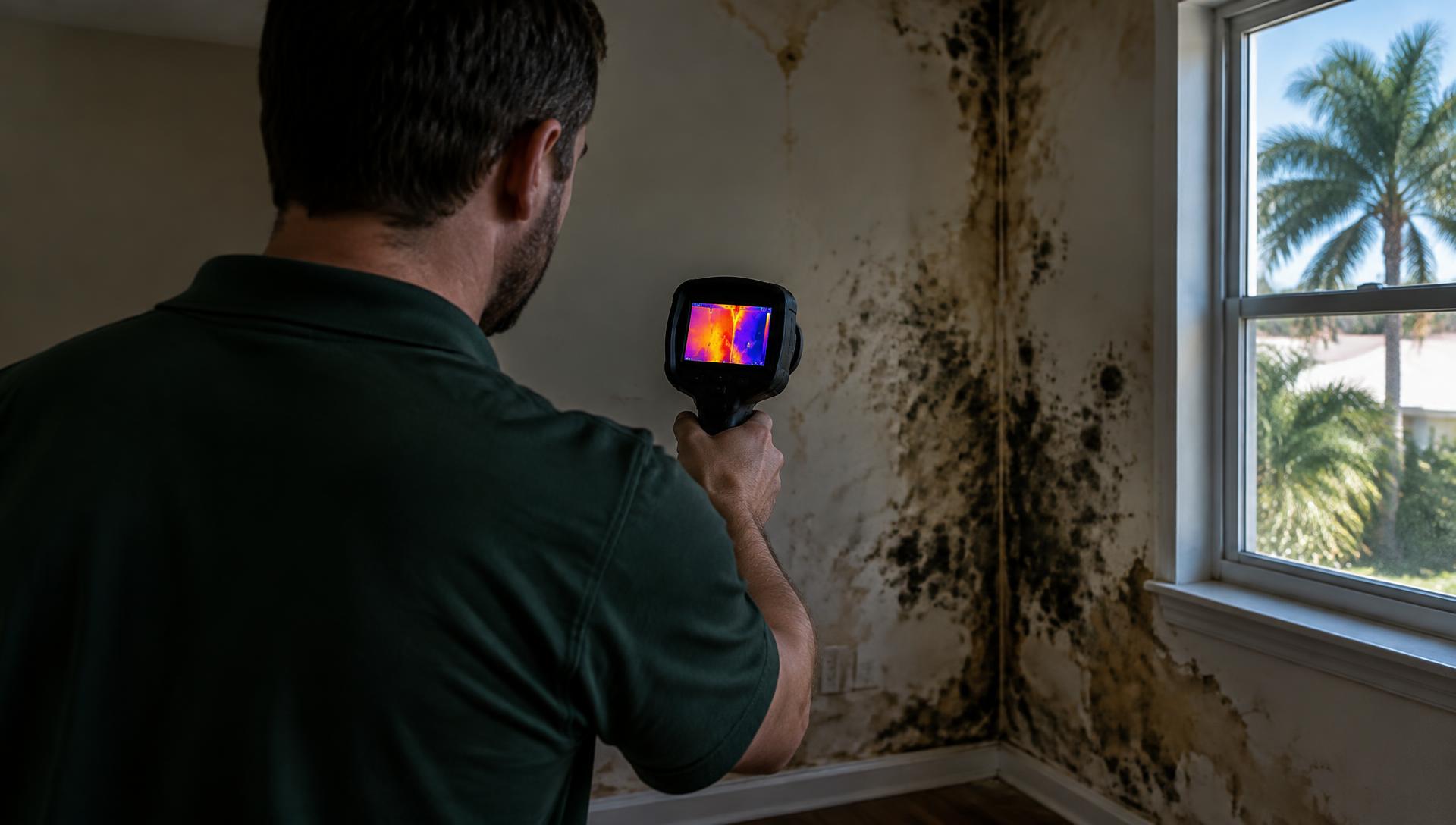
Frequent causes of water damage across Central and South Florida include roof breaches from tropical storms, AC condensation line clogs, failing water heaters, and sudden plumbing leaks. Moisture can rapidly lead to microbial expansion and threaten the structural integrity of your home. While property repairs after a leak can quickly escalate in scope, catching moisture intrusion early minimizes costs and long-term disruption. Here are five sure signs of water damage to act on immediately:
- Discoloration: Most homeowners first detect moisture intrusion when stains appear across ceilings and interior drywall. These spots are typically copper, yellow, or dark brown. In high-humidity environments, discolored growth can begin shortly after dampness sets in. If left unaddressed, the stains spread, weaken building materials, and lead to structural failure. Scheduling professional water damage restoration at the first sign of staining helps prevent extensive building repairs.
- Surface irregularities: Besides discoloration, saturated walls and ceilings often blister or sag. You may notice small bubbles in latex paint, cracking drywall tape, or warped baseboards. These structural changes indicate water pooling behind the surface. Address these irregularities promptly before materials degrade entirely or collapse under the weight of accumulated water.
- Persistent musty odors: Because Florida homes are generally built on concrete slabs rather than basements, musty smells are usually concentrated near HVAC closets, bathrooms, or crawlspaces. If an earthy, damp odor spreads to primary living spaces, trapped moisture is likely fueling microbial colonization. An inspection and professional mold testing can pinpoint hidden moisture reservoirs behind walls.
- Missing shingles or flashing damage: Florida's severe summer thunderstorms and hurricane-season squalls frequently dislodge roof shingles, damage flashing, and overwhelm gutters. Even if water stains are not immediately visible in the living areas, wind-driven rain can penetrate attic insulation and seep down exterior framing unnoticed. Checking your roofline after heavy storms helps detect small leaks before they compromise ceilings.
- Previous appliance or plumbing failures: If you recently dealt with an overflowing washing machine, an AC backup, or a leaking supply line, water may have traveled beneath floorboards or into subfloors. Lingering moisture that is not properly extracted can remain trapped for weeks, eventually causing tile tenting, warped floors, or hidden fungal growth. When a leak occurs, timely structural drying and mold remediation ensure the property dries out completely.
Ahold of Mold Environmental provides licensed moisture evaluation and restoration services throughout Central Florida and South Florida. If you notice signs of trapped water or unaddressed moisture in your home, contact our team to stop the damage before it escalates.