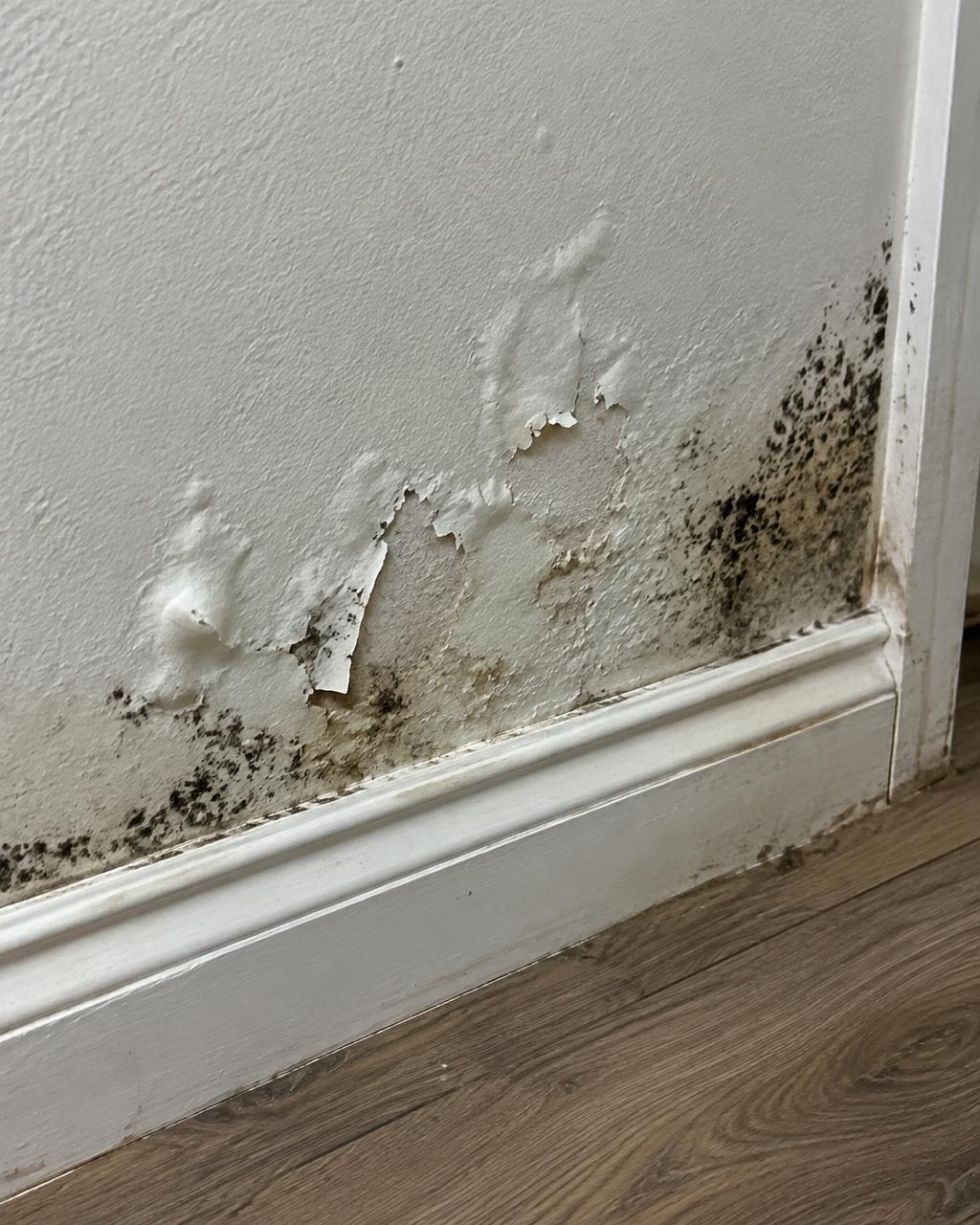
Effective mold cleanup is not simply a matter of wiping down a surface with a household cleaner. Industry standards, established by the IICRC S520 and reinforced by Florida professional licensing guidelines, emphasize five core principles that guide every proper mold remediation project.
- Ensure Safety and Health Precautions: Remediation technicians and building occupants must be protected from exposure during the cleanup process. Licensed professionals utilize personal protective equipment (PPE), including N95 or HEPA respirators, eye protection, and protective suits, while establishing engineering controls to prevent spores from entering occupied areas of the home.
- Control the Mold at Its Source (Containment): Once mold colonies are disturbed, microscopic spores can quickly become airborne and circulate through your HVAC system. Setting up critical barriers using polyethylene sheeting and maintaining negative air pressure with commercial HEPA air scrubbers keeps fungal particulate isolated to the work zone.
- Physically Remove the Contamination: Mold must be physically removed from the structure rather than encapsulated or sprayed. Porous materials such as water-damaged drywall, carpet pad, and acoustic tiles must be carefully bagged and discarded. Semi-porous framing is treated through HEPA vacuuming, damp wiping with antimicrobial agents, and controlled abrasive methods. Simply spraying bleach does not properly resolve mold on porous materials.
- Control Moisture to Prevent Recurrence: Mold cannot thrive without moisture. Whether caused by roof damage after a storm, plumbing failures, or high indoor humidity common across Central and South Florida, the source of water must be identified, documented, and fully corrected. Addressing secondary dampness often involves professional water damage restoration and rapid dehumidification.
- Post-Remediation Verification and Clearance: A thorough cleanup concludes with an independent post-remediation assessment. In accordance with Florida Chapter 468 Part XVI, post-cleanup mold testing should be conducted by a licensed third-party Mold Assessor (MRSA) rather than the remediation contractor, verifying that fungal spore counts have returned to normal indoor fungal ecology before containment is removed.
For areas of contamination larger than 10 square feet, attempting a DIY cleanup without containment risks cross-contaminating your property. If you suspect mold growth in your home or business, contact Ahold of Mold Environmental for professional guidance backed by over two decades of Florida inspection and remediation experience.