Water damage is one of the most urgent issues a residential or commercial property owner can face. When moisture sits too long, excessive dampness causes wood rot, structural degradation, and rapid fungal colonization. That is why it is essential to contact a water damage restoration professional immediately. Fast intervention protects your property and helps prevent costly structural rebuilds down the line.
Common Causes of Water Damage in Florida
Several scenarios lead to indoor water intrusion across Florida properties. Heavy tropical rain, storm surge, and localized flash flooding can overwhelm exterior drainage. If your property is in a low-lying zone, proper storm preparation and separate flood insurance coverage are critical defenses.
Plumbing failures are another primary culprit. Pressurized supply line breaks, overflowing washing machines, failed water heaters, and backed-up condensate lines from air conditioning units frequently release significant volumes of water. Because Florida air conditioners run nearly year-round, clogged drain lines can overflow into ceilings and wall cavities unnoticed until drywall stains or soft spots appear.
What Happens During the Water Damage Restoration Process?
The restoration sequence follows established industry standards to return materials to dry, sanitary conditions:
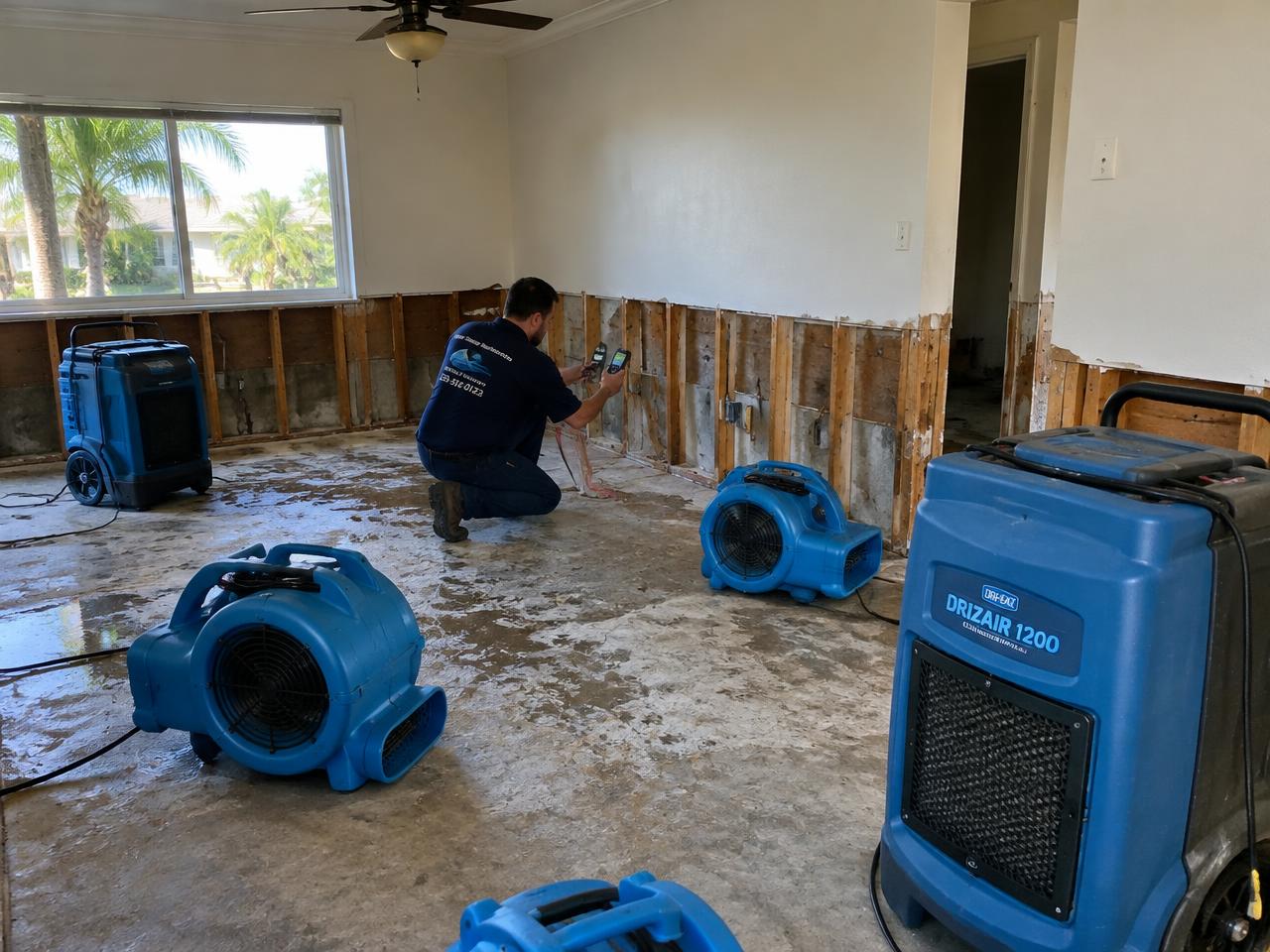
- Inspection and Moisture Mapping: Restorers identify the water source, categorize the water (clean supply line, gray wash water, or black sewage/floodwater), and use thermal imaging and moisture meters to map where moisture has traveled behind walls and under floors.
- Water Extraction: High-powered submersible pumps and commercial wet vacuums extract standing water from floors and carpets to shorten total drying times.
- Controlled Demolition: Incurably damaged materials, such as saturated carpet padding or waterlogged drywall, are neatly removed to expose structural framing for drying.
- Structural Dehumidification: Technicians place commercial-grade LGR dehumidifiers and high-velocity air movers to pull bound moisture from concrete slabs, wall cavities, and wood framing. In Florida's humid air, controlled containment is critical during this stage.
- Cleaning and Antimicrobial Treatment: Salvageable structural elements are cleaned, sanitized, and treated to prevent secondary issues before rebuilding begins. If mold amplification has already started, specialized containment and mold remediation under Florida Chapter 468 guidelines must be initiated.
Why You Should Call a Licensed Professional
While mopping up surface water with household towels or setting up domestic fans may seem practical for minor spills, hidden moisture often remains trapped beneath floor underlayment and inside drywall. Unresolved dampness in warm climates creates ideal conditions for microbial growth behind wall assemblies. Licensed professionals use specialized meters to verify that structural framing has returned to dry standard levels before completing repairs.
If your property has sustained water intrusion, the team at Ahold of Mold Environmental provides experienced cleanup, drying, and moisture assessment. Serving property owners across Central Florida and South Florida since 1996, our licensed assessors and remediators ensure your building is restored safely and thoroughly.