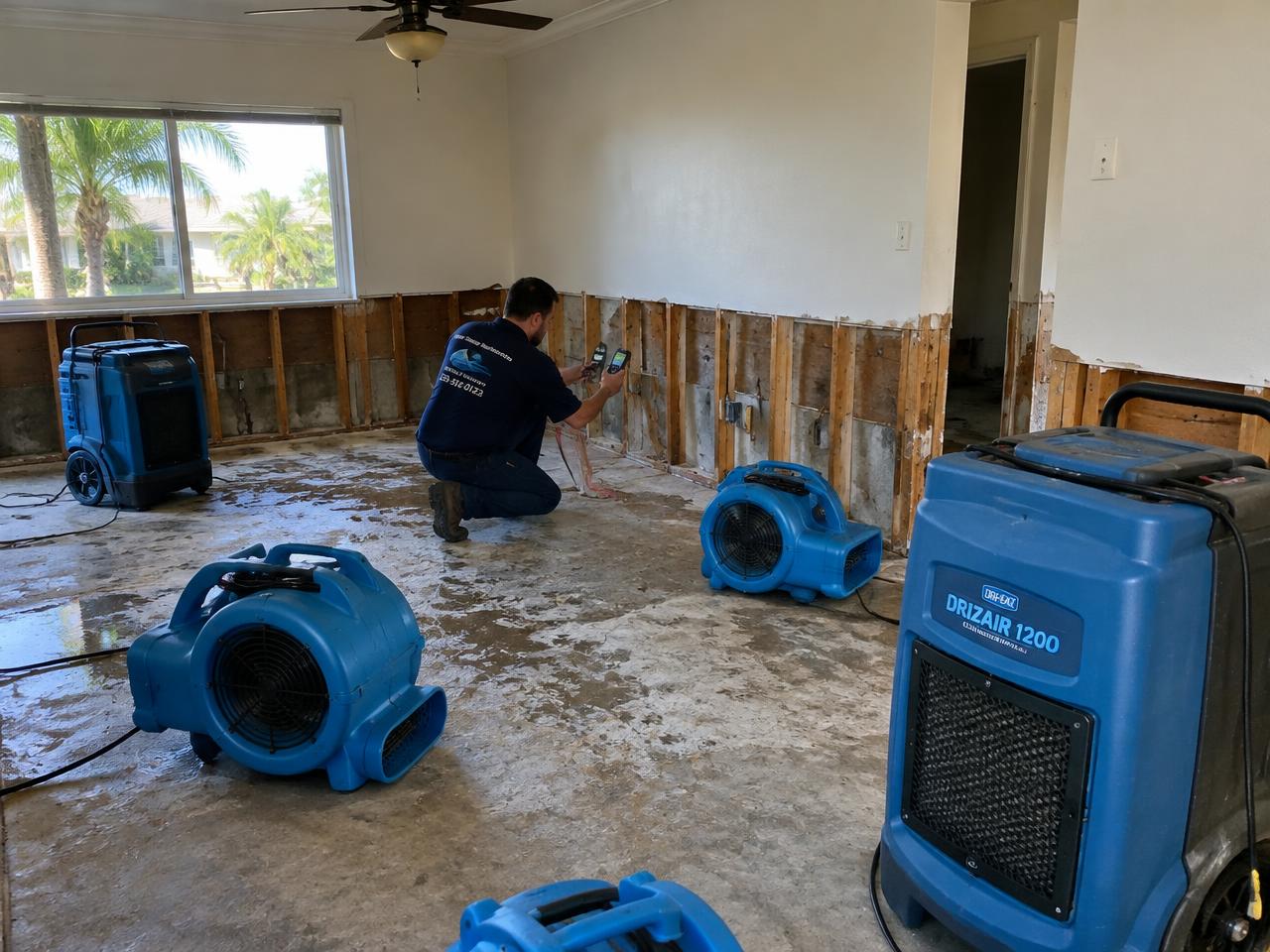
Mold is a legitimate concern for Florida property owners. Given our humid sub-tropical climate, intense rainy seasons, and storm activity, indoor microbial growth can take hold quickly after a leak or high humidity event. That makes professional, ethical remediation essential for homes and commercial buildings across the state.
Unfortunately, not every company advertising remediation services operates honestly. Unscrupulous operators take advantage of stressed homeowners, especially after severe weather. Knowing what to watch for helps you identify red flags before signing a contract or paying for substandard work:
- There’s no cost for "testing": Be wary when a contractor offers "free mold testing." True professional mold testing requires calibrated sampling equipment, thermal imaging, moisture meters, and third-party laboratory analysis. A company offering free testing often uses visual checks or uncalibrated petrie dishes as a sales funnel to push unnecessary or overpriced remediation.
- There’s no regulatory separation: Florida law protects property owners through Florida Chapter 468 Part XVI, which prohibits a single company from performing both the formal mold assessment (MRSA license) and the mold remediation (MRSR license) on the exact same project. If a company insists on testing your home and then billing you to remediate it themselves without independent third-party verification, they are violating state rules and operating with a clear conflict of interest.
- There’s no valid state license: In Florida, general handyman credentials or basic trade certificates are not enough. Reliable contractors must hold an active Mold Remediator (MRSR) or Mold Assessor (MRSA) license issued by the Florida Department of Business and Professional Regulation (DBPR). Always verify credentials online before hiring.
- There’s no written documentation: Trustworthy remediation contractors provide comprehensive written scopes of work. The protocol, itemized charges, containment measures, and equipment requirements should be documented clearly on paper or digital contract. If a contractor demands verbal agreements or refuses to commit details to writing, look elsewhere.
- There’s no verifiable track record: Established contractors should readily provide references, verified customer reviews, and proof of active general liability and pollution insurance. If an operator cannot demonstrate a history of reliable service in your region, treat it as a significant warning sign.
- There’s no clear clearance criteria: Ethical remediators follow industry standards, such as the IICRC S520 Standard for Professional Mold Remediation. They stand behind their protocols by agreeing to independent Post-Remediation Verification (PRV) testing conducted by a separate licensed assessor to confirm the work was successful. Contractors unwilling to be held to independent clearance standards should be avoided.
- Demanding full payment upfront: Legitimate contractors typically request an initial deposit to mobilize equipment and secure containment supplies, with final payment due upon successful completion and third-party clearance. Demanding 100% of the funds upfront before any containment is built is a frequent hallmark of post-storm contractor fraud.
Avoid Scams: Work with Licensed Florida Professionals
When you suspect moisture intrusion or fungal growth, choose an established, state-licensed professional who respects Florida regulations and prioritizes transparency. Ahold of Mold Environmental has been family-owned and operated since 1996, holding state licenses for Mold Assessment (MRSA3074) and Mold Remediation (MRSR4581).
Whether you require assistance in Central Florida (Volusia, Flagler, and Brevard counties) or need support from our team in Fort Lauderdale and Broward County, we provide clear protocols and expert solutions for mold remediation and related water damage restoration. Contact us today to schedule a consultation with our experienced team.