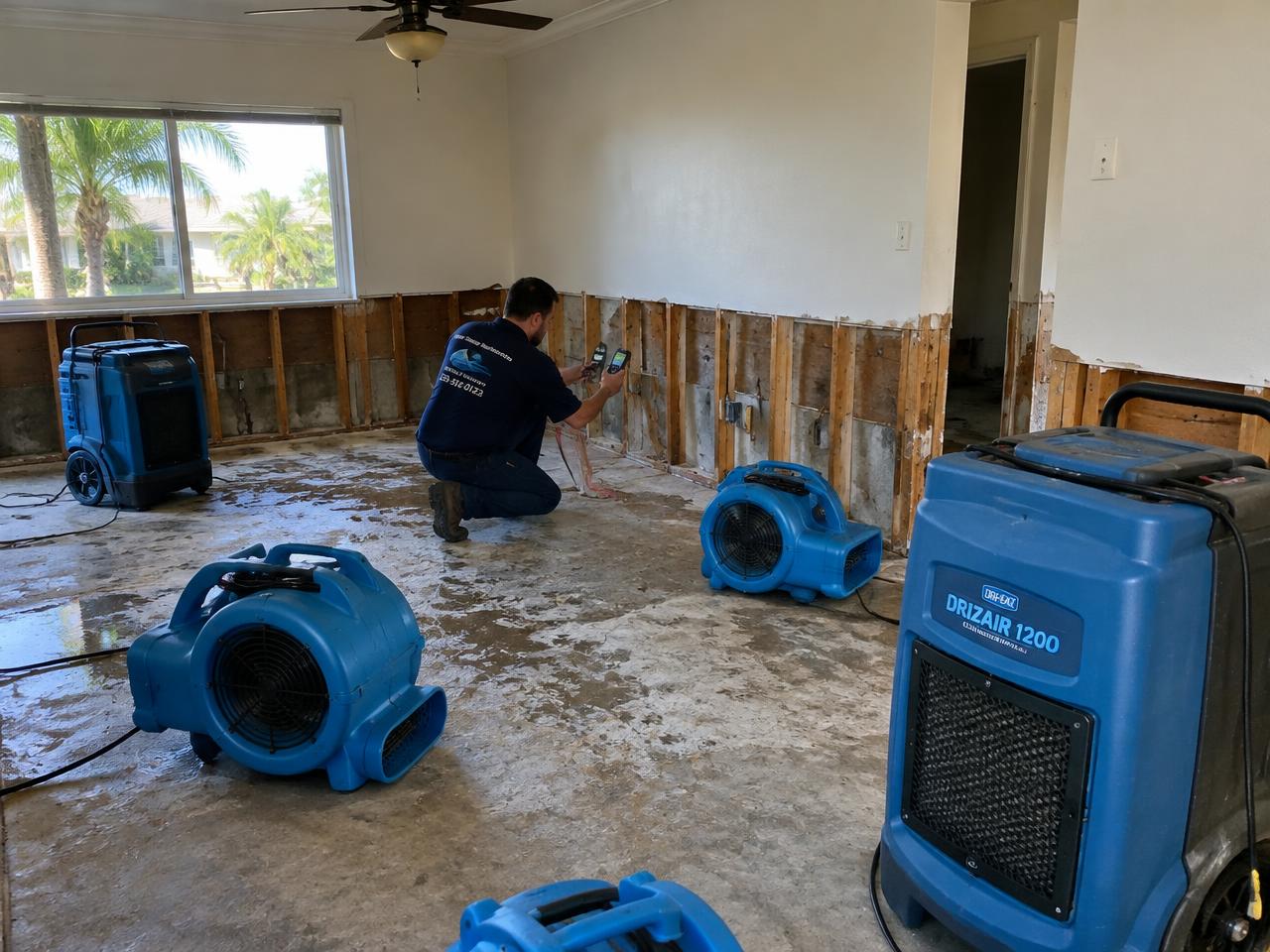
The simple answer is yes: water damage is one of the most common causes of indoor mold growth. While minor, momentary spills cleaned up immediately rarely cause issues, standing water or hidden moisture almost always creates the ideal conditions for mold. In Florida’s subtropical climate, addressing water intrusion quickly through professional water damage restoration is critical to stopping secondary damage before it takes hold.
What Causes Mold to Grow Indoors?
Microscopic mold spores exist naturally in outdoor air across Florida and easily enter homes through open doors, windows, and air conditioning systems. On their own, these floating spores are harmless. However, once they encounter elevated indoor humidity or direct moisture from a plumbing failure, roof leak, or AC overflow, they settle and germinate.
Because modern building materials such as drywall paper, wood framing, and carpet padding provide an abundant food source, mold can establish active colonies on wet surfaces within 24 to 48 hours. Once established, it can degrade structural materials and compromise indoor air quality.
Checking for Mold After Water Intrusion
If your property has experienced storm surge, a slab leak, or an air conditioning condensation backup, you should promptly inspect the area for signs of fungal growth. Visible mold often presents as dark green, black, or grey discoloration and may have a velvety or powdery texture. In many Florida homes, however, mold develops out of sight inside wall cavities, beneath laminate flooring, or behind baseboards.
A persistent musty odor is often the earliest indicator of hidden moisture. If you suspect moisture has traveled behind walls or ceilings, scheduling professional mold testing by a licensed mold assessor helps identify elevated spore counts and map moisture boundaries using thermal imaging and calibrated meters.
What to Do if You Discover Mold
If you identify active fungal growth following a leak, avoid common mistakes such as spraying the area with household bleach. Bleach contains high water content that can actually feed fungal roots within porous materials like drywall. Furthermore, scrubbing dry mold without proper containment can disperse millions of spores throughout your air conditioning system.
Under Florida law (Chapter 468, Part XVI), mold assessment and mold remediation must be performed by appropriately licensed professionals adhering to industry standards. If remediation is required, professional mold remediation specialists establish negative air containment, run HEPA air scrubbers, and safely remove contaminated materials to bring the property back to normal fungal ecology.
Finding Licensed Mold Specialists in Florida
Always verify that any contractor evaluating or treating your property holds valid Florida licenses (MRSA for assessors and MRSR for remediators). Family-owned since 1996, Ahold of Mold Environmental maintains dual licensure (MRSA3074 and MRSR4581) to help property owners resolve moisture and fungal issues safely and objectively.
Whether you need rapid structural drying or comprehensive inspection services in Central Florida or Fort Lauderdale, contact our experienced team for reliable moisture evaluation and mold solutions.