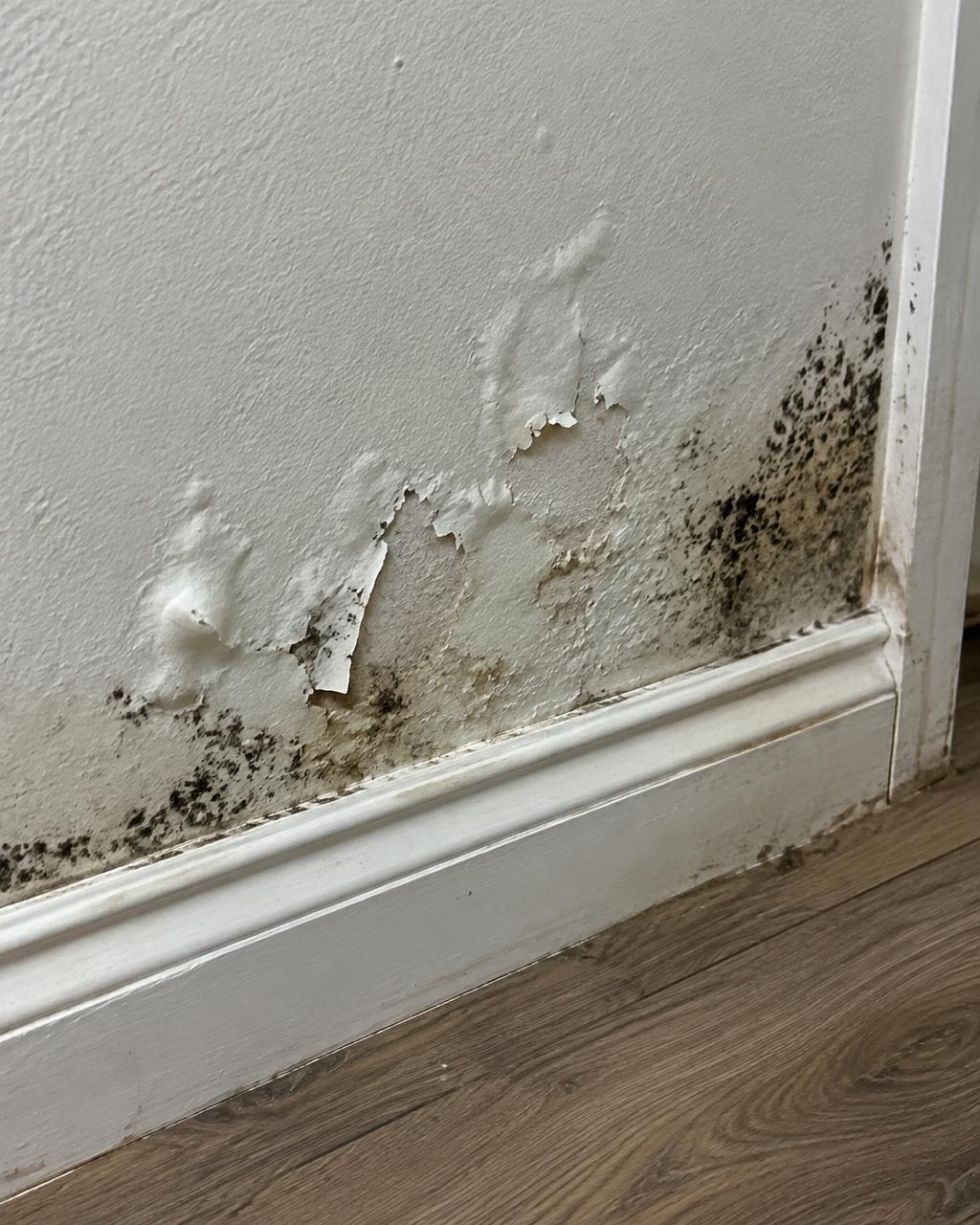
Discovering dark mold growth in your bathroom, around air conditioning vents, or along baseboards is a common frustration for property owners across Florida. While your first instinct might be to grab a rag and wipe it down, whether you can simply wipe off black mold depends entirely on the surface it is growing on and how far it has spread.
On hard, non-porous surfaces such as ceramic tile, glass, stainless steel, and sealed stone, surface mold can often be safely cleaned. However, attempting to wipe mold off porous materials like drywall, plaster, or particle board often leaves embedded roots intact and releases airborne spores across your living space. If you are dealing with minor, localized surface growth on non-porous materials, here are five common methods homeowners use to clean it.
1. Scrub With Baking Soda or Borax
Baking soda and borax are mild, alkaline cleaning agents that help break down surface residue without producing harsh fumes. Mix one cup of baking soda or borax with two cups of warm water until dissolved. Apply the paste or solution to the affected non-porous surface, scrub with a nylon brush, and wipe clean with a damp microfiber cloth.
2. Spray With Distilled White Vinegar
Standard household white vinegar contains approximately 5% acetic acid, which can penetrate and break down surface-level mold on tiles, sinks, and bathroom fixtures. Pour undiluted white vinegar into a clean spray bottle, mist the affected area, and let it sit for about an hour before scrubbing with a sponge and rinsing with clean water.
3. Treat With 3% Hydrogen Peroxide
Hydrogen peroxide provides an effective alternative to harsh chemical bleaches for cleaning hard surfaces. Spray 3% hydrogen peroxide directly onto the affected area and allow it to sit for 10 to 15 minutes. Once the bubbling subsides, scrub the surface thoroughly to lift discoloration and wipe dry.
4. Use Tea Tree Oil
Tea tree oil is a natural botanical extract often used for spot-cleaning small patches of mildew on bathroom caulking or shower tiles. Mix one teaspoon of tea tree oil with one cup of water in a spray bottle, mist the surface, scrub gently, and allow it to dry completely.
5. Use Chlorine Bleach (Non-Porous Surfaces Only)
While bleach is widely used for sanitizing sinks, porcelain tubs, and shower stalls, it should never be used on drywall, unsealed grout, or structural wood. On porous materials, the water in the bleach solution penetrates the material while the chlorine remains on the surface, leaving residual moisture that encourages mold to return. For hard, non-porous fixtures, mix one part bleach with ten parts water, apply carefully in a well-ventilated area, and rinse thoroughly after 10 to 15 minutes.
When Surface Cleaning Isn't Enough
In Florida's humid subtropical climate, persistent black mold is rarely just a surface issue. High ambient humidity, roof leaks, or hidden air handler condensation can saturate building materials from behind walls or under flooring. If you suspect hidden moisture, an independent mold testing and inspection can pinpoint moisture intrusion without disturbing settled spores.
If mold covers more than 10 square feet, has penetrated structural drywall, or keeps reappearing after you clean it, avoid dry-wiping or aggressive scrubbing. Under Florida law (Chapter 468, Part XVI), professional containment, negative air pressure, and HEPA filtration are standard protocol for larger projects. For extensive contamination or recurring moisture problems, contact the licensed specialists at Ahold of Mold Environmental for certified mold remediation. Reach our team through our contact page or call our regional offices in Central Florida at (386) 492-1288 or South Florida at (954) 281-2666.