Even with high levels of indoor mold in her house, a Florida homeowner found herself in a difficult predicament, feeling unable to afford moving her family out while dealing with escalating remediation challenges.
Indoor mold can develop in both older properties and newer construction throughout Florida's sub-tropical climate. When indoor air quality testing reveals elevated fungal contamination, property owners often feel overwhelmed by the logistical and financial burden of correcting the issue.
In one documented Florida case, a homeowner discovered a carpet stain that quickly developed into widespread fungal growth fueled by trapped moisture. Over time, attempts to manage the problem by simply closing off rooms and wiping down surfaces with household bleach proved ineffective. Environmental testing eventually revealed spore counts in the hundreds of millions per sample inside the home compared to modest baseline levels outdoors.
While homeowners often turn to bleach as an immediate disinfectant, it is rarely an appropriate solution for extensive mold growth. Bleach only affects surface growth on non-porous materials. When applied to drywall, subflooring, or carpeting, the chlorine remains on the surface while moisture penetrates deeper into the substrate, frequently worsening the problem over time.
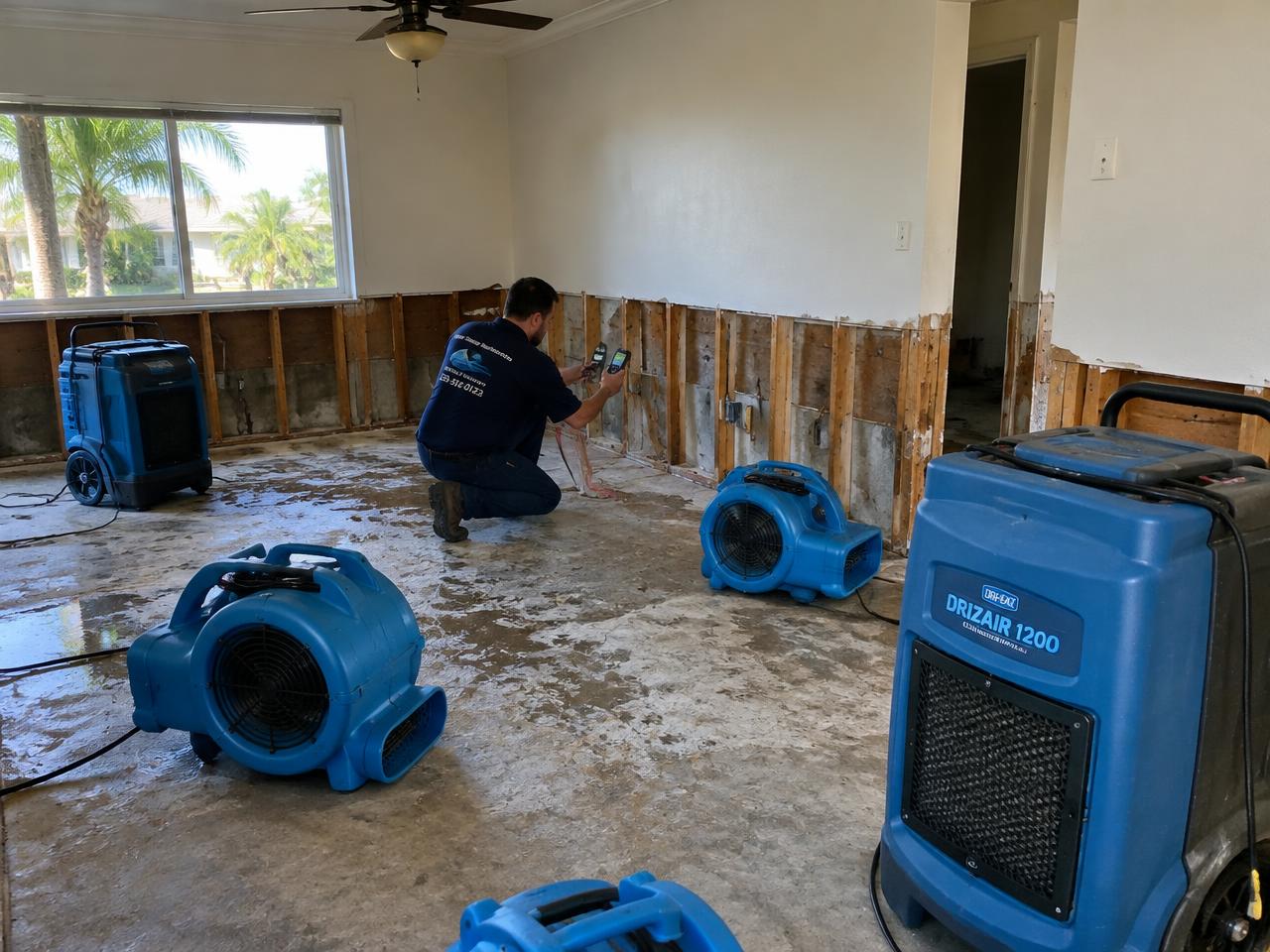
Addressing elevated indoor mold requires addressing the moisture source first. Whether caused by plumbing leaks, heavy tropical storms, or failed air conditioning systems, unchecked water must be handled promptly through professional water damage restoration before remediation can begin.
Under Florida law (Chapter 468 Part XVI), professional mold handling is divided between licensed Mold Assessors (MRSA) and licensed Mold Remediators (MRSR). If you suspect severe contamination in your property, securing independent mold testing provides an accurate baseline of spore concentrations. Once an assessment protocol is written, a qualified team can execute containment, HEPA air filtration, material removal, and antimicrobial treatment through certified mold remediation services.
Living alongside heavy fungal contamination is a serious property concern. Prompt action, objective diagnostic testing, and licensed containment protocols prevent localized moisture issues from expanding into total structural problems.