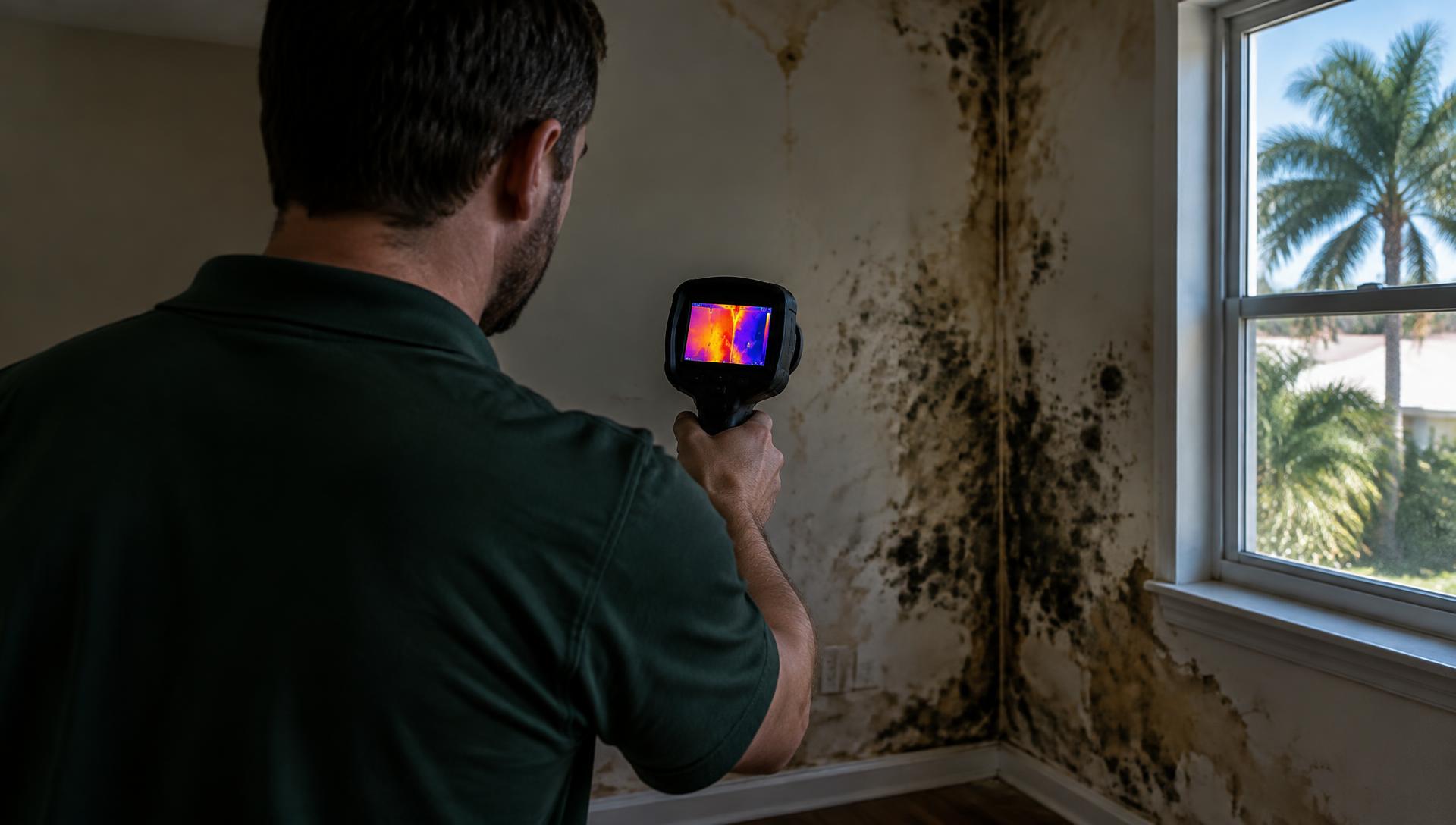
Mold remediation is designed to protect indoor environments by identifying fungal growth, containing it, and safely removing affected materials. While mold removal is commonly required during property transactions or after a plumbing issue, some dishonest operators take advantage of property owners through fear and misinformation.
Understanding what proper mold remediation involves—and knowing how Florida law regulates the industry—is the best way to safeguard your property and your wallet.
How Mold Growth Occurs in Florida Homes
With Florida's persistent humidity, frequent rainy periods, and long cooling seasons, indoor moisture levels can climb quickly if an HVAC system is improperly sized or if roof and plumbing leaks go unaddressed. Even minor moisture intrusion can establish mold growth on drywall, subflooring, or cabinetry within 24 to 48 hours.
Surface mold in damp bathrooms, such as mildew on non-porous ceramic tiles, can usually be handled with regular household cleaning. Remediation becomes necessary when moisture penetrates structural building materials or indoor mechanical systems.
When Mold Growth Becomes a Serious Concern
When moisture remains hidden, mold colonies can spread undetected behind walls and across structural components. In Florida properties, common problem zones include:
- Air conditioning air handlers, plenum boxes, and ductwork
- Drywall behind washing machines, dishwashers, and refrigerators
- Attics with inadequate ventilation or roof flashing leaks
- Crawl spaces with improper vapor barriers
- Underneath kitchen and bathroom sinks
- Baseboards following heavy rain, flooding, or plumbing failures
Professional mold testing can verify whether elevated indoor spore levels exist before any invasive demolition begins.
What Legitimate Mold Remediation Involves
If an area of mold growth exceeds 10 contiguous square feet, industry standards and Florida guidelines call for professional containment and remediation. Bleach is not recommended for porous materials such as drywall or framing lumber, as its water content can soak into the substrate while leaving deeper fungal roots behind.
A legitimate remediation project follows structured protocols:
- Containment: Polyethylene barriers and negative air machines with HEPA filtration keep spores from spreading into unaffected living spaces.
- Source Elimination: Any active plumbing leaks or moisture intrusion must be repaired through proper water damage restoration.
- Physical Removal: Porous materials damaged beyond restoration are carefully bagged and discarded. Non-porous and semi-porous surfaces are cleaned with antimicrobial agents and HEPA-vacuumed.
- Post-Remediation Clearance: An independent licensed mold assessor inspects and tests the area to verify that clearance criteria have been achieved.
How to Avoid Mold Remediation Scams in Florida
Scam operators often use aggressive scare tactics, present unscientific "instant results," or quote extreme fees without providing a written scope of work. Protect yourself by following these core practices:
- Verify Florida State Licensing: Under Florida Chapter 468 Part XVI, mold assessors must hold an active MRSA license and remediators must hold an active MRSR license. Always verify credentials on the Florida DBPR licensing portal.
- Watch for Conflicts of Interest: Florida law strictly prohibits the same company or individual from performing both the initial assessment/clearance testing and the remediation work on the same property within a 12-month period. Be wary of contractors who insist on inspecting, remediating, and clearing their own work.
- Avoid High-Pressure Sales Tactics: Reliable professionals provide clear written protocols and documented estimates rather than demanding immediate, panicked commitments.
- Ask About Insurance: Confirm that your contractor carries active general liability and pollution liability insurance suited for mold remediation.
If you suspect moisture problems or mold in your home, work with established local professionals. Contact Ahold of Mold Environmental to discuss your property needs across Central Florida at (386) 492-1288 or South Florida at (954) 281-2666.