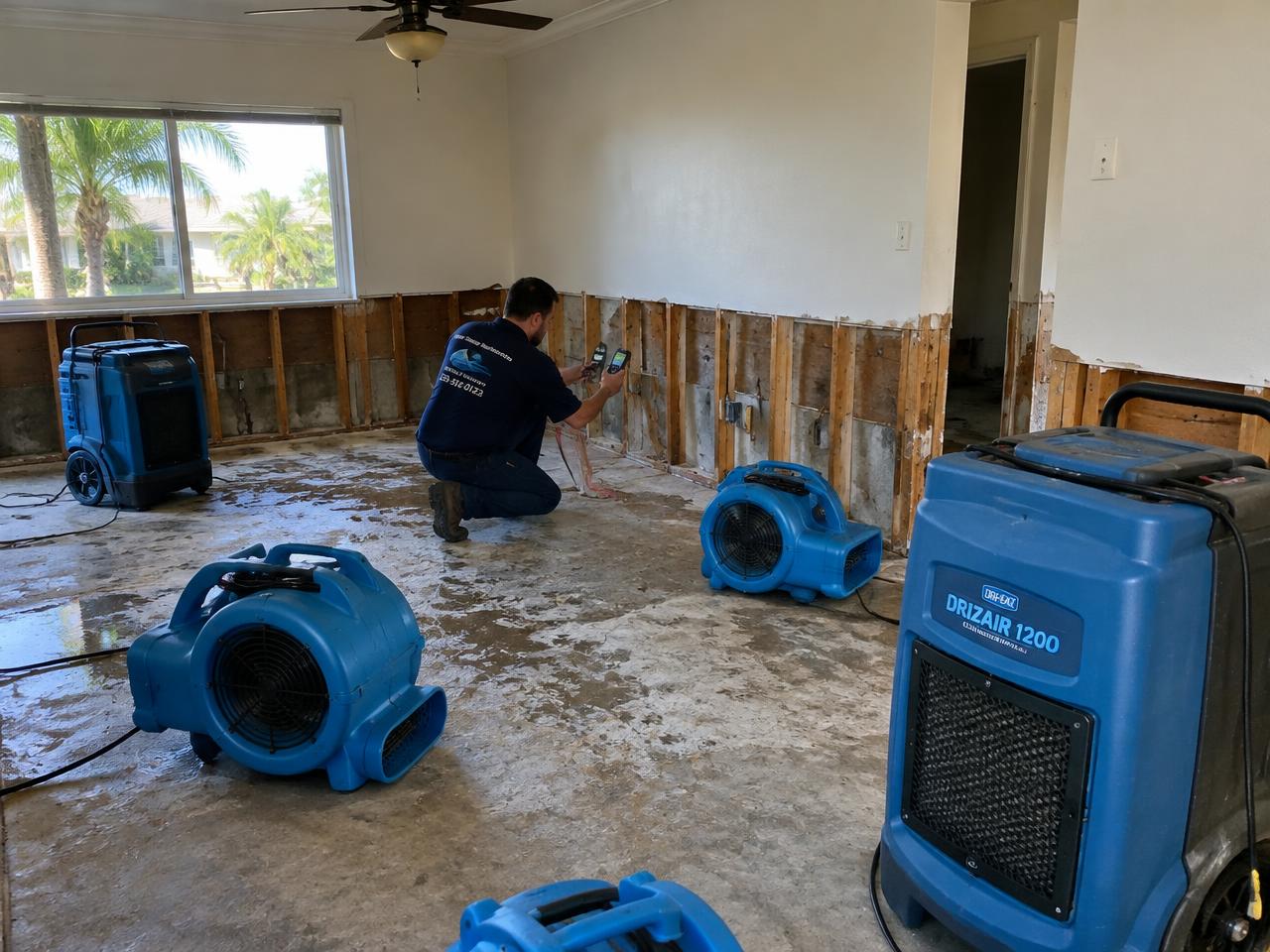
While subterranean basements are relatively uncommon in Florida due to the state's high water table, many older properties, hillside residences, coastal homes on pilings with enclosed ground floors, and daylight walk-outs feature below-grade or semi-below-grade rooms. When moisture infiltrates these lower levels, it creates an ideal environment for rapid microbial growth. Ahold of Mold Environmental has provided licensed, professional moisture investigation and mold remediation services across Florida since 1996, holding state licenses as both a Mold Assessor (MRSA3074) and Mold Remediator (MRSR4581).
Any water problem in a below-grade space can take significant time to dry out naturally. These areas typically receive no direct sunlight, have limited natural airflow, and remain exposed to the surrounding soil's moisture. Left unchecked, elevated moisture can lead to hidden fungal colonies along structural floor joists, subflooring, and finished drywall.
Condensation and Temperature Differentials
High outdoor humidity combined with indoor air conditioning can create sharp temperature differentials in lower-level rooms. When humid air comes into contact with cool concrete slab floors, uninsulated masonry walls, or cold plumbing lines, condensation forms. Over time, persistent condensation leaves materials damp enough to sustain mold colonies, even without a visible plumbing failure.
Tropical Storms, Flooding, and Groundwater Infiltration
Heavy rainfall during Florida's tropical storm and hurricane seasons frequently saturates the soil, driving groundwater against exterior foundation walls through hydrostatic pressure. If ground water breaches cracks in foundation walls or backs up through floor drains, standing water quickly damages flooring, baseboards, and drywall.
Materials that absorb water rapidly—such as cellulose drywall backing, carpet padding, and stored cardboard—must be addressed quickly to prevent aggressive fungal growth, such as Stachybotrys chartarum or Aspergillus species.
Steps to Take After Water Intrusion
When unexpected water enters your home, contacting an experienced water damage restoration and remediation team right away minimizes structural damage. If you are managing initial cleanup safely:
- Extract standing water: Remove pooling water as rapidly as possible using wet-vacuums or submersible pumps.
- Promote drying: Utilize commercial dehumidifiers and high-velocity air movers. Avoid opening windows when outdoor relative humidity is elevated, as this introduces additional moisture.
- Discard non-salvageable porous items: Wet carpet padding, soaked cardboard boxes, and waterlogged drywall should be safely removed and disposed of.
- Clean structural surfaces: Thoroughly clean hard, non-porous surfaces with appropriate antimicrobial detergents and ensure they dry completely before rebuilding.
Signs of Mold in Lower Levels and Basements
Because below-grade areas often receive less foot traffic, mold growth can spread unnoticed for weeks. Warning signs include:
- A persistent, earthy, or musty odor that lingers even when air conditioning runs.
- Dark discoloration, spotting, or fuzzy growth along baseboards, floor joists, or wall cavities.
- Peeling paint, bubbling wallpaper, or white mineral deposits (efflorescence) on masonry surfaces.
- Damp carpeting or warping wood elements.
Investigating and Testing for Hidden Mold
When visual checks reveal no obvious surface growth but musty odors persist, the moisture problem is frequently hidden behind wall assemblies or beneath finished flooring. Professional mold testing utilizes calibrated air sampling, direct surface sampling, and infrared thermography to identify elevated spore concentrations and pinpoint moisture sources without invasive tearing of building materials.
Common Locations for Fungal Colonization
In below-grade rooms, mold most commonly colonizes organic building materials and items stored in damp environments:
- Drywall and baseboard backing
- Floor joist systems and subfloor sheathing
- HVAC supply and return plenums
- Cardboard storage boxes and paper archives
- Upholstered furniture and area rugs
- Pipe chases and plumbing access panels
Preventing Moisture Problems in Lower-Level Rooms
Controlling indoor moisture is the only reliable way to prevent mold colonization long term:
- Control Humidity: Maintain indoor relative humidity below 55% using dedicated dehumidification systems designed for the square footage of the space.
- Correct Grading and Drainage: Ensure exterior soil slopes away from the foundation and verify that downspouts direct rainwater at least five to ten feet from exterior walls.
- Seal Foundation Walls: Apply commercial-grade hydraulic sealants to exterior and interior foundation surfaces to minimize vapor transmission through masonry.
- Routine HEPA Maintenance: Periodically vacuum surfaces with a sealed HEPA vacuum to capture settled dust and organic matter that serve as food sources for spores.
Professional Remediation and Assessment
If you suspect active mold growth in your basement, crawlspace, or ground-level living space, proper containment is critical. Certified remediation involves establishing negative air pressure, using HEPA filtration devices, and removing contaminated materials under strict containment barriers to prevent cross-contamination into upper living levels. Contact Ahold of Mold Environmental to schedule a comprehensive assessment with our licensed Florida specialists.